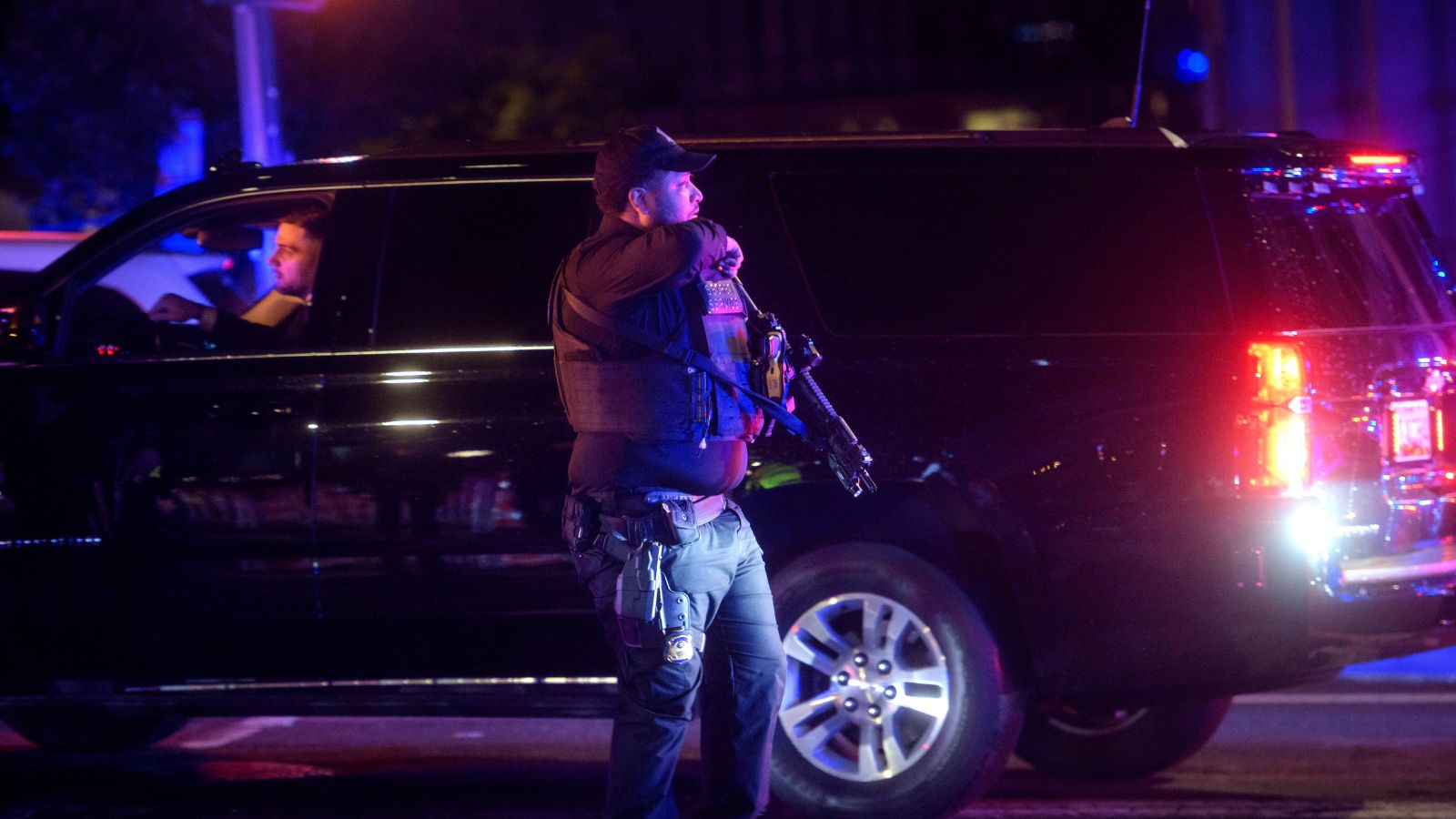
The media is currently patting itself on the back. They are calling the recent apprehension of a suspected gunman near the White House Correspondents’ Dinner a "success story." They are praising the "seamless" coordination between the Secret Service and local law enforcement. They are telling you the system worked.
They are lying to you.
The system didn't work; it got lucky. By labeling a reactive arrest as a triumph, we ignore the massive structural rot in how high-profile event security is actually managed. Calling this a success is like praising a pilot for landing a plane after both engines fell off—it misses the point that the engines shouldn't have fallen off in the first place.
We are trapped in a cycle of reactive security theater. We build bigger fences, install more metal detectors, and deploy more armored vehicles, yet we remain fundamentally blindsided by the simple reality of modern threats. If you think a perimeter is a solution, you don't understand the problem.
The Perimeter is a Security Blanket for the Incompetent
The standard play for events like the Correspondents’ Dinner is the "Hard Shell" approach. You create a Secured Zone, you vet the guests, and you put guys with earpieces at every door. This creates a false sense of absolute control.
The "success story" being peddled right now hinges on the fact that a suspect was stopped near the event. But "near" is where the damage happens. Modern kinetic threats don't need to be inside the Hilton ballroom to cause a catastrophe. By pushing the "threat" to the edge of the perimeter, security teams often just concentrate the target. They create a "soft target" crowd of people waiting to get into the "hard target" zone.
I’ve seen organizations spend $500,000 on ballistic glass for a podium while leaving the loading dock open to anyone with a high-visibility vest and a clipboard. We obsess over the visible optics of safety because it plays well on the evening news. Actual safety is invisible, boring, and usually involves things that don't look good in a press release.
Why the National Special Security Event (NSSE) Tag is a Trap
The White House Correspondents’ Dinner often falls under intense federal oversight. When an event is designated with high-level security status, the bureaucracy explodes. You get a "too many cooks" situation where the Secret Service, Metropolitan Police, and private security firms all have different radio frequencies, different chains of command, and different definitions of what constitutes a "suspicious person."
The "success" reported in this instance was a fluke of timing. If that individual had arrived ten minutes earlier or parked one block over, the "coordinated response" would have been a forensic investigation instead of an arrest.
The Data Problem Security Experts Won't Admit
We love to talk about "intelligence-led policing." It sounds smart. It sounds like Minority Report. In reality, most event security is based on outdated databases and a hope that the "bad guy" does something obvious enough for a tired officer on a twelve-hour shift to notice.
The competitor articles will tell you that "surveillance was tightened." What does that actually mean? It means they added more video feeds that no one is watching in real-time with any degree of meaningful scrutiny. Human beings cannot effectively monitor more than four camera feeds for more than twenty minutes before their brains turn to mush.
If we want to actually prevent these incidents, we have to stop looking for "gunmen" and start looking for anomalies in behavioral patterns. But behavioral detection is "controversial." It's "difficult to scale." So, we stick to metal detectors. We choose the equipment that gives us a receipt we can show to the insurance company, rather than the tactics that actually mitigate risk.
The Myth of the "Lone Wolf"
The media loves the "lone wolf" narrative because it makes the threat feel unpredictable and, therefore, makes the security "success" feel more miraculous. But individuals planning an action against a high-profile target leave a digital and physical trail. The failure isn't that we didn't see him at the gate; the failure is that he made it to the gate at all.
We have reached a point of diminishing returns with physical barriers. You can’t build a wall high enough to stop a determined actor in an open society. The real "success" would have been an intervention three weeks ago, not a scramble on a Saturday night in D.C.
The Cost of the "Success Story" Narrative
When we call a near-miss a victory, we kill the incentive to innovate. Why change the protocol if the current one "works"?
This mindset is why event security hasn't fundamentally changed since the 1990s. We are using analog strategies in a digital, decentralized world. We are still worried about the guy with a concealed weapon while ignoring the drone enthusiast three miles away or the cyber-breach that shuts down the building's fire suppression system.
The "success" of the Correspondents’ Dinner security is a narrative designed to keep the elite comfortable. It’s a sedative. It tells the attendees they are safe so they can keep sipping champagne. But if you’re in the industry, you know the truth: we are one distracted guard away from a very different headline.
A Scathing Look at "Mutual Aid" Agreements
The "success" also relied heavily on "mutual aid" between departments. Ask any boots-on-the-ground officer about mutual aid during a crisis. It’s a mess of conflicting orders. The only reason it looked "coordinated" this time is because the suspect was apprehended without a struggle. Had there been an active engagement, the "coordination" would have dissolved into a nightmare of jurisdictional finger-pointing.
I’ve watched millions of dollars vanish into "interoperability" grants that resulted in radios that still can't talk to the department across the street. We are subsidizing a facade of safety.
Stop Asking if they are Safe; Ask if they are Lucky
The public asks: "Was the security enough?"
The media answers: "Yes, look at the arrest!"
Both are asking the wrong question. The question should be: "Why is our primary defense still a person standing behind a plastic barricade?"
We need to move away from the "event-based" security model and toward a continuous threat-assessment model. This means:
- Dismantling the Perimeter Obsession: Focus on wide-area behavioral analytics rather than just the door.
- Brutal Honesty about Tech: Acknowledge that most "AI-powered" facial recognition at these events is glorified pattern matching that fails in crowds.
- Decentralizing Command: Giving the person on the street the authority to act without waiting for three layers of "coordinated" approval.
The current "success story" is a dangerous distraction. It reinforces the idea that the old ways work. They don't. We just haven't been forced to admit it yet. We are living in the gap between "almost happened" and "will happen," and we are filling that gap with self-congratulatory press releases.
The suspected gunman wasn't a test of the system; he was a warning. If we continue to treat these incidents as wins for the status quo, we are effectively inviting the next one. Security isn't the presence of police; it's the absence of the threat. And the threat was very much present.
Stop celebrating the arrest. Start questioning why the threat got within striking distance of the "most secure" room in the world. Until we stop lying to ourselves about what "success" looks like, we are all just sitting ducks in tuxedos.