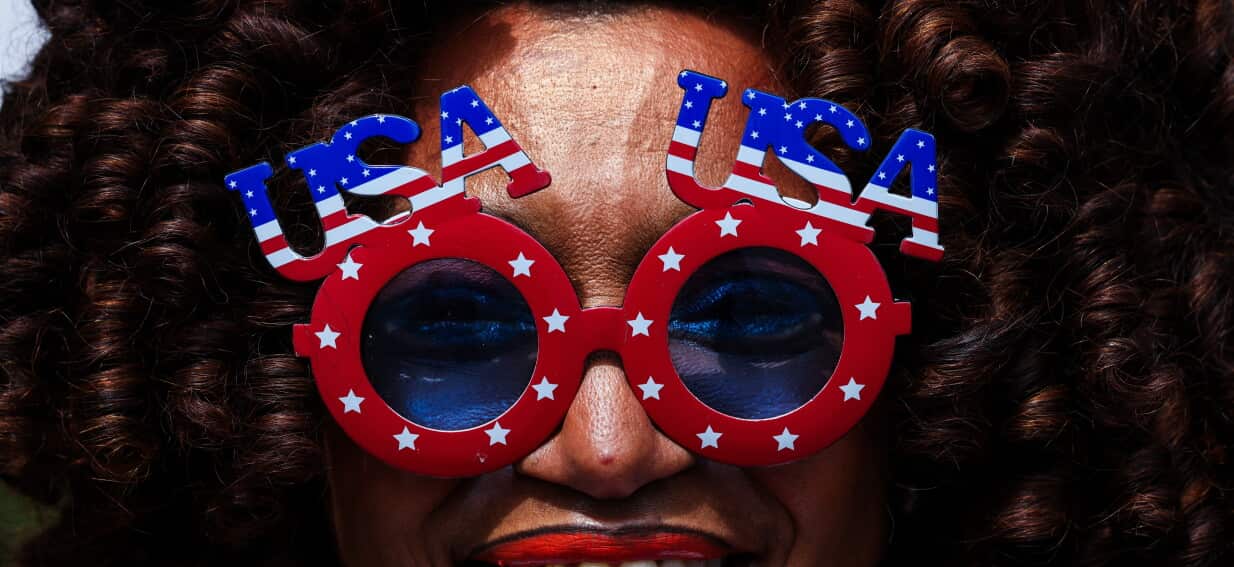
The conflict surrounding the United States semiquincentennial is fundamentally not an issue of cultural friction; it is a structural masterclass in institutional displacement and executive asset reallocation. By bypassing the congressionally mandated, bipartisan America250 Foundation and spinning up "Freedom 250" as a controlled subsidiary embedded within the National Park Foundation (NPF), the executive branch has effectively executed a hostile takeover of a national milestone. This maneuver converts public commemorative infrastructure into an apparatus optimized for three clear operational goals: the maximization of executive branding, the extraction of corporate capital via regulatory alignment, and the consolidation of voter data networks.
Understanding this institutional pivot requires moving past media narratives of "politicization" and examining the formal mechanics of how public assets, appropriated capital, and civic symbolism are being systematically redirected. Read more on a similar issue: this related article.
The Mechanics of Institutional Displacement
The operational blueprint of the 250th anniversary celebration reveals an asymmetric war for administrative control. In 2016, Congress established the U.S. Semiquincentennial Commission to plan the 2026 celebrations on a non-partisan basis. The institutional friction began when the leadership of this original entity resisted executive demands to transform the commemoration into high-profile, campaign-style spectacles.
The executive response was not to reform the existing commission, but to build a parallel track that rendered it obsolete. This was achieved through a multi-step sequence: More journalism by Al Jazeera highlights comparable perspectives on this issue.
- Capital Starvation: The administration withheld tens of millions of dollars from the $150 million in taxpayer funds originally appropriated by Congress for the America250 commission.
- Subsidiary Insertion: Using the National Park Foundation—a trusted, congressionally chartered charity—the White House established Freedom 250 as a wholly owned subsidiary. Because it is controlled by executive appointees, this entity functions as a shadow corporation inside a public framework.
- Asset Redirection: Congressional oversight investigations reveal that fundraisers actively diverted resources intended for the original commission by providing prospective corporate donors with banking and routing numbers belonging exclusively to Freedom 250.
This structural displacement created an operational bottleneck for the original bipartisan commission while granting Freedom 250 unilateral control over the capital’s central programming, including the Great American State Fair on the National Mall.
The Corporate Cost Function and Regulatory Alignment
A public commemoration of this scale requires a vast capital pool. Freedom 250 solved its funding requirements by engineering a highly transactional corporate sponsorship matrix. This framework functions on a clear economic quid pro quo: corporations provide private funding and sponsorship in exchange for high-visibility branding and direct political capital with an active administration.
| Metric / Variable | America250 Commission (Congressionally Mandated) | Freedom 250 (Executive Shadow Subsidiary) |
|---|---|---|
| Primary Funding Source | Congressional Appropriations ($150M total pool, partially blocked) | Private corporate sponsorships and diverted public funds |
| Governance Structure | Bipartisan congressional oversight board | Executive branch appointees and NPF shell control |
| Core Event Strategy | State-level historical exhibits, naturalization ceremonies | Rallies, UFC matches at the White House, street races |
| Corporate Access | Standard non-profit philanthropic acknowledgment | Direct integration with commercial and political branding |
This model introduces severe institutional risks, specifically structural pay-to-play dynamics. A significant portion of the large pool of money funding Freedom 250 stems from massive corporations that are simultaneously actively lobbying Congress and federal agencies for regulatory relief. When an event like the White House lawn martial arts bouts features "Super Bowl-level security" marshaled by the Department of Homeland Security (DHS) alongside corporate-backed cryptocurrency payouts, the line between state functions, private commerce, and campaign finance disappears.
The Asymmetric Boycott and Sub-National Fragmentation
The political polarization of the central event has triggered a secondary structural effect: the fragmentation of the national celebration along state lines. Eleven Democratic-led states—including Pennsylvania, Massachusetts, North Carolina, and Oregon—openly boycotted the Great American State Fair in Washington, D.C.
From an analytical standpoint, these sub-national boycotts represent a strategic miscalculation in terms of narrative dominance. By refusing to participate based on the $700,000 entry fees and the "MAGA tilt" of the programming, these states conceded the nation’s primary symbolic stage entirely to a single political movement.
This creates a distinct geographical bifurcation of the anniversary:
- The Federal Core: Controlled by Freedom 250, featuring highly centralized, nationalistic spectacles, military flyovers, and explicit policy messaging (ranging from anti-transgender rhetoric to mass-deportation endorsements).
- The Sub-National Periphery: Comprising localized museum exhibits, community service initiatives, and decentralized civic programming led by boycotted states attempting to redefine patriotism around economic security and localized history.
This fragmentation carries long-term consequences. Rather than serving as a unifying baseline for democratic institutions, the 250th anniversary has codified a precedent where even basic historical timelines are subject to competing, parallel administrations.
The Optimization of Civic Real Estate for Data Harvesting
The final, and perhaps most sophisticated, component of the Freedom 250 strategy is the conversion of physical civic spaces into digital data acquisition networks. Traditional national celebrations treat attendees as passive observers. The Freedom 250 model treats attendees as user acquisition funnels.
Through the deployment of "Freedom Trucks"—double-wide 18-wheelers acting as mobile interactive museums travelling across the country—the initiative plans to interface with an estimated 20 million Americans. These mobile units, along with the pavilions on the National Mall, require digital registration, app downloads, and interaction points.
This infrastructure serves an underlying data-harvesting function, capturing localized voter information, contact points, and behavioral data. This data is structurally insulated from traditional campaign scrutiny because it is collected under the auspices of a congressionally chartered charity's subsidiary. The long-term asset here is not the temporary spectacle of a July 4th fireworks show, but the permanent, proprietary database of highly motivated, nationalistic consumers built at the public’s expense.
The structural capture of the semiquincentennial proves that symbolic capital can be weaponized as effectively as financial capital. To counter this operational model in future civic milestones, legislative bodies must implement strict statutory firewalls that isolate appropriated funds from executive-controlled non-profit entities. Until those fiscal guardrails are legally mandated, national commemorations will continue to serve as low-cost, high-yield infrastructure for executive branding and corporate regulatory alignment.
This analysis details how federal celebrations can be structurally converted into modern political operations. For a deeper look at how these dynamics manifest on the ground during the events in Washington, Trump's partisan 250-year celebration not for all Americans provides direct visual documentation and reportage on the starkly divided public response and the highly managed environment of the festivities on the National Mall.