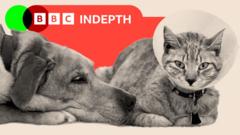
The family dog is no longer just a companion. In the eyes of private equity, that Golden Retriever is a recurring revenue stream with high "stickiness" and recession-proof margins. Over the last decade, a quiet but aggressive consolidation has swept through the veterinary industry, turning local clinics into cogs within massive corporate machines. This shift has pushed prices to a breaking point, leaving a massive opening for a new breed of "Aldi-style" veterinary providers. These insurgents are stripping away the marble lobbies and the complex upsells to focus on one thing: affordable, essential care.
While traditional clinics struggle with the overhead of sprawling diagnostic suites and administrative bloat, these low-cost challengers are betting that pet owners are exhausted by the "gold standard" price tag for every minor ailment. The crisis in veterinary affordability isn't just a byproduct of inflation. It is the result of a deliberate structural change in how animal medicine is financed and delivered.
The Invisible Consolidation of the Local Vet
Most pet owners still see the name of the original founder on the sign outside their clinic. They don't see the logo of the global conglomerate or the investment firm that actually owns the building, the equipment, and the staff's employment contracts. In the UK and North America, a handful of companies now control a staggering percentage of the market. This isn't a conspiracy; it’s a business model built on the "hub and spoke" system.
Corporate owners buy up primary care clinics (the spokes) to feed their high-margin specialty and emergency hospitals (the hubs). When your local vet suggests a battery of tests that can only be performed at the shiny new facility twenty miles away, they aren't just thinking about your cat’s health. They are often following a referral protocol designed to keep revenue within the corporate ecosystem. This vertical integration has driven the cost of basic care into the stratosphere.
The math for these corporations is simple. They have to service the debt used to acquire the practices. That means every exam room must generate a specific amount of dollars per minute. This pressure trickles down to the veterinarians, many of whom are burnt out by "production-based" pay structures that reward them for every test, injection, and procedure they sell. It is a factory-farm approach to medicine that has left a massive segment of the population unable to afford a basic check-up.
Enter the Disrupters
This is where the insurgents come in. Taking a page from the Aldi and Lidl playbook, these new clinics are rejecting the "everything for everyone" model. They don't do complex orthopedic surgeries. They don't have overnight staff for intensive care. They don't sell overpriced boutique kibble in the waiting room.
Instead, they focus on high-volume, high-efficiency preventative care. Vaccinations, spay and neuter procedures, flea and tick prevention, and basic diagnostics. By narrowing the scope of practice, they can slash prices by 40% or even 60% compared to corporate-owned traditional clinics. They utilize small footprints, often in retail strips rather than standalone buildings, and they leverage technology to automate the boring stuff like booking and records.
The Efficiency Engine
In a traditional vet office, the veterinarian is often the bottleneck. They do everything from the physical exam to the record-keeping and even some of the tech work. The Aldi-style rebels flip this. They use a highly leveraged staffing model where veterinary technicians—the nurses of the animal world—take on the bulk of the patient interaction.
The vet enters at the critical moment, performs the diagnosis or the surgery, and moves to the next room. It sounds cold, but for a pet owner facing a $800 bill for a simple ear infection at a traditional clinic, a $120 visit at a high-efficiency clinic feels like a lifeline. It is the democratization of animal health through brutal operational efficiency.
The Myth of the Gold Standard
The veterinary establishment often pushes back against these low-cost models by invoking the "gold standard of care." The argument is that anything less than a full suite of diagnostics is a disservice to the animal. But the reality is that the gold standard is increasingly becoming the "exclusive standard."
If a pet owner cannot afford the $500 blood panel, the "gold standard" suggests they are a bad owner. The low-cost rebels argue that "good enough" care—the silver or bronze standard—is infinitely better than no care at all. This is the core of the friction. The industry is currently built on the idea that medicine must be exhaustive to be ethical. The insurgents argue that medicine must be affordable to be ethical.
Consider a hypothetical example. A dog presents with a common skin allergy. A corporate-owned clinic might recommend a specialized diet ($100/month), a full allergy blood panel ($400), and a follow-up with a dermatologist. A no-frills clinic might skip the tests and start with a generic steroid or antihistamine to see if the symptoms clear up for $30. If the cheap fix works, the owner saves hundreds. If it doesn't, they can still escalate later. One model prioritizes data; the other prioritizes the owner’s wallet.
The Labor Crisis as a Catalyst
The vet industry is currently screaming about a labor shortage. There aren't enough vets, and the ones we have are quitting at record rates. This crisis is actually helping the low-cost insurgents.
Corporate clinics, burdened by high debt, often can't afford to pay the massive salaries required to lure vets away from the burnout. However, the no-frills models offer something different: predictable hours. Because they don't do emergencies and don't stay open 24/7, they can offer a work-life balance that the traditional "all-in-one" hospital cannot match.
By stripping away the complexity of the job, they make the profession sustainable again for the people doing the work. A vet at an Aldi-style clinic knows they will see twenty patients for routine issues and go home at 5:00 PM. They won't be performing a midnight C-section or delivering a $10,000 bill to a grieving family.
The Problem with the No-Frills Model
It isn't a perfect solution. The primary risk of the low-cost model is the "missing middle." If everyone moves to high-efficiency clinics for the easy stuff (vaccines and wellness), the traditional hospitals lose the "easy" money that subsidizes their expensive emergency equipment.
If the "bread and butter" work disappears from full-service hospitals, the cost of emergency care and complex surgery will likely skyrocket even further to compensate. We could end up with a two-tiered system: a "fast-food" style clinic for the healthy pets and an "ultra-luxury" hospital that only the wealthy can afford when things go wrong.
Breaking the Insurance Cycle
Another factor driving this shift is the failure of pet insurance to keep pace. As vet bills have risen, insurance premiums have followed. Many owners find that after paying $80 a month for years, their policy has so many exclusions and deductibles that it doesn't cover the very things they need.
The Aldi-style clinics bypass the insurance headache entirely. Their prices are often low enough that paying out of pocket is cheaper than paying for a monthly premium plus a co-pay. They are effectively "self-insuring" the customer by keeping the baseline cost of ownership down. This is a direct threat to the insurance companies that have grown fat on the rising costs of veterinary medicine.
The Coming Price War
We are at the beginning of a major market correction. For too long, the veterinary industry assumed that because people love their pets, they would pay any price to keep them healthy. Private equity bet billions on that emotional bond. But they hit a ceiling. When a basic dental cleaning costs more than a month's mortgage, the consumer pushes back.
The insurgents are the physical manifestation of that pushback. They are proving that you can run a profitable, ethical veterinary business without the bells and whistles. They are forcing the big conglomerates to look at their own P&L statements and wonder if those mahogany-row offices were really worth it.
[Image comparing the cost structure of traditional vs. no-frills veterinary clinics]
If you want to see where this goes next, look at the consolidation of human dental practices or the rise of urgent care centers in the human medical field. The "one-stop shop" for health is dying. It is being replaced by a fragmented system of specialized, efficient providers. The vet down the street isn't just fighting for your dog’s health anymore; they are fighting for a business model that is rapidly becoming obsolete.
Ask your local vet who actually owns the practice. If they hesitate, or if the name on the paycheck doesn't match the name on the door, you are likely paying a "corporate tax" on your pet’s health. It is time to stop viewing the low-cost rebels as "cheap" alternatives and start seeing them for what they are: a necessary correction to an industry that lost its way in the pursuit of clinical perfection and private equity returns.