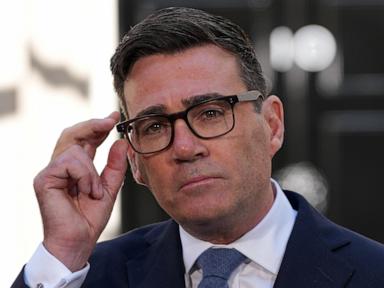
The speculative narrative that Mayor of Greater Manchester Andy Burnham could transition directly from regional governance to the position of UK Prime Minister following a single meeting with King Charles III fundamentally conflates constitutional prerogative with parliamentary mechanics. In the British uncodified constitution, the Sovereign does not select the Prime Minister based on personal preference or unilateral executive discretion. The monarch acts purely on constitutional convention: inviting the individual who commands the confidence of the House of Commons to form a government. Understanding Burnham’s realistic path to 10 Downing Street requires dissecting the rigid institutional barriers, party statutes, and electoral mechanics that govern leadership transitions in the United Kingdom.
The Parliamentary Prerequisite and Electoral Barriers
A persistent fallacy in public discourse is the assumption that high-profile metro mayors can seamlessly step into executive national leadership. Under contemporary constitutional precedent, a Prime Minister must sit as a Member of Parliament (MP) in either the House of Commons or, historically, the House of Lords—though the latter has not occurred since Alec Douglas-Home resigned his peerage in 1963.
Burnham currently holds executive authority as the Mayor of Greater Manchester, an office distinct from the legislature. For Burnham to become Prime Minister, a specific sequence of institutional shifts must occur sequentially:
- Seat Vacancy Creation: A sitting Labour MP in a secure or strategically viable constituency must vacate their seat, triggering a by-election, or Burnham must wait for a general election dissolution.
- National Executive Committee (NEC) Selection: Burnham must secure formal nomination and endorsement from Labour’s NEC to stand as the official party candidate for that constituency.
- Electoral Success: He must win the parliamentary seat in the House of Commons.
- Party Leadership Acquisition: He must secure a sufficient number of nominations from parliamentary colleagues (PLP) to trigger or enter a leadership contest under Rule 4 of the Labour Party Rule Book, subsequently winning the ballot among members and affiliated supporters.
Without passing through these four sequential gates, any audience with the monarch remains entirely ceremonial or advisory within regional governance parameters.
Constitutional Realities of the Royal Prerogative
The assertion that a meeting with King Charles III serves as the catalyst for Burnham assuming power misinterprets the legal nature of the Royal Prerogative.
Under the uncodified British constitution, the appointment of a Prime Minister is governed by the convention of "confidence." The monarch’s primary responsibility during a transition of power is to ensure the continuity of government by appointing the person best placed to command a majority in the House of Commons.
[Constitutional Trigger]
       │
       ▼
Does candidate command a House of Commons majority?
       │
       ├─► NO  ──► Monarch cannot appoint (Risk of Constitutional Crisis)
       │
       └─► YES ──► Kissing Hands Ceremony (Appointment confirmed)
If the monarch were to appoint an individual who does not sit in Parliament or who lacks the formal backing of the majority party, the government would immediately face a motion of no confidence under parliamentary procedures. A defeat on a confidence motion triggers either a statutory window to form an alternative administration or an immediate dissolution of Parliament. Consequently, the formal meeting at Buckingham Palace—historically referred to as "Kissing Hands"—is the legal finalization of a political outcome already decided within Westminster and the electorate, not the decision-making forum itself.
Structural Friction Within Party Mechanics
Even if Burnham secured a parliamentary seat, his trajectory toward party leadership faces structural friction generated by the Labour Party’s institutional architecture. The internal power dynamics of the Labour Party operate through three distinct power centers:
- The Parliamentary Labour Party (PLP): MPs who prioritize legislative discipline, electoral viability, and party stability.
- The Trade Union Affiliates: Block voters and major financial backers who exert influence through candidate endorsements and NEC policy motions.
- The General Membership: The grassroots base, which historically leans further from the pragmatic center than the parliamentary caucus.
To mount a successful leadership challenge, Burnham would need to navigate the nomination threshold set by the PLP. Current party rules mandate that a leadership candidate must secure nominations from a high percentage of sitting Labour MPs, alongside support from affiliated trade unions or local constituency parties (CLPs). A candidate strong with the regional grassroots but lacking deep transactional leverage within the parliamentary caucus will fail at the initial nomination phase.
Regional Executive Power vs. Legislative Leadership
Burnham’s tenure as Mayor of Greater Manchester provides a distinct administrative model compared to the traditional Westminster pipeline. Metro mayors operate with executive portfolios centered on transport integration, housing development allocations, and regional economic strategy under devolution deals. This structure creates a reputation for direct operational delivery.
However, the transition from regional executive to national legislative leader introduces structural complications:
- Loss of Direct Executive Mandate: Metro mayors possess a direct personal mandate from voters. A Prime Minister, by contrast, relies on a collective parliamentary mandate mediated through party discipline.
- Depoliticized vs. Hyper-Partisan Environments: Regional governance often allows for cross-party cooperation on infrastructure projects. Westminster demands strict adherence to party whips and relentless ideologically driven debate.
- Policy Scopes: Shifting from local public transport management to macro-fiscal policy, national defense, foreign relations, and nuclear deterrence requires a complete pivot in administrative capacity and strategic focus.
Strategic Blueprint for a Premiership Bid
For Andy Burnham to realistically convert his regional political capital into a national executive office, his political operation must execute a long-term strategic play centered on three specific moves.
First, he must secure a parliamentary seat through a carefully timed selection process, targeting a constituency with an established, stable majority to minimize electoral risk during a by-election. Second, he must build explicit, formal coalitions with major affiliated trade unions to satisfy internal party nomination criteria while simultaneously cultivating ideological alignment with a critical mass of sitting MPs. Third, he must timing his entry to coincide with a explicit power vacuum or a clear decline in parliamentary confidence regarding the incumbent leadership, positioning himself as an established executive administrator capable of governance rather than an ideological insurgent.
Unless these specific institutional and statutory conditions are satisfied, theoretical discussions surrounding Burnham entering 10 Downing Street remain fundamentally disconnected from the operational mechanics of British politics.