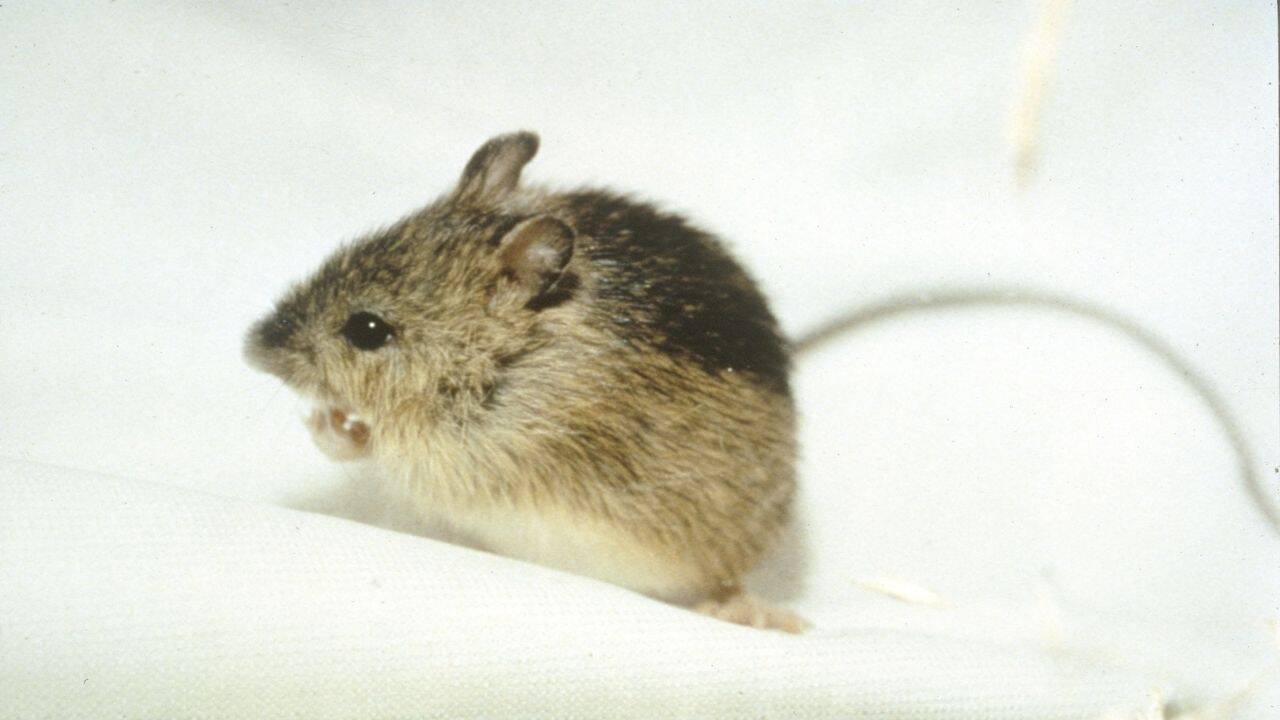
Colorado Preble Meadow Jumping Mouse Conservation By The Numbers And Structural Mechanics
The recovery trajectory of Zapus hudsonius preblei, commonly known as the Preble's meadow jumping mouse, depends on balancing riparian corridor connectivity with expanding urban infrastructure along the Front Range of Colorado. Conservation initiatives targeting this threatened subspecies often default to generalized habitat protection narratives, obscuring the precise ecological mechanics and fiscal trade-offs required for long-term viability. Evaluating recent restoration projects demands moving past surface-level announcements to analyze land-use economics, hydrological prerequisites, and regulatory compliance frameworks.
The Structural Mechanics of Riparian Habitat Fragmentation
The Preble's meadow jumping mouse occupies a narrow ecological niche restricted to densely vegetated, shrub-dominated riparian zones along the eastern slope of the Rocky Mountains, primarily spanning from Wyoming down through El Paso County, Colorado. Survival relies on microhabitat diversity, which features a dense herbaceous understory paired with adjacent open grasslands for foraging and overwintering hibernation.
Urban expansion fragments these linear corridors into isolated habitat islands. The primary failure mode of standard conservation efforts is treating habitat acreage as a monolithic metric. Two hundred contiguous acres of open grassland hold a fundamentally different biological value than two hundred linear acres of fragmented stream corridor intersected by culverts, roads, and concrete channelization.
When a project claims momentum through a new acreage acquisition, analysts must interrogate the perimeter-to-area ratio and the degree of hydrological connectivity. A fragmented parcel adjacent to heavy industrial runoff or high-density residential zones functions as an ecological sink rather than a source population center. The mouse experiences high mortality rates during dispersal phases when crossing non-native matrix lands. Therefore, capital allocation in modern restoration must prioritize corridor width optimization over raw aggregate square footage. Minimum effective corridor widths must account for annual flood scour cycles that naturally regenerate the willow and shrub communities the species requires for nesting and predator avoidance.
Fiscal Architecture and Mitigation Banking Economics
Funding mechanisms for Preble's mouse recovery operate primarily through compensatory mitigation, Endangered Species Act Section 7 consultations, and state-level wildlife grants. Private developers and public works agencies requiring disturbance permits must purchase mitigation credits from approved conservation banks or construct equivalent on-site improvements.
This market-based approach creates a distinct economic tension. The price of a mitigation credit reflects the scarcity of eligible land along the rapidly developing Interstate 25 corridor, where real estate opportunity costs are extraordinarily high. When a new habitat project gains momentum, it typically signals that an influx of public or private mitigation capital has unlocked a previously stalled parcel, converting marginal agricultural or grazing land into protected riparian buffer zones.
However, the cost function of these projects contains hidden variables:
- Long-term monitoring liabilities: Perpetual endowments required for weed management and predator control often exceed the initial acquisition capital.
- Hydrological water rights acquisition: Securing instream flow rights in over-appropriated Colorado river basins involves complex legal battles and high capital outlays that dwarf simple land purchase costs.
- Opportunity costs of infrastructure delays: Linear project delays caused by seasonal restriction windows, which ban construction near mouse habitats during active breeding and hibernation seasons, introduce massive financial friction for municipal civil engineering projects.
Standard ecological assessments fail to account for the temporal mismatch between immediate construction capital deployment and long-term biological response curves. A restored stream bank does not achieve functional maturity for five to ten years, during which local populations remain vulnerable to stochastic extinction events such as severe flash flooding or prolonged regional drought.
Regulatory Compliance and Adaptive Management Protocols
Regulatory oversight of the Preble's meadow jumping mouse involves a complex interplay between the United States Fish and Wildlife Service, state departments of transportation, and local municipal open space programs. The listing status under the Endangered Species Act dictates strict take prohibitions, which forces project engineers to design around seasonal operational windows. These windows limit heavy earth-moving activities to brief autumn and winter periods when the mice are underground in hibernation burrows.
This operational constraint dictates the velocity of habitat restoration projects. Contractors must complete bank stabilization, invasive species eradication, and native shrub planting within compressed timelines, escalating labor and equipment deployment costs.
To bypass these friction points, successful habitat initiatives implement adaptive management frameworks. Instead of static preservation mandates, these protocols establish quantitative ecological triggers. If native shrub canopy cover drops below a specific percentage threshold within a five-year monitoring cycle, automatic remediation protocols activate without requiring a complete regulatory re-consultation. This reduces bureaucratic lag and aligns conservation enforcement with biological feedback loops.
Furthermore, integrating Geographic Information Systems and telemetry tracking provides empirical validation of restoration efficacy. Rather than assuming that a newly planted willow thicket supports population growth, researchers measure juvenile recruitment rates and home range shifts relative to restored corridors. This operational transparency separates high-performing ecological engineering from superficial greenwashing.
Strategic Capital Allocation for Regional Ecosystem Stability
Maximizing the return on investment for future Preble's mouse recovery projects requires a shift from opportunistic parcel acquisition to systemic watershed planning. Conservation capital must target strategic pinch points where land protection yields outsized connectivity benefits across multiple jurisdictions. Stream restoration designs must incorporate natural channel design principles, allowing rivers to reconnect with historic floodplains rather than relying on static, engineered riprap that sterilizes the riparian zone.
Public agencies and private mitigation banks must integrate climate resilience projections into their baseline assumptions. Rising average temperatures and shifting snowmelt dynamics alter the timing and volume of spring runoff, directly threatening the shallow subterranean hibernacula utilized by the mice during winter months. Projects that fail to account for hydrological volatility risk wasting capital on habitats that will dry out or wash away within a standard thirty-year bond cycle.
Future interventions must tie funding directly to verified functional lift metrics, ensuring that every dollar spent translates into measurable reductions in fragmentation and long-term population stability along the Front Range.