The morning began with a deceptive kind of beauty. In the Jiangxi province of China, the air often hangs heavy with a humid stillness, a thick blanket that smells of wet earth and pine. In the town of Shangli, this stillness is usually broken by the rhythmic, industrial heartbeat of the export fireworks factories. These are the places where the world’s celebrations are manufactured in silence and shadow.
At 9:00 AM, the sky did not just change colors. It disappeared.
Twenty-one people went to work that Tuesday morning expecting the familiar, gritty routine of packing gunpowder and rolling paper tubes. They were mothers who needed school fees. They were fathers who measured their lives in the weight of rice bags. By noon, they were statistics in a government brief. But to understand what happened in Shangli, you have to look past the number 21. You have to look at the chemistry of a celebration and the volatility of poverty.
The blast was not a single sound. It was a physical wall of pressure that flattened everything within a radius of several hundred meters. Imagine the air itself becoming a solid object, a hammer made of oxygen and heat, swinging with the force of several tons of high-grade explosives. Windows three miles away didn't just crack; they vanished into dust.
The Chemistry of a Nightmare
To make a firework, you must dance with instability. The ingredients are simple: sulfur, charcoal, and potassium nitrate. But when you are producing for a global market that demands bigger, louder, and more vibrant displays, the margins for error shrink until they are invisible.
In these factories, the air is thick with fine particulate matter. A single stray spark—static electricity from a polyester shirt, a metal tool dropped on a stone floor, or a cigarette snuck in a restricted zone—is all it takes. The reaction is instantaneous. The gunpowder doesn't "burn" in the way a campfire does. It undergoes a process called deflagration, moving faster than the speed of sound, turning a room full of colorful tubes into a pressurized bomb.
The 21 who died were at the epicenter. For them, there was no warning. The nervous system cannot process pain at the speed of a supersonic shockwave. One moment, they were sealing the fuses on "Thunder Shells" destined for a Fourth of July in Ohio or a New Year’s Eve in London. The next, the building they stood in ceased to exist.
The Invisible Stakes of a Global Spark
We often treat the things we buy as if they appeared by magic. We see the burst of crimson and gold against the night sky and we cheer. We don't see the corrugated metal sheds in Jiangxi. We don't see the lack of ventilation or the frantic pace of production required to meet seasonal shipping deadlines.
This wasn't an isolated tragedy. It was a symptom of a systemic pressure cooker. China produces roughly 90% of the world's fireworks. That is a staggering amount of combustible material moving through a supply chain that often prioritizes volume over the lives of those on the assembly line. When a factory in Shangli explodes, the global market feels a twitch in pricing, but the village feels a hole in its soul.
Consider a hypothetical worker named Ming. Ming isn't a chemist. He is a specialist in "star-rolling." He spends ten hours a day shaking large vats of chemical pellets that will eventually become the glowing sparks of a firework. He knows the danger. He has heard the stories of the 2001 explosion that leveled a primary school in the same province, or the 2010 blast that killed scores. He works anyway. The risk is a ghost that sits on his shoulder, but hunger is a wolf at his door. The wolf is louder.
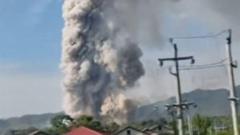
The blast in Shangli sent plumes of black smoke so high they could be seen from the neighboring counties. It looked like a dark finger pointing at the sky, accusing the heavens of negligence.
The Aftermath of the Silence
When the smoke cleared, the rescue teams moved in. But "rescue" is a generous term for what happens after a black powder explosion of this magnitude. They found twisted metal. They found scorched earth. They found shoes that had been blown clean off their owners' feet by the sheer force of the vacuum created by the heat.
Local officials quickly moved into the standard choreography of grief and damage control. They promised "thorough investigations." They suspended the licenses of nearby facilities. They spoke of "safety protocols" and "rectification."
But safety is expensive.
True safety requires reinforced blast walls, spark-proof flooring, automated mixing rooms, and a pace of labor that allows for constant vigilance. In the competitive world of export manufacturing, those costs are often the first to be trimmed. The "21 people" are the hidden tax on every cheap box of sparklers sold in a suburban parking lot halfway across the globe.
The tragedy of Shangli is not just that people died. It is that their deaths were predictable. When you stack tons of explosives in a shed and ask humans to handle them with their bare hands for pennies an hour, the explosion is not an accident. It is a mathematical certainty. It is a debt that eventually comes due.
The Weight of the Dust
By the following evening, the site was a graveyard of gray ash and charred timber. The families of the 21 gathered at the cordons. There is a specific kind of silence that follows a disaster in a small town. It isn't the absence of noise; it's the presence of a void. It’s the sound of twenty-one dinners that will never be eaten and twenty-one chairs that will remain empty.
The news cycle moved on. A headline, a few thousand clicks, and then the world’s attention drifted to the next crisis. But in the soil of Jiangxi, the sulfur remains. It lingers in the nostrils. It stains the clothes.
We live in a world connected by invisible threads of labor and risk. Every time we look up at a shimmering canopy of artificial stars, we are looking at the end product of a gamble. In Shangli, twenty-one people lost that gamble so the rest of us could have something beautiful to look at for three seconds before it fades into the dark.
The ash has settled now. The factory will likely be rebuilt, perhaps under a different name, perhaps with a new coat of paint over the old foundations. The trucks will eventually start rolling again, filled with boxes labeled "Danger" and "Flammable," headed for the ports.
The sky over Jiangxi is clear today. But the air still tastes like the things we choose to forget.