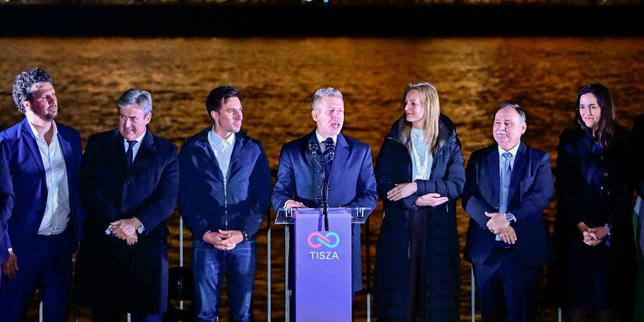
The sixteen-year grip of Viktor Orban on the Hungarian state has finally shattered. On April 12, 2026, the political order that defined Central Europe for nearly two decades reached its abrupt end. In a landslide victory that caught even seasoned observers off guard, the Tisza Party, led by political newcomer and former government insider Peter Magyar, secured a decisive mandate. This was not merely an electoral defeat for the Fidesz party; it was the total dismantling of an entrenched mechanism of power that had turned the country into a unique laboratory for illiberal governance.
The sheer scale of the result—a projected two-thirds parliamentary supermajority for Tisza—strips Fidesz of its ability to obstruct the transition of power. When the final ballots were tallied, it became clear that the long-standing strategy of mobilizing a loyal base through nationalist rhetoric and anti-Brussels grievances had lost its potency. For a nation that had become accustomed to constitutional engineering and the gradual capture of institutional levers, the outcome represents a fundamental reset.
The Anatomy of a Political Earthquake
To understand how this happened, one must look past the surface-level narratives of dissatisfaction. The Orban era was built on a specific, self-reinforcing model of state control. Through the systematic acquisition of media outlets, the distribution of public contracts to a tight-knit circle of allies, and the aggressive reform of the judiciary, the ruling party created a environment where the lines between partisan interest and national governance were effectively erased.
However, this architecture required constant validation through electoral success. The 2026 campaign exposed the vulnerabilities of that model. Economic stagnation, a healthcare sector in crisis, and the mounting pressure of frozen European Union funds created a reality that the government's well-oiled propaganda apparatus could no longer fully suppress. Magyar, a former Orban loyalist who broke with the ruling camp to launch his own movement, utilized his intimate knowledge of the system’s inner workings to dismantle its messaging from within.
His campaign did not rely on complex ideologies. It targeted the visceral frustrations of the electorate: corruption, the crumbling quality of public services, and the perceived isolation of Hungary on the world stage. By framing himself as a systemic challenger rather than just another opposition politician, he succeeded in bridging the divide between disillusioned voters who had stayed home in previous cycles and those who had long sought an alternative to the status quo.
A Mandate for Systemic Reform
Magyar now faces the formidable task of governing a nation where the opposition is not just a rival party, but a complex web of influence established over sixteen years. The supermajority in parliament grants him the legal authority to undo the constitutional amendments and cardinal laws that allowed Fidesz to cement its power. Yet, passing legislation is only the beginning.
The institutional decay of the past decade means that restoring the rule of law will be a grueling process. The civil service, the media, and the independent regulatory bodies are heavily populated by appointees whose loyalty lies with the previous administration. Cleaning house without precipitating a total paralysis of the state will require a level of political skill that Magyar has yet to prove on the executive stage. Furthermore, the economic reality is stark. Hungary is currently starved of billions in frozen EU funds, and the immediate priority of the new government will be to convince Brussels that the institutional safeguards are being genuinely restored.
There is also the matter of international alignment. While Orban spent years positioning Hungary as a bridge between the East and the West, cultivating ties with Moscow and, more recently, aligning himself with elements of the American conservative movement, Magyar has pledged a swift pivot toward European integration. This shift will be closely watched by leaders in Kyiv, Washington, and Brussels, all of whom have long been frustrated by Budapest’s tendency to block collective security initiatives.
The Illusion of a Clean Break
Analysts caution that a change in leadership does not equate to a total change in political culture. Magyar’s own background as a former Fidesz insider has fueled skepticism about his long-term commitments. While his manifesto emphasizes the restoration of democratic norms, his voting record in the European Parliament has occasionally shown a tactical alignment with his former colleagues on issues of agriculture, migration, and national interest.
Critics from both sides of the spectrum worry about what happens if the new government fails to deliver quick, tangible improvements to the average Hungarian’s life. If the cost of living remains high and the promised anti-corruption reforms become bogged down in legal bureaucracy, the momentum that carried Tisza to victory could evaporate just as quickly as it materialized. The danger is that a new regime, armed with the same supermajority tools that the previous one used to consolidate power, might find the temptation to utilize those same shortcuts too great to resist.
The transition period—the thirty days before the new parliament formally convenes—will be a test of character for both the incoming administration and the outgoing one. Fidesz still retains control over a massive network of local structures and media assets. The ability of the new government to neutralize these influence nodes without resorting to the very illiberal tactics it claims to despise will define the first chapter of this new era.
The mood in Budapest remains one of cautious, almost fragile optimism. The jubilant crowds that gathered along the Danube on Sunday night are not just celebrating a change in government; they are reacting to the relief of a long-held political stalemate coming to an end. Whether this represents a genuine movement toward a more pluralistic, transparent society, or merely a change in the identity of those holding the levers of the state, remains to be seen. The machine is broken, but the replacement is still being built.