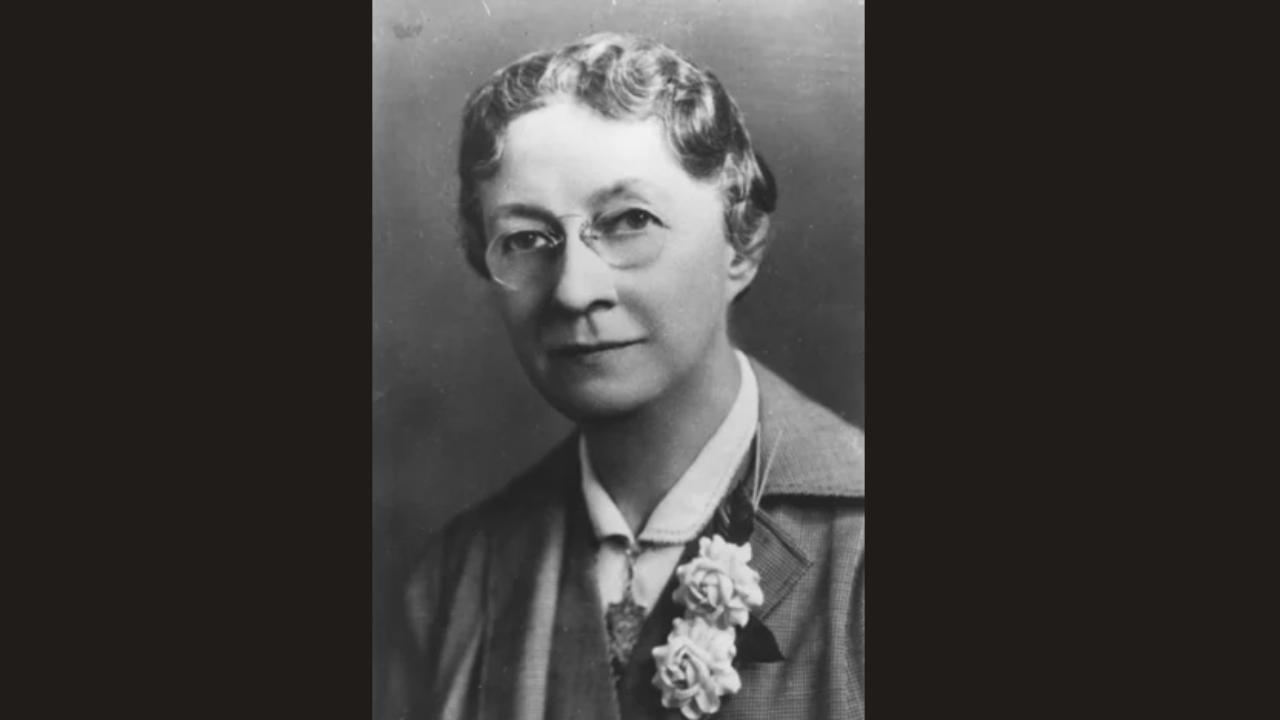
The modern global food supply chain operates on a single thermodynamic premise: microbial proliferation and enzymatic degradation scale exponentially with temperature, and breaking that curve requires continuous thermal control from harvest to consumption. Before 1905, American food distribution lacked both the empirical thresholds and the mechanical infrastructure to execute this control. Urbanization had decoupled food production from consumption by hundreds of miles, creating a systemic failure mode where perishable goods arrived at metropolitan markets in states of advanced putrefaction. Mary Engle Pennington solved this operational bottleneck not through legislative rhetoric, but by establishing the quantitative bacteriological, chemical, and thermal engineering standards that govern the modern cold chain.
Standard historical narratives reduce Pennington's career to a biographical triumph over institutional sexism at the University of Pennsylvania and the U.S. Department of Agriculture (USDA). That framing misses the operational reality of her contribution. Pennington was an industrial systems engineer disguised as a physiological chemist. When she assumed leadership of the USDA Food Research Laboratory in 1908, food preservation was governed by folklore, arbitrary storage timelines, and structurally defective refrigeration equipment. Her work replaced guesswork with deterministic protocols across four distinct domains: pathogen epidemiology in dairy, biochemical decay kinetics in poultry and eggs, thermodynamic optimization of rail transit, and domestic appliance engineering.
The Bacteriological Baseline and Milk Supply Sanitation
At the turn of the twentieth century, urban infant mortality in the United States correlated directly with seasonal spikes in ambient temperature. Unpasteurized, unrefrigerated milk transported from rural dairies to cities like Philadelphia acted as an optimal growth medium for Mycobacterium bovis, Salmonella, and Streptococcus species. Public health interventions failed because municipal inspectors lacked standardized metrics to distinguish safe milk from contaminated stock before distribution.
Pennington approached the Philadelphia milk supply crisis in 1904 through the Philadelphia Clinical Laboratory, which she founded to sell bacteriological testing services to physicians and dairies. Her intervention followed a strict diagnostic-to-protocol loop:
- Quantitative Microbial Profiling: Rather than relying on organoleptic inspection—smelling or tasting milk for sourness—Pennington instituted systematic plate counts to establish baseline bacterial loads per cubic centimeter. She demonstrated that milk could harbor lethal pathogen concentrations long before lactic acid fermentation altered its flavor profile.
- Vector Isolation: By sampling at sequential nodes along the supply chain—the farm, the milking pail, the transport can, the rail depot, and the retail storefront—she mapped the exact points of thermal and hygienic failure. The primary vector was not the cow, but unsterilized metal containers combined with transit temperatures exceeding 50 degrees Fahrenheit (10 degrees Celsius).
- Standard Operating Procedures (SOPs) for Dairies: Pennington drafted sanitary protocols for milk producers, mandating immediate post-milking cooling, steam sterilization of containers, and strict herd inspection.
When Harvey Washington Wiley recruited her to the USDA Bureau of Chemistry in 1905—bypassing civil service gender restrictions by registering her application under the initials "M.E. Pennington"—she scaled this localized diagnostic framework into federal regulatory architecture. Following the passage of the Pure Food and Drug Act of 1906, enforcement required legally defensible scientific thresholds. Pennington provided the empirical proof linking specific bacterial counts and storage temperatures to chemical decomposition, giving federal prosecutors the evidentiary standard needed to seize adulterated food shipments.
The Kinetics of Perishable Decay in Poultry and Eggs
Once appointed Chief of the Food Research Laboratory in 1908, Pennington confronted the most litigious and economically volatile sector of the American food industry: dressed poultry and shell eggs. Cold storage warehouses had emerged in the late nineteenth century, yet consumers and lawmakers viewed them with deep suspicion. Because warehouse operators routinely placed already-spoiling meat into cold storage to arrest visible decay, cold-stored food became synonymous with food poisoning. State legislatures proposed bills limiting cold storage duration to as little as thirty days, a regulatory blunt instrument that threatened to destroy seasonal food arbitrage and trigger winter urban food shortages.
Pennington recognized that time in storage was a secondary variable; the primary variables were initial microbial load, evisceration timing, and rate of core temperature reduction.
To prove this, she executed multi-year comparative studies tracking thousands of chickens and eggs from slaughterhouse to retail counter under controlled thermal regimes. Her findings dismantled conventional industry practices:
- The Evisceration Paradox: At the time, regulatory advocates demanded that poultry be eviscerated (drawn) immediately upon slaughter before shipping, assuming internal organs accelerated spoilage. Pennington's chemical and bacteriological assays proved the opposite under existing transit conditions. Breaking the abdominal cavity exposed sterile muscle tissue to environmental bacteria and airborne spores, while severing blood vessels accelerated oxidative rancidity. Undrawn poultry, if chilled immediately and kept dry, maintained structural and chemical integrity significantly longer than poorly washed drawn poultry.
- Dry-Chilling vs. Ice-Packing: Slaughterhouses traditionally submerged warm carcasses in tanks of melting ice water to lower body temperature, then shipped them packed in crushed ice. Pennington demonstrated that water immersion leached soluble proteins and flavor compounds, ruptured skin integrity, and cross-contaminated entire batches via waterborne bacteria. She engineered the dry-chilling protocol: hanging carcasses in mechanically cooled rooms maintained between 30 and 32 degrees Fahrenheit (-1 to 0 degrees Celsius) until internal core temperatures stabilized prior to packing in dry parchment-lined boxes.
- Egg Shell Permeability and Humidity Control: For shell eggs, Pennington quantified the rate at which moisture loss enlarges the air cell and weakens the vitelline membrane, allowing bacteria to penetrate the shell pores. She established the precise relative humidity thresholds (80 to 85 percent) and temperature floors (29 to 31 degrees Fahrenheit) required to hold eggs for up to nine months without chemical degradation, rendering arbitrary legislative storage caps obsolete.
Thermodynamic Optimization of the Refrigerated Railcar
Establishing optimal warehouse temperatures solved only stationary storage; moving perishables across continental distances remained a massive failure point. By 1910, approximately 100,000 refrigerated boxcars operated on American railroads, yet spoilage rates in transit routinely exceeded 15 to 25 percent during summer months.
Pennington conducted an exhaustive engineering audit of the U.S. rail fleet, riding inside freight cars with thermometers, hygrometers, and air-flow anemometers across transcontinental routes. She identified three systemic design flaws in contemporary ice-bunker railcars:
- Inadequate Thermal Insulation: Most cars utilized thin layers of hair felt or wood shavings that compressed over time, leaving uninsulated air gaps at the roofline where solar radiation heat gain was highest.
- Stagnant Convection Loops: Ice bunkers located at either end of the car cooled the air immediately adjacent to the bulkheads, but without floor racks or baffled bulkhead openings, cold dense air pooled at the bottom center of the car while warm air trapped near the ceiling cooked the top tiers of cargo.
- Inefficient Refrigerant Geometry: Solid block ice packed tightly against bunker walls minimized surface area, restricting the rate of heat absorption.
Working with railroad engineers and the U.S. Railroad Administration during World War I, Pennington authored the specifications for the United States Standard Refrigerator Car (adopted in 1918). Her design introduced three mandatory structural modifications that became the industry baseline:
- Basket Bunkers: Replacing solid box bunkers with wire-mesh baskets separated from the car walls by two-inch air spaces, exposing all four sides of the ice mass to circulating air and increasing heat transfer efficiency.
- Insulated Bulkheads: Installing solid, insulated partitions in front of the ice bunkers with a 12-inch opening at the top and a 14-inch opening at the bottom, forcing a continuous natural convection cycle—warm air drawn in at the ceiling, chilled over the ice, and discharged beneath the cargo.
- Slatted Floor Racks: Raising cargo four inches off the solid car floor on slatted wooden racks, creating an unobstructed plenum for cold air distribution along the entire length of the car.
Combined with standardized pre-cooling protocols—forcing chilled air through loaded cars at the packing house before departure—Pennington's railcar architecture cut in-transit spoilage losses to negligible levels and allowed agricultural hubs in California and the Midwest to supply East Coast cities year-round.
Commercialization and the Domestic Cold Chain Bottleneck
In 1919, Pennington resigned from the USDA to join the American Balsa Company, managing the manufacturing of balsa-wood insulation panels for commercial refrigeration units. In 1922, she established her own independent consultancy in New York City, advising food processors, cold storage conglomerates, and appliance manufacturers.
Her strategic focus shifted to the final, unengineered link in the cold chain: the residential kitchen. Even when food arrived at retail grocers in pristine condition via dry-chilled warehouses and standard refrigerator cars, household iceboxes operated at ambient temperatures between 50 and 60 degrees Fahrenheit—warm enough to reactivate dormant psychrotrophic bacteria within hours.
As director of the Household Refrigeration Bureau for the National Association of Ice Industries from 1923 to 1931, Pennington applied the exact same thermodynamic and bacteriological rigor to residential boxes that she had applied to freight cars:
- Thermal Zoning and Airflow Mapping: She tested commercial iceboxes in laboratory conditions, mapping internal temperature gradients. She proved that placing ice in a side compartment rather than an overhead compartment created dead zones, and established the rule that residential refrigeration must maintain a consistent temperature below 45 degrees Fahrenheit in the milk compartment and below 50 degrees Fahrenheit in general storage.
- Insulation Standardization: She pressured manufacturers to replace cardboard and sawdust linings with compressed corkboard, publishing transparent thermal conductivity ratings so consumers could evaluate box efficiency.
- Mass Technical Literacy: Pennington authored and distributed over one million technical bulletins to home economics departments, extension agents, and consumers, detailing the physics of convective cooling, proper food placement within thermal zones, and the biological consequences of temperature fluctuations.
When mechanical vapor-compression domestic refrigerators displaced iceboxes in the 1930s, manufacturers adopted Pennington's thermal zoning, insulation standards, and shelf-spacing geometries directly into electric appliance designs.
Limitations and Systemic Vulnerabilities of the Pennington Model
While Pennington's cold chain architecture eliminated acute microbial spoilage and enabled modern mass food distribution, the system carries structural trade-offs and inherent vulnerabilities that continue to challenge food supply operators:
- Energy Intensity and Carbon Load: Continuous mechanical refrigeration across processing plants, long-haul transport, retail display cases, and domestic units demands immense baseline electrical and fossil-fuel energy. The Pennington model assumes cheap, uninterrupted energy; any grid disruption or fuel supply shock causes immediate, catastrophic inventory loss across the chain.
- The Psychrotrophic Selection Pressure: Holding food continuously between 32 and 40 degrees Fahrenheit suppresses mesophilic pathogens like Salmonella, extending shelf life by weeks. However, extended cold storage creates an ecological niche for cold-tolerant pathogens such as Listeria monocytogenes and Yersinia enterocolitica, which continue to replicate slowly at refrigeration temperatures. Longer supply chains provide these organisms more time to reach infectious doses before consumption.
- Sensory and Nutritional Homogenization: Optimizing agricultural varieties for cold-chain durability—thick skins, high starch-to-sugar ratios, delayed ripening—systematically sacrifices volatile flavor compounds and micronutrient density. Moreover, extended cold storage masks the chronological age of food, creating information asymmetry where consumers cannot assess true freshness through sensory cues.
Strategic Application for Modern Cold Chain Operators
Pennington's career demonstrates that supply chain resilience is achieved not by adding reactive end-of-line inspections, but by enforcing strict thermal and hygienic control at the point of origin. For contemporary logistics leaders, agricultural producers, and food technology developers managing perishable networks, three operational imperatives follow directly from her methodology:
- Front-Load Thermal Extraction: Capital expenditure in cooling infrastructure yields the highest return at the first mile. Removing field heat or carcass body heat within minutes of harvest or slaughter reduces downstream refrigeration energy requirements and halts exponential bacterial growth before transport begins.
- Instrument the Interstices, Not Just the Nodes: Monitoring warehouse temperatures while ignoring loading docks, staging areas, and last-mile delivery vans creates blind spots where brief thermal excursions ruin product integrity. Deploy continuous, item-level time-temperature indicators (TTIs) and real-time telemetry across every handoff point.
- Shift from Static Expiration Dates to Dynamic Shelf-Life Modeling: Printed "use-by" dates replicate the flaw of early twentieth-century static cold storage laws—they measure time while ignoring thermal history. Integrate sensor-derived temperature curves with predictive microbial growth models to dynamically route inventory based on remaining shelf life, directing shorter-life batches to local markets and reserving thermally pristine batches for long-haul distribution.