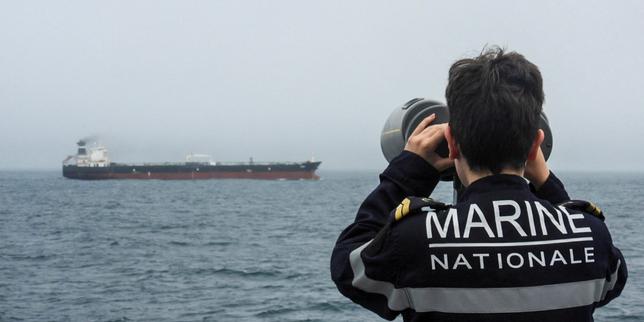
The steel hull of a modern oil tanker is thick, but it vibrates with the anxiety of the crew inside. Out in the grey, chopping swell of the Atlantic Ocean, the Tagor rode low in the water. It was just another commercial vessel cutting through the international shipping lanes, carrying thousands of tons of crude oil. Until the French Navy appeared on the horizon.
Command commands. Helicopters hover. The mechanics of a modern maritime interception are loud, swift, and terrifying for those on the receiving end. Within hours, the Tagor was no longer a free agent of commerce. It was boarded, seized, and redirected under French military escort.
In Paris, the move is framed as a triumph of environmental vigilance and international law. In Moscow, it is called piracy.
Between these two irreconcilable narratives sits a crew of merchant mariners, caught in the gears of a escalating shadow war for control of the world’s oceans. This is not just a dispute over a single ship. It is a flashpoint in a quiet, high-stakes conflict over who owns the rules of the sea.
The Invisible Network of the Ghost Fleet
To understand why a French warship would intercept a tanker in the middle of the Atlantic, you have to look at the invisible lines mapping the global economy.
Since the tightening of global sanctions, a massive, parallel maritime economy has emerged. Shipping experts call it the shadow fleet. These are aging vessels, often registered under flags of convenience—countries like Panama, Liberia, or Gabon—that operate under layers of shell companies. They exist to move oil from restricted nations to hungry markets, completely bypassing the traditional Western banking and insurance ecosystems.
Consider the reality of operating one of these ships.
[Traditional Shipping] ─── Registered in EU ─── Insured by London ─── Visible AIS Tracking
[Shadow Shipping]      ─── Shell Company    ─── Unknown Insurer   ─── Dark/Spoofed Signals
A captain on a shadow tanker operates in a state of perpetual legal limbo. The standard safety nets of international maritime trade do not apply to them. If the engine fails, there is no corporate headquarters in Rotterdam or London rushing to send a salvage tug. If they are boarded, their defense relies not on standard maritime lawyers, but on the geopolitical weight of the superpowers backing their cargo.
The French authorities claimed the Tagor posed an imminent risk. They cited safety violations and potential environmental hazards, a justification used to law-enforce maritime safety under international conventions. When a vessel's ownership is opaque and its insurance is questionable, European coastal states view it as a ticking ecological time bomb. A single spill could devastate miles of coastline.
The Law of the Sea vs. The Law of Might
Russia’s reaction was immediate and fierce. The Kremlin declared the boarding entirely illegal, an act of overreach that violates the sacred principle of freedom of navigation on the high seas.
International maritime law is built on a delicate consensus: the United Nations Convention on the Law of the Sea (UNCLOS). Under UNCLOS, a ship on the high seas is generally subject only to the jurisdiction of the state whose flag it flies. Stepping onto that deck without permission is, legally speaking, stepping onto foreign territory.
   ┌────────────────────────────────────────────────────────┐
   │                  THE HIGH SEAS DILEMMA                 │
   ├───────────────────────────┬────────────────────────────┤
   │      FRENCH POSITION      │      RUSSIAN POSITION      │
   ├───────────────────────────┼────────────────────────────┤
   │ • Environmental safeguard │ • Violation of sovereignty │
   │ • Inspection necessity    │ • Act of maritime piracy   │
   │ • Enforcement of safety   │ • Breach of UNCLOS rules   │
   └───────────────────────────┴────────────────────────────┘
But Western nations are increasingly utilizing environmental and safety regulations as a tool to disrupt the shadow fleet. It is a legal gray zone. If a coastal state believes a ship is unseaworthy or polluting, they claim the right to intervene.
The real tension lies in the definition of risk.
Is a ship a threat simply because its paperwork is hidden behind five layers of Siberian and Cypriot holding companies? The French say yes. The Russians say that using safety regulations to hunt political targets destroys the very foundation of international trade.
Blood, Rust, and Bureaucracy
Step away from the diplomatic cables and stand on the bridge of a seized vessel.
The atmosphere is thick with heavy fuel oil and stale coffee. For the mariners on board, the geopolitics of Paris and Moscow are distant abstractions. Their immediate reality is a group of armed foreign sailors occupying their mess hall, inspecting their logs, and questioning their credentials.
The maritime industry has always been a refuge for those comfortable with isolation, but the rise of the shadow fleet has turned the profession into a minefield. Crews often don't know who ultimately owns the vessel they are navigating. They receive coordinates, they load cargo, and they sail.
When a state decides to make an example of a ship like the Tagor, the crew becomes bargaining chips. They are stuck in port, their passports confiscated, waiting for diplomats who have never smelled marine diesel to argue over their fate.
This interception signals a shift in strategy. Western nations are no longer just squeezing the financial pipes; they are physically stopping the flow. By targeting the physical infrastructure of the shadow fleet, they are forcing a dangerous question: How far will Moscow go to protect its floating supply lines?
The Cracking Fabric of Global Commerce
The ocean used to be a place where, despite intense political rivalries, certain rules were absolute. A merchant ship was left alone unless it was explicitly smuggling weapons or engaged in piracy.
That consensus is fracturing.
If Western nations continue to board ships based on regulatory suspicions, and adversarial nations view those boardings as acts of war, the high seas will become balkanized. Insurance rates for standard commercial shipping will skyrocket. Route planning will become defensive, avoiding vast swathes of the ocean where a sudden shift in political winds could result in a military boarding.
We are entering an era of friction. The globalized, smooth supply chains that defined the last thirty years are being replaced by fragmented zones of influence. The seizure of the Tagor is a warning shot to every operator running dark. It proves that the ocean is no longer a hiding place.
The Tagor now sits anchored, its engines idling, surrounded by the cold waters of an Atlantic that feels smaller and more dangerous than it did a week ago. The diplomats will write their briefs, and the lawyers will cite their precedents, but out on the water, the steel remains cold, the future remains uncertain, and the rules of the sea are being rewritten by the loudest guns.