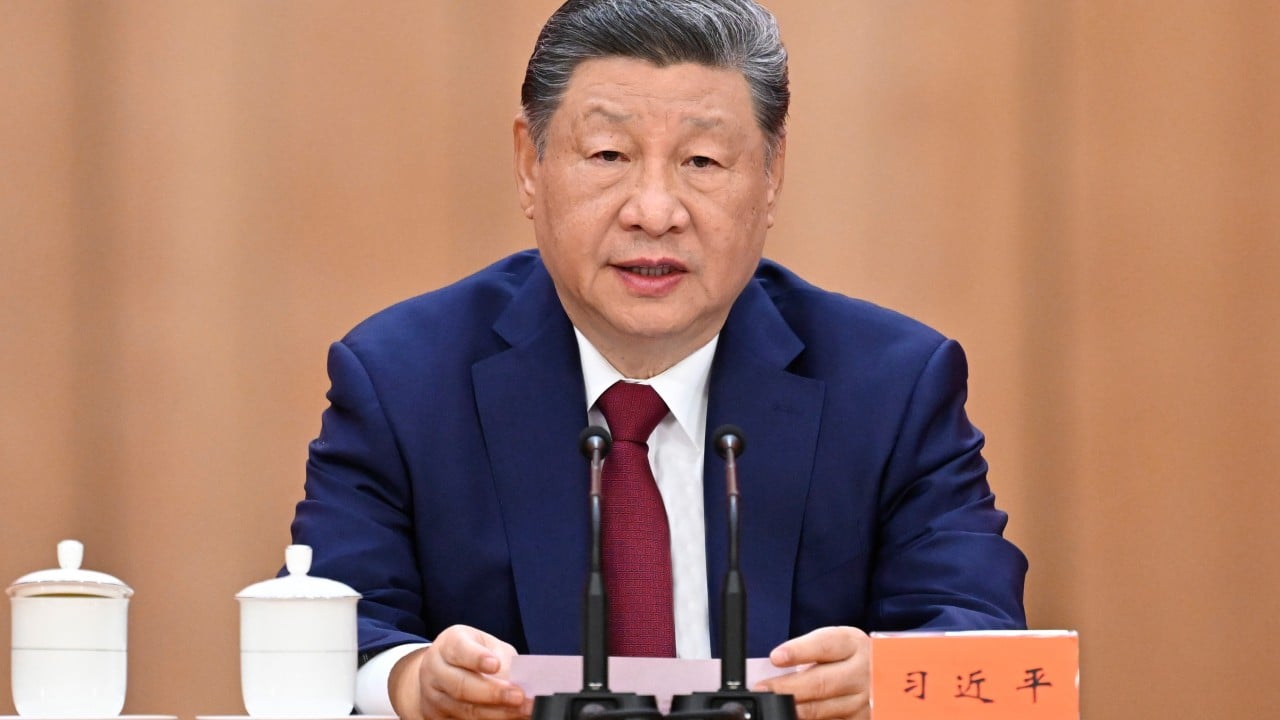
The velvet curtains in the Jingxi Hotel do not merely block the autumn chill of Beijing; they swallow sound.
Every few years, roughly three hundred and seventy of the most powerful men and women in the world pass through the heavy doors of this military-run compound in western Beijing. They leave their phones outside. They leave their entourages behind. And when they sit down in rows of identical, high-backed chairs beneath a massive golden hammer and sickle, the outside world receives only a trickle of carefully calibrated state communiqués. For a different view, read: this related article.
To a casual observer scrolling past a headline in London, New York, or Singapore, the opening of a Central Committee plenum looks like bureaucratic theater. Dry. Predictable. An exercise in ideological housekeeping where China’s Communist Party gathers to endorse discipline and pledge loyalty to General Secretary Xi Jinping.
That reading misses the human heartbeat—and the quiet terror—of the room. Further insight regarding this has been shared by USA Today.
Because behind those closed doors, a plenum is never just an administrative meeting. It is a pressure cooker of personal survival, institutional memory, and the unspoken question that governs every career in modern China: What happens when obedience becomes the only currency that holds its value?
The Weight of a Signature
To understand the invisible stakes of a plenum, step away from the Great Hall of the People and consider a hypothetical mid-level municipal planner—let’s call him Chen—sitting at a desk in an industrial province a thousand miles south of Beijing.
Chen is not a firebrand ideologue. He is forty-four, wears wire-rimmed glasses, and spends his mornings reviewing zoning permits and debt restructuring spreadsheets for local state-owned enterprises. For twenty years, Chen operated under an unwritten social contract that defined China’s post-Mao boom: deliver economic growth, keep the streets quiet, and Beijing will largely leave you alone to improvise.
That contract is dead.
When state media reports—as Xinhua and official Party outlets consistently frame these gatherings—that the Central Committee is opening a plenary session centered on strict Party discipline and political loyalty to the core leadership, Chen feels it in his stomach before he ever reads a policy document.
Why? Because in China’s governance system, "discipline" is not an abstract virtue. It is an active mechanism of inspection, audit, and purge. According to data released by the Central Commission for Discipline Inspection (CCDI) over the past decade, millions of officials across every tier of government have been investigated or disciplined since Xi Jinping launched his sweeping anti-corruption campaign in 2012. Senior ministerial figures, defense officials, and provincial governors have vanished from public view months before a plenum officially ratifies their expulsion.
For Chen, a plenum focused on loyalty means the criteria for survival have shifted from competence to alignment.
If he approves an infrastructure loan that goes bad, it is no longer just a financial miscalculation; under heightened disciplinary scrutiny, it can be interpreted as a failure to faithfully execute central directives. So Chen hesitates. He requests three more signatures. He waits for an explicit signal from above before moving a single yuan. Multiply Chen’s hesitation by ten million civil servants, and you begin to see how a closed-door meeting in Beijing directly shapes the pulse of the world’s second-largest economy.
The Architecture of a Plenum
Politically, a "plenum"—short for plenary session—is a full meeting of the Central Committee of the Chinese Communist Party, a body elected every five years at the Party Congress. Think of the Party Congress as a shareholder convention that sets the broad five-year charter, while the Central Committee acts as the board of directors meeting intermittently between conventions to handle major personnel shifts, economic blueprints, and ideological corrections.
Historically, numbered plenums carry distinct rhythms. The first and second plenums immediately following a Party Congress handle leadership appointments and state roles. The third plenum has traditionally been associated with major economic reforms—most famously Deng Xiaoping’s 1978 Third Plenum, which opened China’s economy to the world. Later plenums, such as a fourth, fifth, or sixth, increasingly turn inward toward governance, long-term five-year development plans, and Party rectification.
Political analysts and China watchers, including scholars at institutions like the Asia Society Policy Institute and the Brookings Institution, have repeatedly noted how the center of gravity in these sessions has evolved over the past decade. Where earlier eras treated Party discipline as a guardrail around economic experimentation, the modern era treats political unity as the prerequisite for everything else—from technological self-reliance to national security.
Consider what happens next when a plenum elevates loyalty to the center of the agenda.
First, it formalizes the personnel reality. Between plenums, high-profile figures may be quietly sidelined or placed under investigation. The plenum is the constitutional mechanism by which the Central Committee formally strips a fallen member of their seat and elevates alternates to fill the void. Watching who is absent from the televised pan-shots of the Jingxi Hotel ballroom has become one of the most closely scrutinized rituals in international diplomacy.
Second, it locks in the ideological vocabulary. In Chinese politics, words are coordinates. When official readouts emphasize the "Two Establishes" and the "Two Upholds"—formulations that anchor the Party’s authority directly in Xi Jinping’s status as the core leader and his political thought as the guiding doctrine—every provincial newspaper, university department, and state-owned bank must immediately mirror that exact phrasing. Failure to echo the cadence signals drift.
The Paradox of Absolute Control
I remember standing outside a government compound in northern China during an earlier political campaign, watching a row of elderly retirees sweep fallen poplar leaves from the pavement beneath a freshly painted red banner. The banner proclaimed absolute unity with the Party center. Inside the compound, a local bureaucrat I knew confided over lukewarm green tea that nobody in his office had slept properly for three weeks. They were rewriting five years of meeting minutes to ensure every decision cited the correct central speeches.
"We aren't building anything right now," he told me quietly, glancing toward the open door. "We're just proving we never disagreed."
That moment captures the central tension that makes Beijing’s pursuit of total discipline so compelling—and so fraught.
Think of a modern governance system like an intricate suspension bridge. In an ideal design, high tension in the main cables gives the bridge strength, allowing it to carry immense weight across turbulent water. That is the case Beijing makes for centralized discipline: facing geopolitical headwinds, a slowing property sector, demographic decline, and intense technological rivalry with the United States, a fragmented bureaucracy cannot move quickly or decisively. Without ironclad discipline, local officials pursue vanity projects, hoard debt, and ignore environmental or safety mandates. From the perspective of Zhongnanhai—the leadership compound in central Beijing—strict loyalty is the antidote to bureaucratic paralysis and corruption.
Yet every structural engineer knows what happens when you tighten a suspension bridge’s cables beyond their elastic tolerance. The bridge stops swaying with the wind, which looks reassuring on a calm day. Until a crosswind hits, and without flexibility to absorb the shock, steel snaps.
This is the vulnerability that even seasoned observers of Chinese politics struggle to measure from the outside. When loyalty becomes the supreme metric, information stops flowing upward cleanly. Bad news is softened, delayed, or buried because nobody wants to be the messenger who contradicts the optimism required by the center.
According to economic researchers who track local Chinese fiscal data, discrepancies between provincial growth figures and underlying indicators like electricity usage or freight volume often widen during periods of intense political campaigns. Local officials, desperate to demonstrate both ideological zeal and administrative success, curate reality to fit the mandate.
Why the Outside World Should Care
It is tempting to view a Communist Party plenum as an internal drama—a distant palace intrigue with little bearing on daily life outside China’s borders.
That comfort is an illusion.
When Beijing prioritizes political discipline and centralized command, the ripple effects travel along every global supply chain and diplomatic channel. If local Chinese officials become risk-averse, domestic consumption and private-sector confidence inside China tend to cool, prompting Beijing to lean heavier on state-directed manufacturing and exports to hit its growth targets. Those exports—from electric vehicles and solar panels to steel and industrial chemicals—land directly on the docks of Rotterdam, Long Beach, and Santos, triggering trade disputes, tariffs, and industrial policy shifts around the world.
At the same time, a leadership circle defined by strict personal loyalty operates with fewer internal dissenting voices during moments of international crisis. Whether navigating tensions in the Taiwan Strait, managing maritime standoffs in the South China Sea, or calibrating economic ties with Moscow and Brussels, decisions made inside the Jingxi Hotel are increasingly concentrated at the very top.
There is also a quieter, deeply human cost playing out inside China’s universities, newsrooms, and tech companies. For a younger generation of Chinese engineers, entrepreneurs, and scholars—many educated abroad and fluent in the language of global innovation—the tightening of ideological discipline narrows the space for open inquiry. Innovation thrives on questioning orthodoxy; political discipline demands defending it. Balancing those two opposing forces is the defining tightrope walk of China’s current era.
Beneath the Banner
The cameras inside the Jingxi Hotel eventually pan back, capturing the synchronized applause as the plenary communiqué is adopted unanimously. On the evening broadcast of Xinwen Lianbo, the anchor’s voice is steady, resonant, and completely devoid of doubt. To the outside world, the message is a monolith: unbroken unity, unwavering discipline, absolute alignment.
Yet thousands of miles away, in a fluorescent-lit provincial office, Chen closes the news browser on his computer. He picks up a heavy black fountain pen, hovers it over a stack of unsigned municipal development permits, and slowly sets the cap back on.


