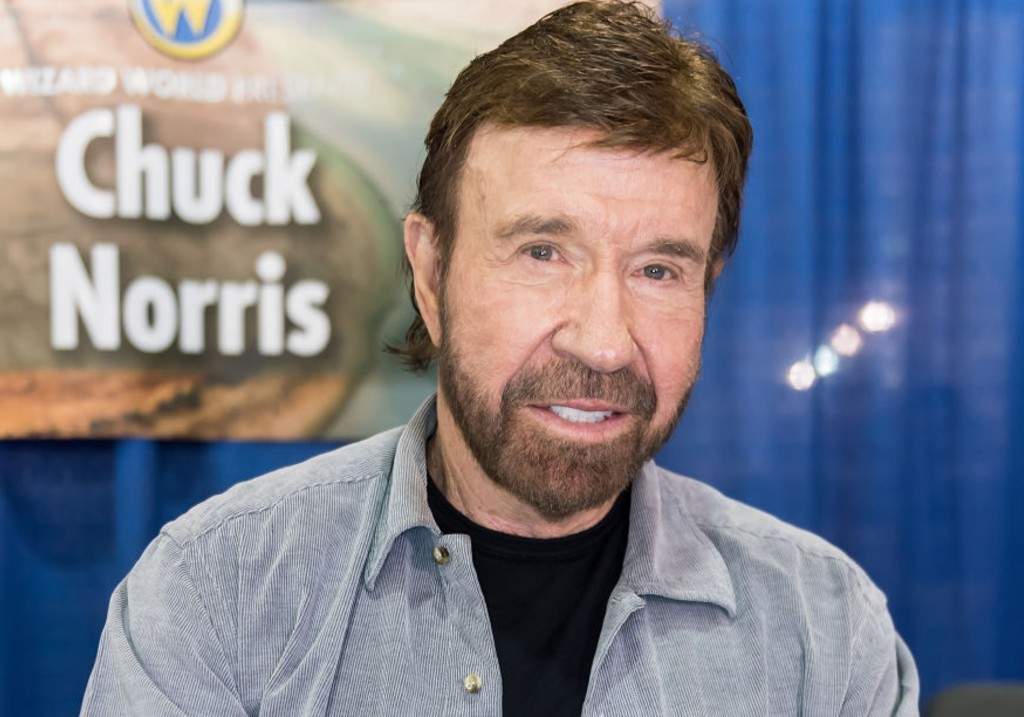
Chuck Norris is alive. Despite a recurring wave of social media posts, "breaking news" banners, and frantic searches claiming the martial arts legend passed away at 86, the actor remains in good health. He is currently 86 years old—having been born on March 10, 1940—but the reports of his demise are nothing more than a sophisticated blend of clickbait architecture and the internet's obsession with a man who has become more meme than myth.
The rumor mill thrives on the fact that Norris occupies a unique space in the cultural psyche. He is the "invincible" man. When a headline suggests that the one person who supposedly "counted to infinity twice" has finally met his match, people click. They don't click because they expect it to be true; they click because the irony is too profitable for scammers to ignore. This isn't just a simple case of mistaken identity or a celebrity death scare. It is a case study in how digital platforms weaponize nostalgia and the human fear of losing a childhood icon to drive traffic to dubious websites. For a deeper dive into this area, we recommend: this related article.
Anatomy of a Celebrity Death Hoax
The current cycle of misinformation regarding Norris follows a predictable, yet effective, pattern. Usually, a post appears on a platform like Facebook or X (formerly Twitter). It uses a black-and-white photo of the actor, often wearing his signature Stetson or a karate gi. The caption is vague, using words like "gone" or "tribute" to bypass automated fact-checking filters that might flag the word "dead" more quickly.
These posts are designed to trigger an emotional response. Before the brain can engage its critical thinking faculties, the finger has already pressed the link. Once redirected, the user often finds themselves on a site cluttered with aggressive advertisements, "survey" pop-ups, or even malware. This is the "churn and burn" model of digital journalism. The creators of these sites know the story is false. They simply do not care. By the time a reputable news outlet issues a correction, the scammers have already collected their ad revenue and moved on to the next target. To get more information on this topic, in-depth coverage can also be found on The New York Times.
Norris has been a frequent target of this specific brand of malice for over a decade. In 2012, 2017, and again in 2020, similar stories went viral. Each time, the details change slightly—sometimes it is a heart attack, other times a "training accident"—but the result is the same. The "Texas Ranger" has to once again prove his existence by making a public appearance or posting a video on his official social media channels.
The Cultural Weight of the Walker Texas Ranger Legacy
To understand why a Chuck Norris death hoax carries so much weight, one has to look at the transition of his career from 1970s karate champion to 1990s television titan. Walker, Texas Ranger ran for eight seasons on CBS. It wasn't just a show; it was a moral compass for a specific demographic of American viewers. Cordell Walker represented a brand of stoic, uncomplicated justice that felt increasingly rare in a shifting media landscape.
Norris brought his real-world martial arts credentials to the screen. He wasn't just an actor playing a tough guy. He was a black belt who had fought the likes of Joe Lewis and Bill "Superfoot" Wallace. When he fought Bruce Lee in Way of the Dragon, it became the gold standard for cinematic martial arts. This foundation of genuine physical prowess provided the bedrock for the "Chuck Norris Facts" that exploded on the internet in the mid-2000s.
These "facts"—satirical exaggerations of his strength—redefined his career for a younger generation. Suddenly, he wasn't just the guy your dad watched on Saturday nights. He was the man who "ordered a Big Mac at Burger King and got one." This shift from actor to folk hero made him seemingly immortal in the eyes of the public. The idea that a man who can "slam a revolving door" could die of natural causes at 86 feels like a glitch in the simulation. That is the psychological hook scammers exploit.
The Business of Fake Grief
There is a dark economy behind the "Chuck Norris dead at 86" headlines. Investigative looks into the origins of these hoaxes often lead to "content farms" located in Eastern Europe or Southeast Asia. These operations use automated tools to monitor trending names. When a celebrity reaches a certain age or hits a milestone birthday, the "death" templates are pre-loaded.
Revenue Through Rage and Regret
The monetization works through several layers:
- Ad Arbitrage: The hoaxer buys cheap ads on social media to promote the "news." They pay 2 cents per click and send the user to a page that earns them 5 cents in ad impressions.
- Data Harvesting: Many of these links lead to "tribute" pages that ask users to sign a guestbook using their email or social media login. This data is then sold to third-party marketing firms.
- Engagement Farming: Even when people comment to say "This is fake," the algorithm sees high engagement. The platform then shows the post to even more people, assuming it is a "hot" topic.
This cycle turns a false report into a self-sustaining monster. The more people debunk it in the comments, the further the lie travels. It is a paradox of the modern internet. Truth is often slower than the lie because truth requires verification, while the lie only requires a "Post" button.
Physical Reality vs. Digital Perception
In reality, Chuck Norris has spent his recent years focusing on his family and his health. He famously stepped away from a significant portion of his acting career to care for his wife, Gena O'Kelley, following complications from medical treatments. This transition from "action star" to "devoted husband" added a layer of human vulnerability to his public persona that the memes often ignore.
His longevity is not a supernatural feat but a result of a lifetime of discipline. He continues to advocate for fitness through his Kickstart Kids foundation, which uses martial arts to teach character to middle schoolers. While the internet treats him as a caricature of toughness, those who work with him describe a man deeply concerned with legacy and the tangible impact of his work on the youth.
The obsession with his death is, in many ways, a refusal to accept the aging process of our cultural landmarks. When icons of the 70s and 80s reach their mid-80s, the public experiences a form of collective anxiety. We are watching the transition of an era.
The Mechanism of Verification in a Post-Truth Era
If you see a headline claiming a major celebrity has died, the first step is never the link itself. In a healthy information ecosystem, the "death of a legend" is verified by legacy wire services like the Associated Press or Reuters within minutes. If the only source for a Chuck Norris death report is a site you’ve never heard of or a "breaking" tweet from an unverified account, it is a hoax.
The problem persists because the human brain is wired for story over statistics. A story about a hero falling is a narrative we've been conditioned to follow since the days of Greek tragedy. We are suckers for a dramatic ending. However, the reality of Chuck Norris is much more grounded. He is a man who transitioned from a world of physical combat to a world of digital mythology, and he is still here to see it happen.
Stop clicking on the black-and-white photos. Stop sharing the "RIP" posts without checking a primary source. Every click funds the next hoax, and every share forces an 86-year-old man to remind the world that he hasn't checked out yet. The next time you see a claim that Chuck Norris is dead, remember the one "fact" that actually holds up: Death once had a near-life experience with Chuck Norris.
Verify the source before you mourn a man who is still busy training the next generation.