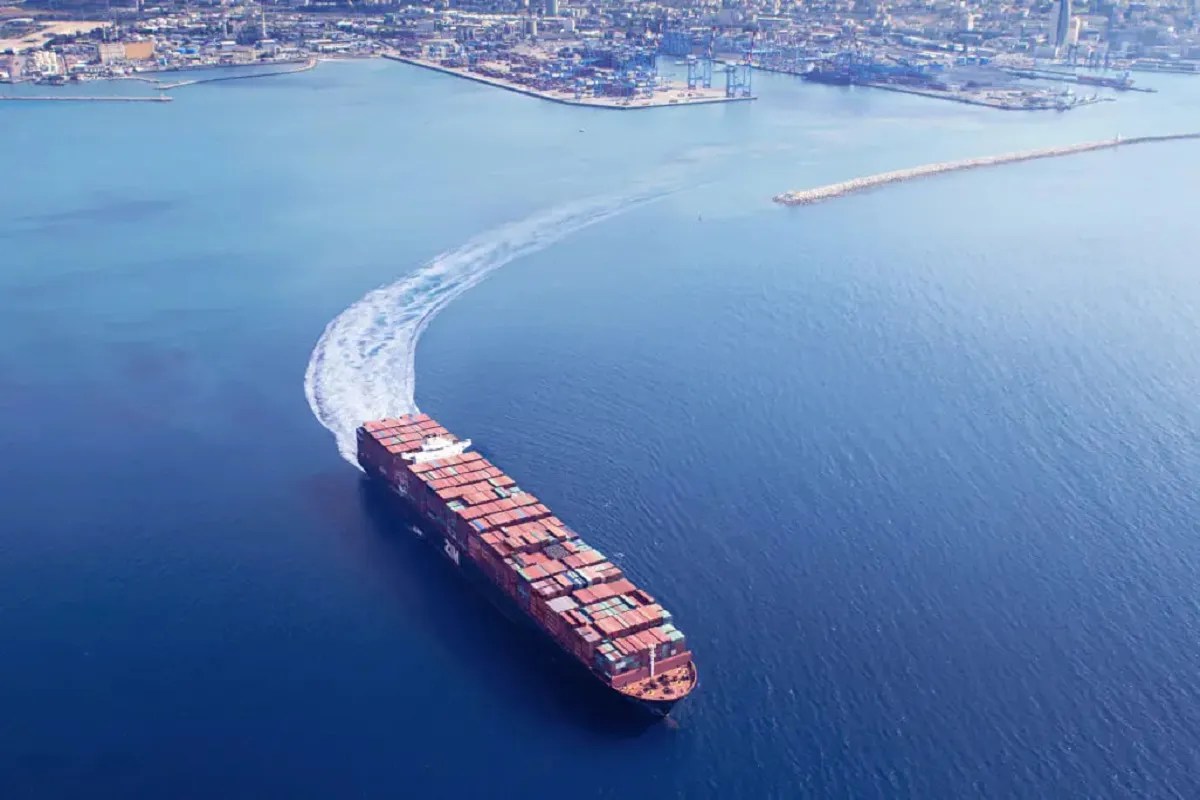
Washington is shifting its heavy-handed maritime focus from the volatile Persian Gulf toward the narrow, crowded waters of the Malacca Strait. This isn't a mere change in patrol routes; it is a fundamental realignment of global energy security. For India, this move is both a shield and a potential cage. While the U.S. aims to contain Chinese expansionism, New Delhi finds itself sitting on the trigger of the world’s most dangerous economic valve. If the Strait closes, 40 percent of global trade vanishes overnight.
The End of the Hormuz Era
For decades, the Strait of Hormuz was the undisputed center of the geopolitical universe. Every tremor in Iran sent oil prices screaming. But the math has changed. The United States is no longer the desperate customer of Middle Eastern crude; it is a net exporter. Meanwhile, the Indo-Pacific has become the engine of global consumption. The Malacca Strait, a 500-mile funnel between Malaysia, Indonesia, and Singapore, is now the primary artery for the lifeblood of the Eastern economies.
China imports nearly 80 percent of its energy through this narrow gap. It is their "Malacca Dilemma," a term coined by former President Hu Jintao that still haunts the Politburo. By increasing its presence here, the U.S. isn't just protecting trade; it is placing a hand on the throat of the Chinese economy.
India as the Unintended Gatekeeper
Geography is a cold master. India’s Andaman and Nicobar Islands sit like a stationary aircraft carrier at the western entrance of the Malacca Strait. This gives New Delhi the physical capability to monitor, and if necessary, block every ship entering the waterway.
The U.S. knows this.
The strengthening of the "Quad" (U.S., India, Japan, Australia) is designed to turn these islands into a sophisticated surveillance hub. We are seeing a massive upgrade in "Maritime Domain Awareness." This is a sanitized term for knowing exactly which ship is carrying what, where it is going, and how to stop it without firing a shot.
For India, the benefit is clear. It gains high-end American sensor tech and a seat at the table of global power. The risk, however, is being dragged into a conflict that isn't its own. If the U.S. decides to "sanction" or block Chinese vessels in the Malacca Strait during a Taiwan contingency, India becomes the front line.
The Logistics of a Siege
The Malacca Strait is a logistical nightmare. At its narrowest point, the Phillips Channel, it is only 1.7 miles wide. It is shallow, prone to haze from Indonesian forest fires, and infested with localized piracy.
When the U.S. Navy talks about "monitoring" this area, they aren't just talking about ships. They are talking about a multi-layered net of underwater sensors, drone swarms, and satellite integration.
- P-8I Neptune Aircraft: India’s fleet of Boeing-made sub-hunters is already coordinating with U.S. assets. They aren't just looking for ships; they are mapping Chinese submarine routes.
- The Deep Sea Cable War: Much of the world's internet traffic runs along the seabed of the Strait. Controlling the surface is only half the battle.
- The Tanker Surge: The sheer volume of traffic means any "interdiction" creates a massive backlog. A three-day blockage in Malacca would cause a fuel crisis in Japan and South Korea within a week.
China’s Expensive Escape Room
Beijing isn't sitting still while the U.S. and India tighten the noose. They are spending hundreds of billions on the "Belt and Road Initiative" to bypass the Malacca Strait entirely.
The China-Pakistan Economic Corridor (CPEC) and the pipelines through Myanmar are designed to move oil from the Indian Ocean directly into Western China by land. This is an admission of vulnerability. Moving oil by pipe or truck is significantly more expensive than by sea. Every dollar China spends on these bypasses is a dollar diverted from its naval budget, which serves the U.S. strategy of economic exhaustion.
Then there is the Kra Canal project in Thailand. For over a century, people have dreamed of cutting a canal through the Malay Peninsula to bypass Malacca. China has pushed for this, but the geopolitical pressure from the U.S. and the internal politics of Thailand have kept the shovels out of the ground.
The Myth of Neutrality
Many in the Indian establishment argue for "Strategic Autonomy." They want the benefits of the U.S. partnership without the baggage of an alliance. This is becoming a fantasy.
The Malacca Strait is too small for three masters.
As the U.S. moves its most advanced littoral combat ships and underwater surveillance systems into the region, India is being forced to choose. Silence is seen as consent by Washington and as hostility by Beijing. The "Look East" policy has evolved into an "Act East" policy, but the next phase might be "Defend East."
The Subsurface Threat
While everyone watches the tankers on the surface, the real game is happening in the dark. The Malacca Strait is too shallow for large nuclear submarines to transit submerged safely. They have to surface or hug the deep trenches near the Indonesian coast.
The U.S. is currently deploying "Extra Large Uncrewed Underwater Vehicles" (XLUUVs). these are essentially autonomous robot subs that can sit on the ocean floor for months, waiting for a specific acoustic signature. By placing these at the mouth of the Strait, the U.S. turns the waterway into a minefield that only its friends can navigate.
India’s role here is providing the "eyes." The naval base at Port Blair is being transformed. It is no longer a sleepy outpost; it is the nerve center for an integrated sensor grid that covers the entire eastern Indian Ocean.
Economic Weaponization of the Sea
We have entered an era where the "freedom of navigation" is a selective concept. The U.S. presence in the Malacca Strait is a signal that the global trade rules are being rewritten. If you play by the rules established in Washington, your oil flows. If you don't, your tankers find themselves "delayed" by endless inspections or "technical issues" in the Strait.
India must understand that it is holding a double-edged sword. If it helps the U.S. close the Malacca Strait, it secures its position as a regional hegemon. However, it also invites the permanent presence of the U.S. Navy in its backyard.
The transition from the Hormuz focus to the Malacca focus is nearly complete. The U.S. Fifth Fleet in Bahrain is now secondary to the Seventh Fleet in Japan and the growing cooperation with the Indian Navy. This isn't about fighting a war; it's about making a war so expensive for China that they never start one.
Control of the Malacca Strait is the ultimate "kill switch." The U.S. has its finger on the button, and India is the one who built the box.
The era of the open ocean is ending, replaced by a world of managed chokepoints. In this new reality, the Malacca Strait is no longer a trade route; it is a tactical weapon. India’s challenge is to ensure that while it helps manage this weapon, it doesn't accidentally get caught in the crossfire of a superpower struggle it cannot control.
The silence in the Andaman Sea is deceptive; beneath the waves and across the radar screens, a siege is already underway.