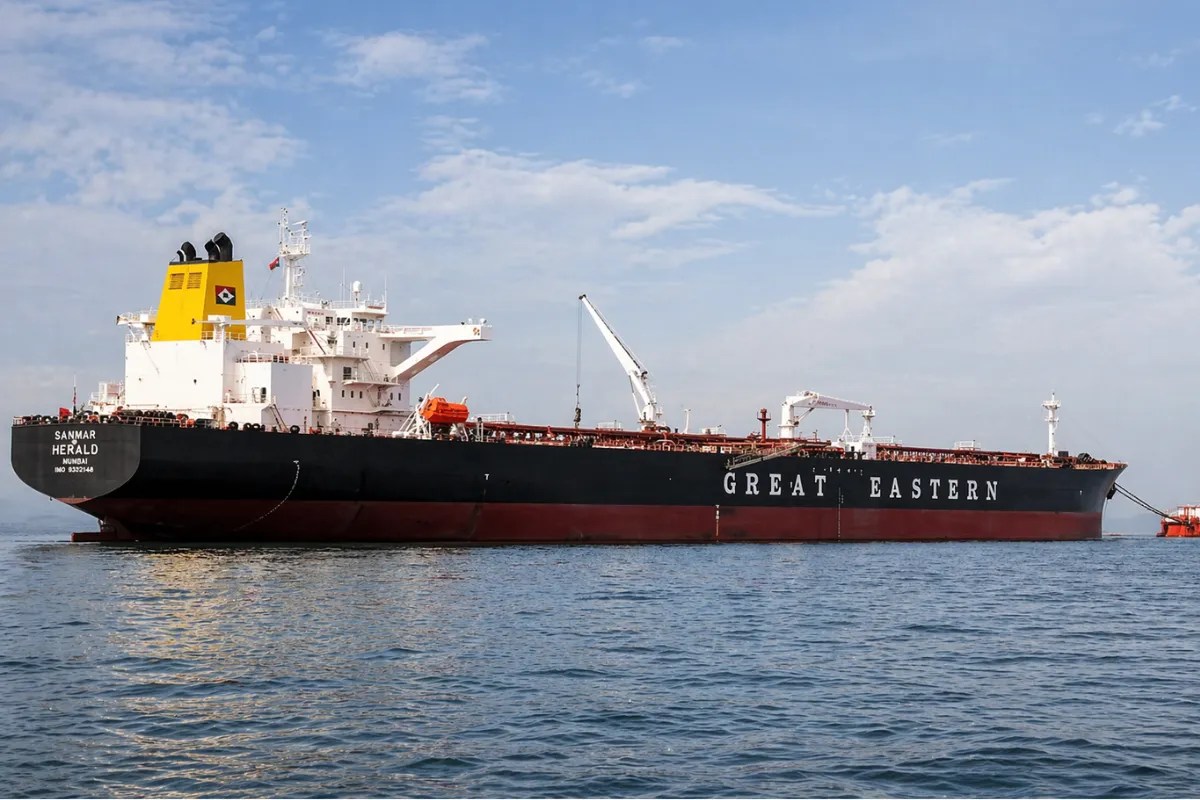
The steel hull of a container ship vibrates with a low, bone-deep hum that never stops. For the twenty-four crew members aboard a standard merchant vessel cutting through the Gulf of Oman, that vibration is the sound of safety. It means the engines are running. It means they are moving. But as the ship steers north toward a narrow bend of water known as the Strait of Hormuz, that comfort evaporates.
The air outside is thick, heavy with salt and the smell of crude oil, registering a blistering forty-two degrees Celsius. On the bridge, the captain watches the radar screen. Every blip is a question mark. Every speed boat appearing on the horizon could be a routine patrol, or it could be something else entirely.
This is not a abstract geopolitical puzzle. It is twenty-one miles of water.
Through this single, fragile maritime throat flows one-fifth of the world’s petroleum every single day. If you drive a car in Berlin, light a factory in Tokyo, or buy groceries in New York, your life is tethered to this strip of sea. And right now, the tension stretching across these waves is pulled so taut it is about to snap.
Behind the closed doors of Western military headquarters, the spreadsheets and diplomatic cables have stopped archiving data and started predicting a clash. NATO is quietly shifting its weight. The alliance is preparing to deploy boots, steel, and advanced surveillance tech directly into the maw of the Persian Gulf before the July heat peaks. The world thinks it is watching a localized standoff between regional powers. It isn’t. We are looking at the fuse of a global economic engine, and the match is hovering close.
The Friction of a Twenty-One Mile Bottleneck
To understand why a conflict here alters the life of an ordinary citizen thousands of miles away, one must look at the geography. The Strait of Hormuz is a classic chokepoint. At its narrowest, the shipping lanes used by massive supertankers are only two miles wide in either direction.
Imagine a highway that feeds the entire global economy, but it narrows down to a two-lane dirt road controlled by a volatile neighbor.
On one side lies the Arabian Peninsula; on the other, the jagged, mountainous coastline of Iran. For years, the Iranian state has viewed this strait as its ultimate leverage. It is their thermal switch. Whenever Western sanctions bite too deep or diplomatic talks stall, the threat to close Hormuz is issued.
But threats are evolving into actions. In recent months, drone strikes on merchant shipping, the mysterious mining of vessel hulls, and the outright seizure of commercial tankers have turned these waters into a gray-zone warpath.
Consider the hypothetical, yet highly accurate scenario of the Mariner East, a theoretical three-hundred-meter crude carrier. If a low-cost loitering munition—a suicide drone costing less than a used car—strikes its bridge, the ship stalls. It blocks the lane. Insurers instantly pull their coverage for the entire region. Within forty-eight hours, oil prices jump thirty percent. Within a week, gas stations across Europe ration fuel.
This is the nightmare scenario driving NATO’s sudden, quiet mobilization. The alliance can no longer treat the Gulf as a distant, regional theater. It is a domestic economic vulnerability.
The Calculus of the July Deadline
The decision to position assets before the end of June is dictated by two brutal realities: climate and logistics.
High summer in the Persian Gulf is an environment of pure hostility. Temperatures regularly exceed fifty degrees Celsius with near-total humidity. Machinery breaks down. Electronics overheat. Human endurance drops sharply. If military intervention or stabilization forces are to be effective, their infrastructure must be dug in, tested, and operational before the environment itself becomes an enemy.
Deploying naval strike groups and amphibious units is a logistical ballet that takes months to choreograph. It involves:
- Positioning missile defense batteries along the southern coast of the Gulf.
- Establishing secure, redundant communication nodes that can withstand heavy electronic jamming.
- Deploying underwater unmanned vehicles (UUVs) to map mines hidden in the shipping channels.
The intelligence pouring into Brussels suggests that waiting until late summer is a luxury the West does not possess. Iran’s domestic pressures, coupled with its deepening military partnerships with external superpowers, have emboldened its strategy. The regional shadow war is creeping out of the dark.
NATO’s move is designed to create an unbreakable wall of deterrence. By placing high-readiness maritime forces directly in the corridor, the alliance aims to change the math for leadership in Tehran. The message is blunt: any attempt to choke the strait will be met not with diplomatic protests, but with immediate, overwhelming defensive force.
The Hidden Digital Battlefield
The public looks for grey warships and fighter jets, but the opening salvos of this confrontation are already being fired in the electromagnetic spectrum. The Strait of Hormuz is currently the most densely monitored, jammed, and spoofed body of water on earth.
Commercial captains report that their GPS signals regularly lie to them. Ships traveling through the gulf suddenly find their navigation systems indicating they are parked inland at an airport in Iran, a phenomenon known as spoofing.
This digital fog is intentional. It forces massive ships to rely on manual piloting, increasing the risk of collisions in narrow waters, while making them vulnerable to interception.
NATO’s arrival changes the technical balance. The deployment includes specialized electronic warfare vessels capable of cutting through this interference, providing a "digital umbrella" for commercial shipping. It is a quiet war of frequencies, where the side that controls the data controls the sea lanes.
Yet, for the sailors on the water, the tech matters less than the immediate, terrifying reality of proximity. When an Iranian fast-attack craft swarms within fifty yards of a cargo ship, flashing weapons and demanding a halt, the abstract concepts of international law offer little comfort. The crew relies entirely on the gray silhouette of a Western destroyer sitting five miles out on the horizon.
The Ripple Effect on the Modern Home
It is easy to compartmentalize these developments as the domain of defense ministers and foreign policy experts. That is a mistake. The modern supply chain is a nervous system; a pinch at one nerve ending causes pain across the entire body.
If the Strait of Hormuz closes for even fifteen days, the economic shockwaves would dwarf the supply chain crises of the early 2020s.
The cost of shipping a single container would skyrocket as vessels are forced to take the long route around the Cape of Good Hope in South Africa, adding weeks to transit times and millions of dollars in fuel costs. The inflation that citizens worldwide have spent years battling would return with a vengeance, driving up the cost of everything from grain to microchips.
This is what NATO is ultimately defending. It is not just defending a patch of blue water, nor is it merely projecting power into the Middle East. It is protecting the predictable, everyday flow of global life.
The buildup will continue to accelerate as the weeks tick down toward July. More gray hulls will pass through the Suez Canal. More reconnaissance aircraft will track the movements of Iranian coastal missile batteries. The rhetoric from both sides will likely grow sharper, more dangerous, and more absolute.
Deep in the belly of those merchant ships currently navigating the Gulf, the crew continues to work. They check the gauges. They monitor the radio. They look out at the horizon, where the hazy line between the sky and the sea blurs into a uniform, oppressive heat. They know that beneath the calm, glass-like surface of the water, the gears of a massive, terrifying machine are turning, and the world is holding its breath to see if they catch.