You'd think a record-breaking month would have CEOs in Shenzhen popping expensive champagne. In March 2026, China’s electric vehicle exports didn't just grow; they exploded, surging 140% to a staggering 349,000 units. But if you look at the faces in the boardrooms of BYD or Geely, the vibe is more "calculated survival" than "victory lap."
While the world is scrambling for Chinese EVs to escape the brutal fuel shock of the Iran war, the Chinese domestic market is quietly cooling off. It’s a weird, lopsided reality. We’re seeing a massive global pivot toward electrification driven by panic at the pump, yet the very country supplying those cars is dealing with a third straight month of falling demand at home.
The fuel shock that changed everything
The 2026 Iran war has been a nightmare for global logistics, but it's been the ultimate marketing campaign for battery power. With the Strait of Hormuz effectively blockaded since early March, crude oil prices haven't just risen—they’ve become a source of daily anxiety. In parts of Asia and Europe, gas prices have climbed so fast that driving a traditional internal combustion engine (ICE) car now feels like a luxury most families can't afford.
This isn't just about $100-a-barrel oil. It’s about the "largest supply disruption in history," as the International Energy Agency put it. When you can’t get gas, or when filling your tank costs 30% more than it did four weeks ago, that shiny new EV in the showroom suddenly looks a lot more practical.
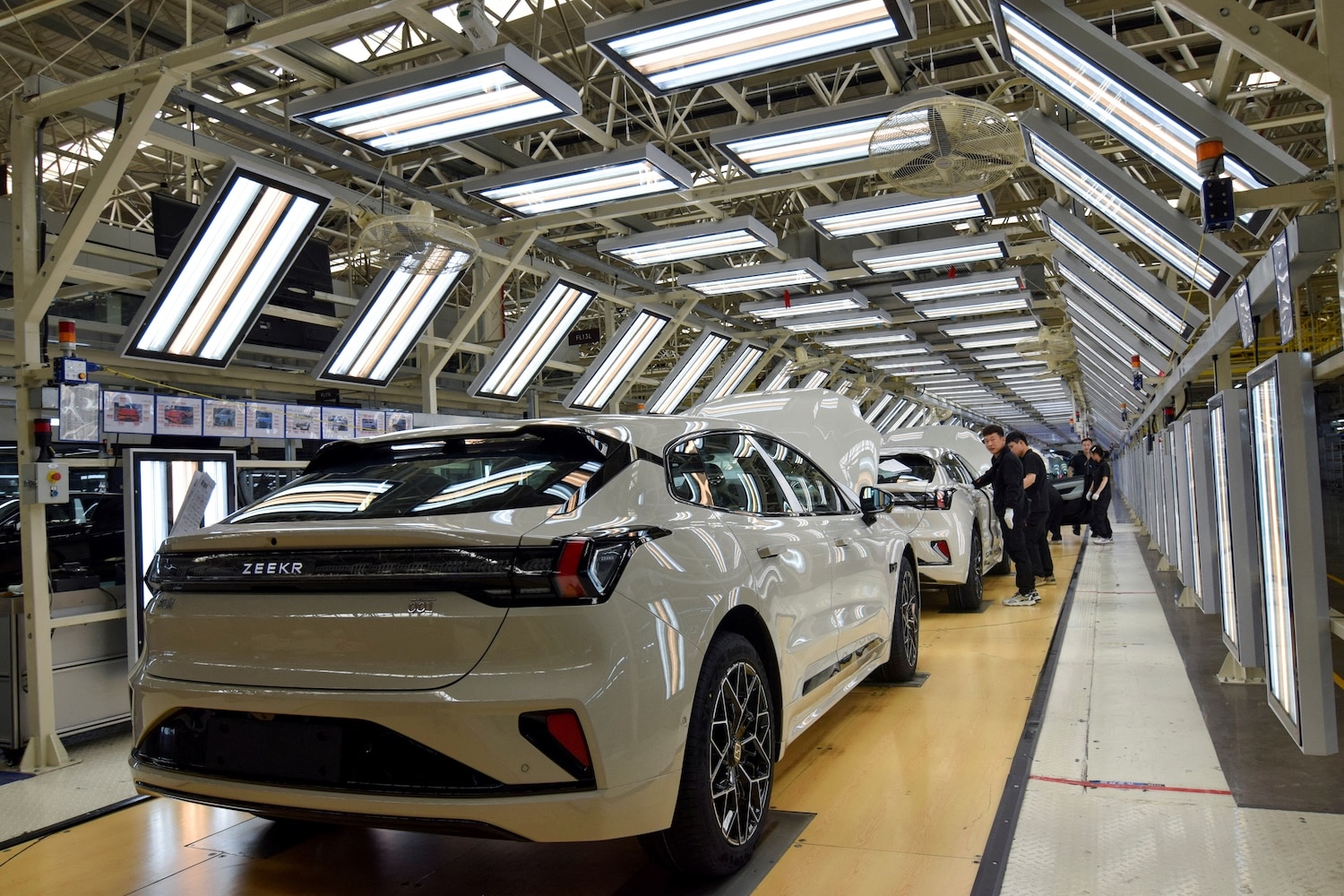
Chinese manufacturers were perfectly positioned to catch this wave. Unlike European or American legacy brands that are still fiddling with their supply chains, China’s "Big Three" exporters—BYD, Geely, and Chery—already have the scale. BYD alone handled about a third of that 349,000-unit record. They aren't just selling cars; they're selling an escape hatch from the Middle East energy crisis.
Why the home crowd is staying away
Here is the part nobody expected. While the rest of the world is begging for Chinese shipments, the Chinese consumer is hitting the brakes. Domestic sales of EVs and hybrids fell 14% in March to around 848,000 units. Even the heavyweights are feeling the pinch. BYD’s domestic numbers dropped over 40%, and Tesla’s China sales took a 24% hit.
It's a classic case of market saturation meeting economic jitters. China has been the EV leader for so long that the "early adopter" phase is over. Most people who wanted an EV already have one, and the rest are worried about the broader economy and the fallout from the regional conflict. When you combine that with a brutal domestic price war that’s been grinding margins into the dirt for two years, you get a local market that’s exhausted.
The export math that keeps the lights on
If you're an executive at Chery or SAIC, you aren't crying about the domestic dip—you're rerouting every car you can to a port. The export market is where the profit is.
- Europe is hungry for value: Chery’s exports to Europe have skyrocketed, up over 200% in the first part of the year. They’re offering range and tech that European brands can't match at the same price point.
- Southeast Asia and Latin America: These regions are the new battlegrounds. Geely is dominating Southeast Asia, while BYD is seeing triple-digit growth in Central and South America.
- The Tesla pivot: Even Tesla’s Shanghai Gigafactory is leaning into this. While their local China sales are struggling, their exports from Shanghai actually grew by 9% in March.
What this means for your next car
Honestly, the global car market is undergoing a permanent shift right now. This isn't a temporary spike that will vanish once the war ends. Every time a consumer in Australia or Thailand switches to a Xiaomi SU7 or a BYD Atto because gas is too expensive, they aren't going back to a tailpipe.
The Iranian conflict is basically a massive accelerator for a process that was already happening. It’s making the economic case for EVs undeniable. If you're looking to buy a car in 2026, the "Chinese option" is no longer the budget alternative—it’s the dominant force in the market.
If you’re waiting for prices to drop further, don't hold your breath. Manufacturers are now prioritizing high-margin overseas markets over the discounted domestic Chinese market. The best move is to look at the total cost of ownership now. With gas prices remaining volatile, the gap between "expensive" EVs and "cheap" gas cars has officially closed. Check your local tariffs and import rules, because the next car you see on your neighbor's driveway is almost certainly going to have come through a Chinese port.