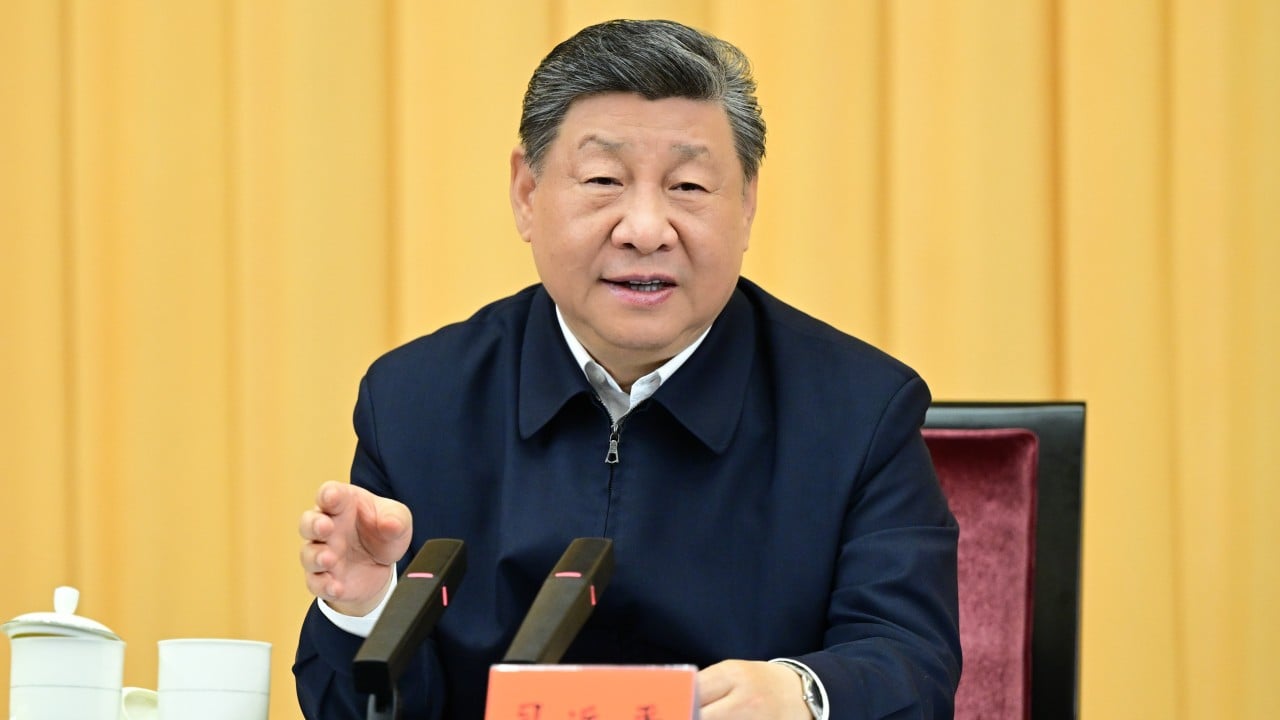
Xi Jinping isn’t just asking for better tech. He’s demanding a total overhaul of how China invents things. In a recent high-level session with the Politburo, the message was blunt: stop playing catch-up and start breaking things. He used the term disruptive innovation like a battle cry. It's not about incremental upgrades to existing gadgets anymore. It’s about finding the "original" breakthroughs that make current US advantages obsolete.
You’ve gotta realize why this matters right now. The tech race between the US and China has hit a wall of sanctions and export controls. If China can't buy the best chips, they have to invent a completely different way to process data. That’s the "disruptive" part. It’s a move born out of necessity, but it’s also a massive gamble on the future of global power.
The Shift From Copying to Cracking the Code
For decades, the knock on Chinese tech was that it followed the leader. You’d see a Western product, and a Chinese version would pop up soon after—maybe cheaper, maybe faster, but rarely "new." Xi wants that era dead. He’s pushing for what he calls New Productive Forces. This is a fancy way of saying they need industries that don't even exist yet.
Think about it this way: instead of trying to build a better gasoline engine, you invent the lithium-ion battery. That’s the level of shift he’s looking for.
- Quantum Computing: They’re pouring money into tech that could make current encryption look like a child's padlock.
- Brain-Computer Interfaces: Direct links between minds and machines aren't just sci-fi anymore; they're a national priority.
- Deep-Sea and Space Tech: Dominating environments where the US hasn't fully staked its claim.
China is currently facing what they call "bottleneck" technologies—areas where the US can effectively shut them down by pulling a single lever. Semiconductors are the obvious one. By calling for disruptive innovation, Xi is telling his scientists to stop trying to climb the US-built ladder and just build a whole new skyscraper instead.
Why the US Should Be Paying Attention
This isn't just talk. We're seeing a shift in who’s running the show in Beijing. Look at the people standing next to Xi during these announcements. You’ve got former aerospace experts and rocket scientists like Ma Xingrui and Yuan Jiajun sitting in the Politburo. These aren't just bureaucrats; they're people who understand how to scale complex, high-risk technical projects.
The US lead in AI is still real, but it's narrow. American labs are great at "frontier models"—the big, smart AI brains like GPT. But China is pivoting toward physical integration. They want AI that actually runs the factory floor, manages the power grid, and drives the robots. While we’re debating chatbots, they’re trying to automate the entire physical world.
The Talent Trap and the Wealth Gap
There’s a massive catch to this plan, though. Disruptive innovation is notoriously hard to plan from the top down. Usually, "disruption" happens in a garage with two people who hate the status quo. In China, the status quo is the government.
I see a few big hurdles they haven't cleared yet:
- The Brain Drain Problem: Even though China produces millions of engineers, the top tier still often looks toward the West. The recent Meta-Manus deal—where China blocked a US firm from buying a local AI startup—shows just how scared they are of losing their best minds.
- The Funding Gap: Venture capital in China has taken a hit recently. The government can throw billions at a problem, but state money is rarely as efficient as private "win or die" capital.
- The Jobs Crisis: High-tech factories don't need millions of low-skilled workers. As China moves toward this high-quality growth model, they’re leaving a lot of young graduates behind who can't find a spot in the "New Productive Forces."
Honestly, it’s a bit of a contradiction. You can’t really "order" someone to be disruptive while simultaneously demanding absolute stability and control. Those two things don't usually live in the same house.
What Happens Next
If you’re watching this space, don't look at the GDP numbers. Look at the patent quality and the supply chain autonomy. China is currently trying to localize nearly 41% of its AI chip market, with Huawei leading the charge. If they hit over 50%, the US export bans lose their teeth.
If you're a tech leader or an investor, you need to be tracking these specific sectors over the next 24 months:
- Advanced Materials: Watch for breakthroughs in graphene or superconductors that could bypass traditional silicon limits.
- Green Tech: Xi explicitly linked "new productive forces" to green development. They want to own the global supply chain for the energy transition.
- Bio-Digital Convergence: The race for massive biobanks is the new arms race.
Forget the old "Made in China" label. The new goal is "Invented in China," and they’re willing to burn a lot of cash to make it happen. Whether they can actually spark true creativity within a rigid system is the $10 trillion question.
You should start looking at Chinese open-source AI frameworks like DeepSeek or Huawei's Ascend ecosystem. They aren't just alternatives anymore; they're becoming the foundation for a parallel tech universe. If you aren't familiar with how they work, you're going to be blindsided when the "disruption" actually hits.