Western powers are quietly retreating from traditional global institutions, and Beijing is writing the checks to replace them. For decades, the United Nations peacekeeping framework relied on American cash and a broad consensus that Western-led internationalism kept the world stable. That consensus is officially dead.
China has scaled up its financial and physical dominance within the United Nations, surging to become the second-largest funder of both the UN regular budget and its peacekeeping operations. Beijing now covers over 15 percent of the global peacekeeping bill and more than 20 percent of the regular budget, trailing only the United States.
But this isn't an act of global charity. It's a calculated strategy to reshape international law, protect resource supply chains, and gain unilateral control over global security structures. While Washington actively debates cutting its UN commitments, Beijing is leveraging its financial muscle to ensure that when international bodies act, they do so on Chinese terms.
The Financial Takeover of Global Security
The numbers tell a stark story of shifting geopolitical gravity. In 2000, China contributed a measly 1 percent to the UN regular budget. By 2019, that number hit 12 percent, and by 2025, it rocketed past 20 percent. This financial expansion is even more pronounced in the peacekeeping sector, where Beijing's share has grown to roughly 15 percent of the total budget.
This massive funding surge happens to coincide directly with American retreat. The US Congress caps its peacekeeping contributions at 25 percent, despite the UN technically assessing the US share at 28 percent. This creates a chronic funding deficit that Washington shows no interest in fixing. Beijing is more than happy to fill the void.
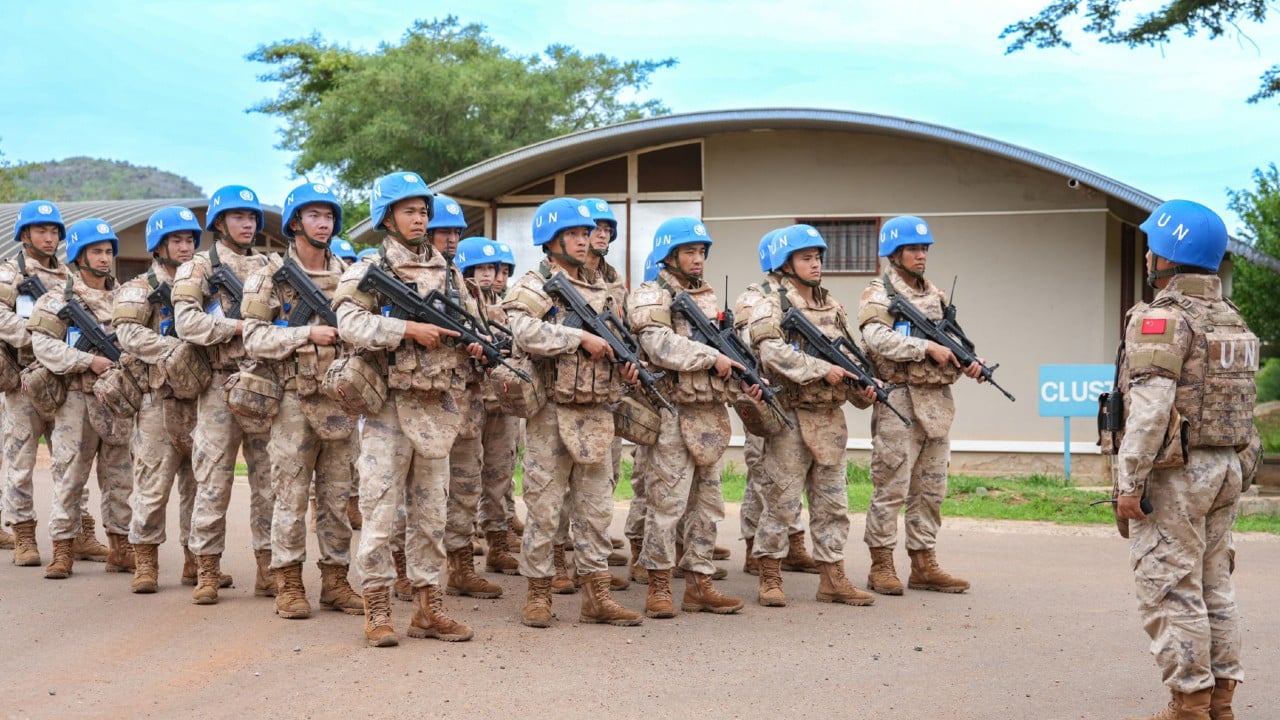
Money translates directly into personnel and policy control. Unlike other permanent members of the UN Security Council like Russia, the US, or the UK, which rarely put their own boots on the ground for peacekeeping missions, China is a top ten supplier of uniformed personnel. They have over 2,200 troops, police, and medical staff deployed globally under the blue UN helmet. That is more than the rest of the Security Council permanent members combined.
Protecting the Silk Road with UN Badges
If you want to know what China's actual goals are, look at a map of where their peacekeepers end up. It isn't random. They aren't deploying troops to random global flashpoints out of the goodness of their hearts. They deploy them to resource-rich zones where Chinese state-owned companies have billions of dollars tied up in infrastructure.
Take South Sudan. China's largest single peacekeeping commitment is a full infantry battalion of over 1,000 troops stationed there. South Sudan also happens to be a major source of crude oil for Beijing, with state-owned China National Petroleum Corporation holding massive stakes in the country's oil fields. When violence breaks out, Chinese UN troops are on the ground, effectively using an international mandate to secure Chinese corporate assets.
The Democratic Republic of Congo tells a similar story. China has deployed hundreds of personnel to the UN mission there. The DRC holds the world's largest deposits of cobalt and lithium, crucial components for the global electric vehicle supply chain. Chinese firms control roughly 80 percent of the copper and cobalt mining operations in the country. By funding and manning these UN missions, Beijing gets the international community to co-sign and partially subsidize the security of its own supply chains.
Rewriting the Rules of Global Intervention
The deeper threat to Western interests isn't just where these troops are deployed, but how China is changing the philosophy of global peacekeeping. For forty years, UN interventions were built around Western liberal ideas: protecting human rights, monitoring democratic elections, and holding dictatorial regimes accountable.
Beijing detests this model. They view it as a backdoor for Western-backed regime change. Instead, Chinese diplomats are using their newfound financial leverage to strip human rights mandates out of UN peacekeeping budgets.
They are pushing for a model they call "political settlements." Kinda like their domestic policy, this framework prioritizes state sovereignty and regime stability above all else. Under the Chinese model, a peacekeeper's job is to protect the government in power, not the citizens protesting against it. They want to turn the UN into a shield for authoritarian states, ensuring that internal abuses are treated as purely domestic matters.
The Sidelining of Traditional Diplomacy
We are seeing the creation of a parallel system of global governance. Western analysts often warn that China wants to destroy the UN. That's wrong. They don't want to destroy it; they want to own it.
By placing Chinese nationals at the head of crucial UN agencies and expanding their financial veto over peacekeeping budgets, they can stymie Western initiatives without firing a shot. When the UN becomes too bureaucratic or resistant, Beijing simply routes its cash through alternative channels like the China-UN Peace and Development Fund or the Global Development and South-South Cooperation Fund.
This leaves Western foreign policy in a dangerous bind. If the US and Europe continue to starve the UN of funding and political support, they are effectively handing the keys of global governance to Beijing. You can't complain about China rewriting the rules of international order when you refuse to pay for the ink.
The next decade of global security won't be decided by grand ideological debates in Geneva or New York. It'll be decided by who pays the bills for the troops on the ground. Right now, only one superpower is treating the UN budget like a core national security priority.
For a closer look at how these financial shifts play out on the ground, check out this investigative report on China's Growing Influence at the United Nations, which details the tactical moves Beijing uses to secure key administrative positions and deploy troops.