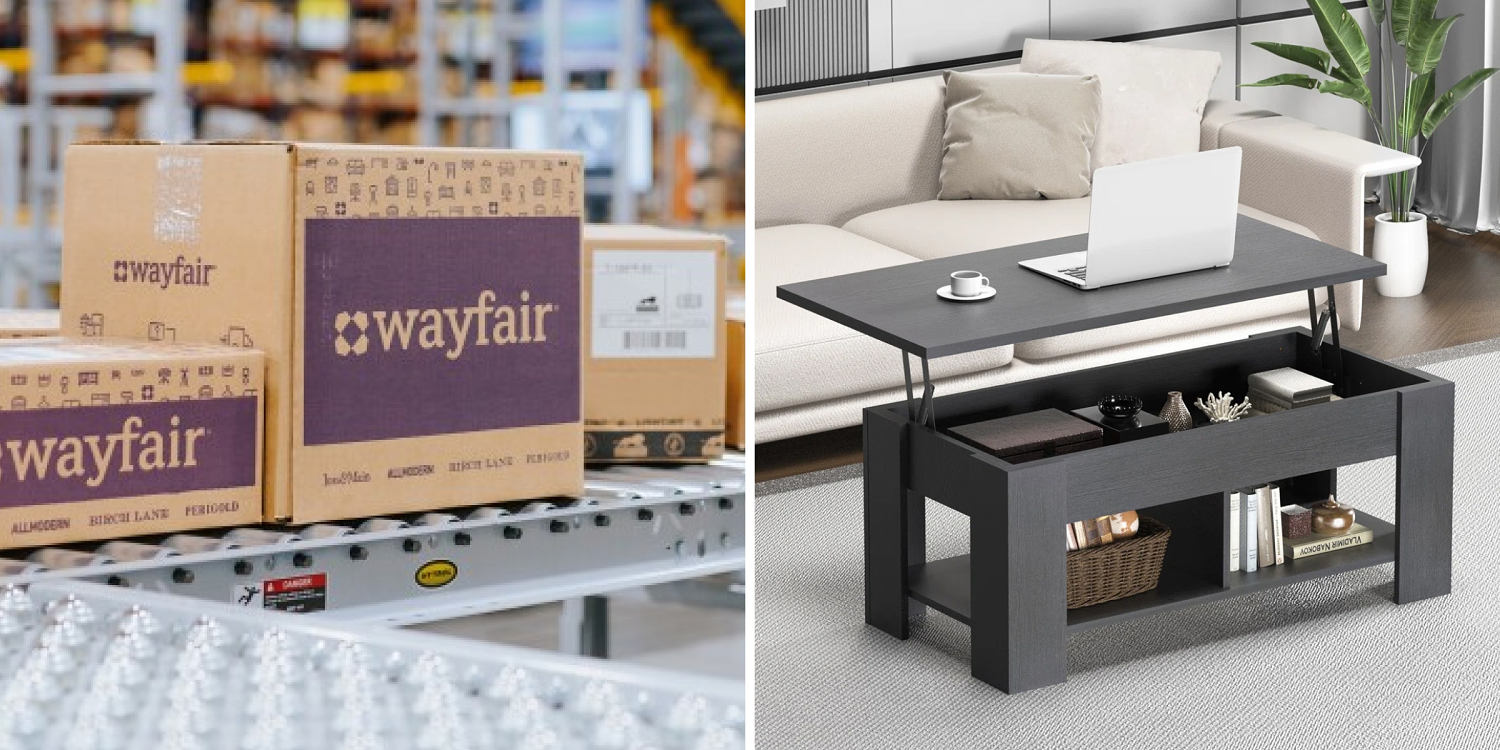
The 80% off sticker is a psychological trap designed to make you ignore the smell of formaldehyde and the inevitable sagging of particle board. While every major home goods retailer spends "Spring Cyber Week" shouting about historic price cuts and massive liquidations, they are actually offloading inventory that was never meant to last beyond your next move.
Retailers like Wayfair have perfected the art of the "Phantom Discount." They inflate the MSRP—the Manufacturer's Suggested Retail Price—to an astronomical number that no sane human would ever pay. When they "slash" it by 82%, you aren't saving $1,200. You are paying $300 for a sofa that cost $45 to manufacture in a factory where quality control is an afterthought. Read more on a similar topic: this related article.
Buying furniture during a flash sale is a race to the bottom of the value chain. If you think you're "winning" by scoring a mid-century modern replica for the price of a nice dinner, you’ve already lost. You aren’t buying an asset. You’re renting trash.
The Math Of Disposable Living
Let’s look at the actual economics of these "deals." If you buy a $400 sofa during a blowout sale, you are participating in a cycle of planned obsolescence. Further analysis by Glamour delves into related views on this issue.
Most mass-market furniture uses Oriented Strand Board (OSB) or low-grade particle board for the frame. These materials are held together by staples and glue. The moment you sit down, the clock starts ticking. Within eighteen months, the density of the foam (usually 1.5 lbs or less) will collapse. The fabric will pill. The joints will creak.
Compare this to a $2,500 sofa with a kiln-dried hardwood frame and 2.5 lb high-resiliency foam.
- The "Deal": $400 / 2 years = $200 per year.
- The Investment: $2,500 / 20 years = $125 per year.
By chasing the 82% off high, you are paying a 60% premium over the long term for the privilege of living in a home that feels like a staging set. I have consulted for logistics firms that handle "Last Mile" delivery for these giants. The damage rates are staggering. They bake the cost of "it arrived broken" into the price. You are literally paying for the replacement of someone else’s shattered coffee table every time you click "Add to Cart."
Why "Cyber Week" Is A Supply Chain Dump
Retailers don't run these sales because they love you. They run them because warehouse space is more expensive than the margin they lose on a discounted rug.
Spring is the season of the "Inventory Purge." New collections are hitting the water from overseas factories. The old stuff—the trends that didn't stick, the colors that looked better in Photoshop than in reality—has to go. When you shop a Spring Cyber Sale, you are acting as a free disposal service for the retailer.
The Illusion of Choice
You think you're browsing 10,000 items. In reality, you're looking at the same five white-label factories in Southeast Asia or China, rebranded under twenty different "exclusive" labels. This is the House Brand Shell Game. Whether it's Mercury Row, Joss & Main, or AllModern, the guts are often identical.
They use different photography to create an illusion of variety. They tweak the hardware or the leg finish. But the core engineering—the part that actually matters for your back and your wallet—is the same. Breaking this cycle requires acknowledging that "variety" in the digital furniture space is a marketing hallucination.
The Toxic Reality Of Flat-Pack Logistics
We need to talk about the hidden costs of shipping air. To offer "Free Shipping" on an 80% discounted item, the item must be light. To be light, it must be flimsy.
Most of these sale items are designed for shipping efficiency, not human ergonomics. They are engineered to fit into a flat box that fits onto a standard pallet. This means the furniture is modular in the worst way. Instead of a solid, integrated structure, you get a series of points of failure held together by Allen bolts that will inevitably vibrate loose.
Industry Insider Fact: The carbon footprint of the "returns-to-landfill" pipeline is one of the home decor industry's darkest secrets. Because it is often more expensive to inspect, re-box, and resell a returned $150 chair, many of those "deals" you send back go straight to a crusher.
How To Actually Buy Furniture (The Contrarian Blueprint)
If you want a home that doesn't look like a dorm room and doesn't fall apart when you sneeze, stop looking at "Sales" sections. Start looking at construction specs.
1. Demand the "Cradle" Stats
If the product description doesn't explicitly state "Kiln-Dried Hardwood Frame," it is made of plywood or OSB. Do not buy it. If it says "Wood Products" or "Manufactured Wood," it is sawdust and glue. Walk away.
2. The Weight Test
Quality has mass. If a dining table weighs 40 pounds, it’s a prop. A real oak or walnut table of the same size should require two people to move. In the world of furniture, weight is the most honest metric of value.
3. Source the "Second Market"
Instead of spending $800 on a discounted, brand-new sectional that will be in a landfill by 2028, spend $800 on a used, high-end piece from brands like Herman Miller, Knoll, or Ethan Allen. These pieces were built when craftsmanship meant something. They have already depreciated. They will hold their remaining value—and their shape—for decades.
4. Ignore the "Stars"
Review culture is rigged. Most people leave a 5-star review the day the box arrives because it "looks great." They don't update the review six months later when the leg snaps off. Filter reviews by "Most Recent" and look for the people who have owned the piece for over a year. That is where the truth lives.
The Death Of The "Spring Refresh"
The "Spring Refresh" is a manufactured urgency. Your home doesn't need a new identity every twelve months. The desire to "refresh" is usually just a symptom of buying low-quality items that have lost their luster.
When you buy a piece of furniture that is truly well-made, it develops a patina. It ages. It becomes part of the architecture of your life. The junk sold during "Cyber Week" doesn't age; it just decays.
The most radical thing you can do this week is buy nothing. Save that "82% off" money. Triple it. Then buy one thing that you will still own in twenty years. Everything else is just expensive kindling.
Stop being a victim of the algorithm's race to the bottom. Your living room deserves better than a temporary solution marketed as a permanent deal.
If you are ready to stop renting your lifestyle and start owning it, I can show you how to identify the specific joinery techniques that separate heirloom quality from high-gloss garbage. Shall I break down the difference between a dovetail and a doweled joint so you never get scammed by a "Sale" again?