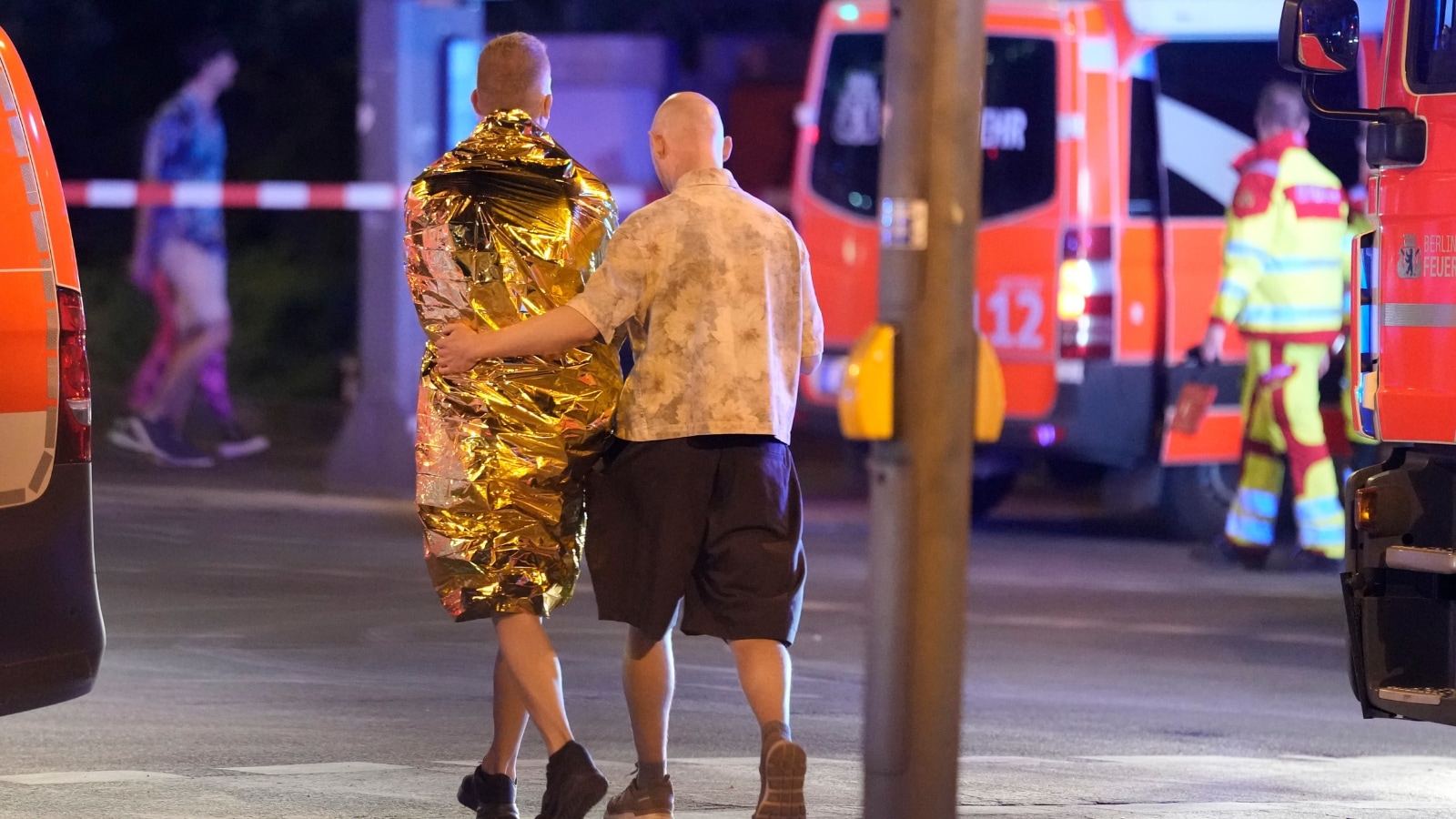
The air above Berlin was heavy with the scent of roasted almonds, sun-warmed asphalt, and the sharp, collective electricity of a million people breathing together. Banners of every conceivable color snapped in the summer wind. Music vibrated through the soles of shoes, rattling against the pavement, transforming the city into a living, moving organism of joy.
Pride.
It was supposed to be a sanctuary. A day carved out of the calendar where existence itself was not a negotiation, where holding a hand or waving a flag was an act of pure, unadulterated belonging.
Then came the rupture.
Noise is strange in a crowd. At first, it is just texture. A shout. A stumble. A sudden compression of bodies shifting away from a common center, like iron filings reacting to an unseen magnet. But sound has weight. When panic moves through a crowd, it travels faster than thought.
Chaos.
One moment, laughter. The next, thirty people broken on the ground. One life extinguished entirely. A man, armed not with words or placards, but with lethal intent, carved a path through the celebration.
Police intervention. Speed. The terrifying calculation of split-second authority. A suspect dead. Twenty-nine injured. Behind those cold statistics lie fragmented realities: a shoe left in the middle of the street, a phone buzzing unanswered in a pocket, a sudden, permanent shift in how safety feels.
We build cities out of concrete and glass, but we inhabit them with trust. We step into crowds assuming that the stranger standing shoulder-to-shoulder with us shares a basic, unspoken contract. Do no harm. Let us live. Let us celebrate.
When that contract shatters, the recovery is not measured in days. It is measured in the quiet moments afterward. It is the hesitation before stepping into a crowded square. It is the second glance at a backpack. It is the heavy ache in the chest of a city that thought it had learned how to keep its people safe, only to discover that joy can always be targeted.
Yet, the music did not stay silent forever.
In the days following the violence, flowers piled high against cold stone. Notes written in shaky handwriting appeared on makeshift memorials. People returned to the streets, not because the fear had vanished, but because yielding to the terror would mean surrendering the very soul of what the celebration stood for.
Safety is fragile. Community is resilient. And sometimes, the only way through the dark is to hold each other a little closer, refusing to let the noise extinguish the light.