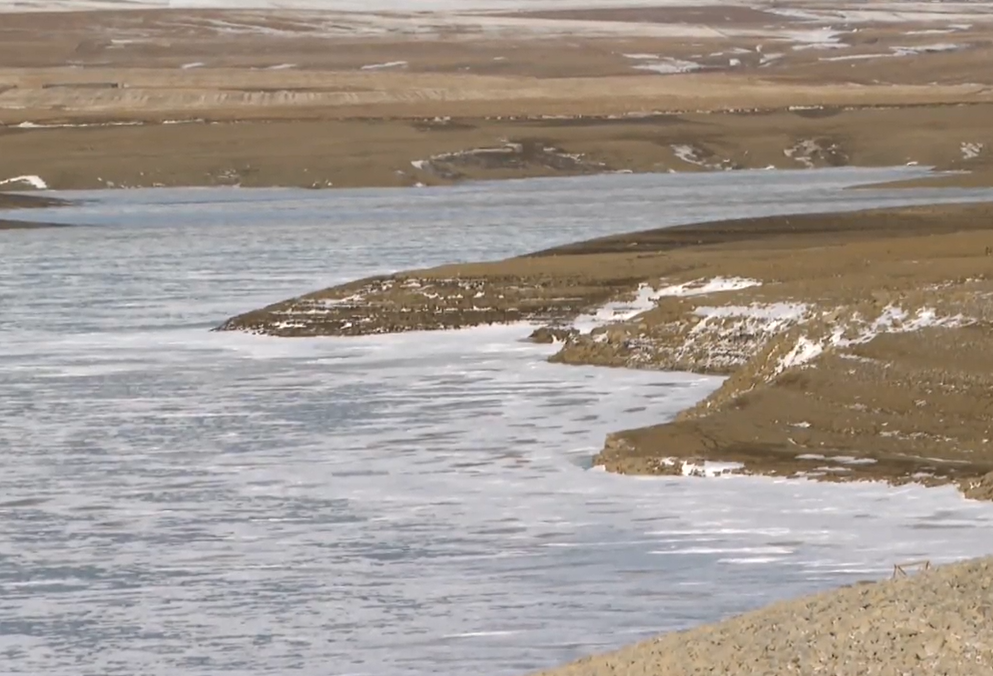
Civil infrastructure and agricultural supply chains across western Canada are currently experiencing a compounded hydro-meteorological crisis. The convergence of an active low-pressure system pushing north from the United States with a highly saturated northern soil profile has shifted the regional risk profile from localized weather anomalies to systemic infrastructure vulnerability.
The immediate economic and structural exposures can be broken down into two distinct physical vectors: saturation-driven overland flooding in central and northern regions, and severe convective atmospheric instability capable of generating supercell tornadic events across the southern corridor.
The Dual-Vector Risk Framework
To understand why this specific meteorological event poses an elevated threat to the region, the crisis must be analyzed through a dual-vector risk framework. Traditional emergency management models often treat extreme rainfall and tornadic convective cells as isolated events.
In this scenario, however, they operate as simultaneous stressors on identical geographic coordinates, compounding the strain on municipal emergency response, regional transport networks, and agricultural assets.
Vector 1: Saturation-Driven Overland Flooding
The critical vulnerability in Central Alberta, specifically within the Edmonton metropolitan region, is not merely the volume of current precipitation, but the pre-existing saturation level of the catchment basins. Environment and Climate Change Canada (ECCC) has projected rainfall volumes between 40 mm and 70 mm. In an average season, standard municipal drainage networks and natural watercourses could absorb this volume via infiltration.
This season, persistent June rainfall has eliminated soil moisture deficits, pushing the water table to near-surface levels. The physical implications follow a strict sequence of hydraulic constraints:
- Infiltration Zero-Point: Soil surfaces have reached absolute field capacity. Because the infiltration rate has effectively dropped to zero, 100% of the newly introduced 40–70 mm of rainfall converts immediately into sheet runoff.
- Volumetric Channel Exceedance: Local drainage networks, designed around historical rolling averages, face immediate volumetric strain. Minor tributaries and municipal culverts are experiencing forced backwater effects, driving the overland flooding of secondary and primary transportation corridors.
- Infrastructure Degradation: The immediate closure of critical arterial routes, such as the westbound lanes of Yellowhead Trail at 170 Street in Edmonton, demonstrates the immediate economic bottleneck. When urban arterial roads flood, the structural integrity of the sub-base is compromised, accelerating pavement stripping and subsurface voids.
Vector 2: Convective Atmospheric Instability
Simultaneously, the southern and eastern corridors—spanning southern Saskatchewan into Manitoba—are facing severe convective atmospheric dynamics. The mechanism driving this threat is a pronounced surface trough migrating northward from Montana, injecting high-theta-e (warm, highly humid) air from the Gulf of Mexico into the lower troposphere.
The severe storm potential is governed by three primary atmospheric variables:
- Convective Available Potential Energy (CAPE): The extreme thermodynamic instability in the region provides the raw energetic fuel. High CAPE values ensure that if air parcels are lifted, they will accelerate violently upward, forming deep updrafts capable of producing 4 cm hail and sustaining supercell structures.
- Deep-Layer Helicity and Wind Shear: The interaction between the northward-moving surface trough and upper-level westerly winds creates a high-shear environment. This directional and speed shear tilts updrafts, allowing storms to organize, sustain themselves over multiple hours, and develop the mesocyclone rotation required for tornadic genesis.
- The Thermal Inversion Roadblock (The Cap): Long-range atmospheric soundings reveal a temperature inversion layer aloft—essentially a layer of warmer air capping the cooler, moist air below. This cap acts as a thermodynamic lid. If solar heating or boundary-layer convergence fails to break this cap, storms remain suppressed. If the cap is breached, the sudden release of built-up convective energy can trigger rapid, violent storm initialization.
Infrastructure and Supply Chain Bottlenecks
The structural failure modes triggered by these dual vectors extend beyond immediate property damage. The long-term macroeconomic impacts materialize across critical infrastructure and agricultural transport networks.
Transport Interdiction
The primary operational constraint is the interruption of logistical corridors. When major highways, such as Highway 48 in southeast Saskatchewan, are submerged under several inches of moving water, the regional supply chain experiences immediate delays.
Unlike coastal networks with multi-modal redundancies, the Canadian Prairies rely heavily on fixed, non-redundant linear assets: specific highway corridors and class-one rail lines. Hydro-dynamic forces against rail ballasts and highway sub-grades introduce long-term structural risks, necessitating prolonged speed restrictions and costly remediation cycles long after surface waters recede.
Agricultural Yield Degradation
For the agricultural sector, the timing of this hydro-meteorological event introduces severe biological and operational constraints. June represents a critical phase for crop development and root establishment.
Prolonged overland flooding creates anoxic (oxygen-depleted) soil conditions within depressed field topographies. If standing water remains for more than 48 to 72 hours, root respiration ceases, causing rapid nutrient chlorosis and irreversible yield penalties. Furthermore, structural wind gusts of 90 to 110 km/h combined with large hail present direct mechanical destruction vectors for standing crops.
Structural Mitigation and Operational Adaptations
Addressing this escalating risk profile requires an operational shift from reactive emergency management to predictive structural resilience. Municipalities and regional industrial operators must optimize their infrastructure strategies across three critical axes.
Hydraulic Capacity Optimization
Municipal engineers must pivot away from standard static stormwater planning models. Digital twins of watershed basins, utilizing real-time sensor networks, must be leveraged to dynamically manage reservoir levels ahead of convective events.
Where physical channel expansion is economically unfeasible, regional authorities must implement targeted retention strategies, utilizing upstream agricultural land as intentional flood-fringe storage to protect high-value municipal infrastructure assets.
Industrial Risk Management
For commercial operators, logistics firms, and industrial facilities within the moderate-to-high risk zones of Saskatchewan and Manitoba, immediate operational adjustments are mandatory:
- Drainage De-Stressing: Facilities must immediately minimize auxiliary water inputs into internal sewer systems. Postponing non-essential industrial washings and high-volume fluid processing preserves municipal lift-station capacity, reducing the risk of localized backflow into facility basements.
- Mechanical De-Watering Logistics: Procurement teams must pre-arrange emergency access to high-capacity mechanical pumping assets, specifically six-inch or larger trash pumps, through pre-negotiated disaster relief frameworks or private equipment supply chains. Relying on spot-market procurement during an active regional flood event introduces severe operational downtime.
- Asset Relocation: Mobile heavy equipment, logistics fleets, and high-value inventories must be systematically relocated from low-lying yards to designated high-elevation staging areas.
The multi-day convective setup currently moving across western Canada exposes the limits of historical weather infrastructure assumptions. As the atmospheric system transitions eastward into Manitoba, bringing high-velocity wind fields and heavy downpours, the priority must shift to real-time asset protection and strict logistical route management.
Operators who rely on passive historical averages will face severe operational and structural friction; resilience requires executing immediate, data-driven preventative measures.