Ask any public health official in Praia why Cabo Verde manages to keep its maternal mortality ratio hovering around 40 deaths per 100,000 live births while continental neighbors struggle with numbers ten times higher, and they will point to a political commitment. Look closer at the mechanics of the archipelago, however, and a different reality emerges. This is not merely a story of benevolent governance. It is a calculated architectural response to geographic tyranny.
When your nation is splintered into ten volcanic islands scattered across the Atlantic, routine healthcare delivery becomes an extreme sport. Traditional models that rely on sprawling highway networks and centralized urban mega-hospitals fail instantly here. The archipelago forced its own hand decades ago out of sheer survival necessity.
To understand how Cabo Verde built an effective maternal and infant health framework, one must examine the friction points between decentralized island logistics and modern clinical demands. Ninety-seven percent of births on the islands are attended by skilled health personnel, a statistic that commands respect in West Africa. Yet, achieving that coverage required dismantling the rigid hierarchies of colonial-era medicine and replacing them with hyper-local outpost nursing.
A pregnant woman living in the remote interior of Santo Antão does not experience the same healthcare reality as someone residing in the capital of Praia. On paper, the system guarantees universal access. In practice, an obstetric emergency on a smaller island means navigating a tense calculus of weather windows, inter-island boat transfers, and emergency propeller flights to central hospitals on Santiago or São Vicente.
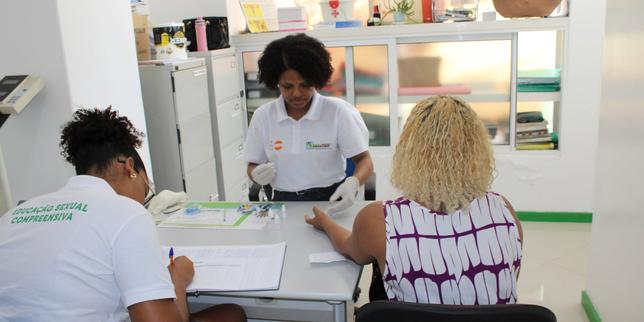
The primary health care grid relies heavily on local delegates and decentralized clinics. Nurses function as frontline diagnosticians, wielding diagnostic autonomy that would make risk-averse medical boards in Western nations flinch. They have to. When a specialized physician is an island away, the nurse standing in the rural health post is the entire safety net.
This decentralized reliance creates an intriguing vulnerability. The system’s strength lies in its proximity to the patient, but its structural ceiling is dictated by transport logistics. Medical evacuations, locally known as evacuações médicas, represent the invisible friction holding the archipelago back from absolute health parity. If the seas are too rough for a launch or the airstrip is socked in by heavy Atlantic fog, maternal care transitions from a medical protocol to a waiting game against nature.
International development agencies love to hold up Cabo Verde as an idealized template for the developing world. Reports from global health bodies routinely praise the nation's high immunization rates and low infant mortality—currently sitting around 11 deaths per 1,000 live births. These metrics are real, earned through decades of aggressive public health campaigns targeting infectious diseases and expanding prenatal registration.
Yet, treating the islands as a plug-and-play model for mainland Africa ignores the specific historical and sociological context of the archipelago. Cabo Verde inherited a distinct socio-political stability upon independence in 1975, paired with a high literacy rate and a compact population of roughly half a million people. Scaling a micro-state model with high social cohesion onto a vast, fractured continental nation with hundreds of ethnic groups and fractured infrastructure is an administrative impossibility.
Furthermore, success breeds its own modern complications. As basic survival rates climb, clinical attention shifts toward quality-of-care bottlenecks. The archipelago currently grapples with a high cesarean section rate, hovering near 33 percent. Medical anthropologists note that while surgical interventions save lives when complications arise, an over-reliance on surgical delivery points to defensive medicine practices and stretched maternity wards where scheduled procedures help manage unpredictable staff shortages.
Nutritional indicators also reveal cracks in the polished facade of the national health narrative. While children are immunized at remarkable rates, chronic malnutrition and widespread childhood anemia persist as stubborn public health hurdles. A mother may receive flawless prenatal monitoring during her nine months of pregnancy, only to return home to a household food budget strained by heavy import dependencies and volatile global commodity prices. Healthcare does not end in the delivery room, yet food security metrics prove that clinical triumphs cannot entirely insulate a population from macroeconomic pressures.
The underlying lesson of the Cabo Verde maternal health framework is not that a flawless system exists. The true takeaway is that resilience is engineered through redundancy. By distributing primary care nodes across isolated communities rather than concentrating all resources in elite urban centers, the nation built a baseline that prevents routine complications from turning fatal.
Maintaining this momentum requires acknowledging that the next phase of progress will not come from building more clinics. It will come from shortening the distance between an island clinic and a high-complexity surgical suite when minutes matter.
The Atlantic will always isolate these islands. The health system was forced to become inventive enough to bridge the water.