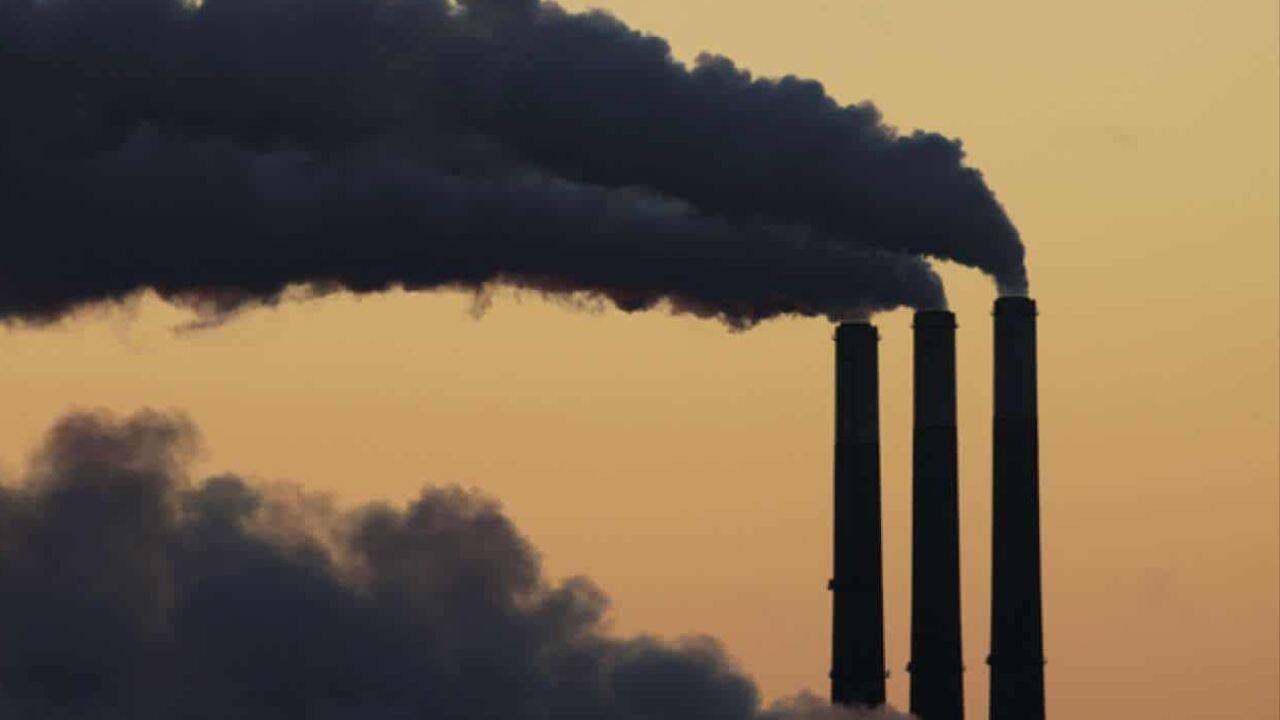
Environmental history loves a simple villain. The standard narrative surrounding the Clean Air Act era paints a picture of corporate evasion, where dirty industrialists realized they were being cornered by federal regulators and decided to cheat physics. The story goes like this: instead of actually cleaning up their dirty coal plants, utilities simply built giant, 500-foot-plus smokestacks to blast sulfur dioxide high into the upper atmosphere, washing their hands of the mess while exporting acid rain to whoever lived downwind.
It is a neat, emotionally satisfying tale. It makes complete sense if your understanding of atmospheric chemistry comes from a middle school science poster.
It is also completely wrong.
The explosion of tall smokestacks between 1970 and 1985—surging from a mere handful to well over 180 massive spires across the American landscape—was not an act of industrial malice. It was a brilliant, necessary engineering triage born from a desperate math problem. The operators of these facilities were not trying to hide pollution. They were managing fluid dynamics at an unprecedented scale because the alternative was immediate, localized mass poisoning.
I have spent decades tearing apart industrial compliance records and watching environmental policy get filtered through political theater. I have seen regulators mandate impossible timelines and corporate boards panic, resorting to brute-force physics when legal compliance became a moving target.
To understand why the tall stack strategy was actually a masterclass in risk mitigation rather than a cheap trick, you have to look past the moral outrage and look at the air currents.
The Physics of the Plume
Let us clear up the core misconception right away. People assume that dumping emissions higher up means the pollution magically disappears. It does not. Atmospheric dilution is a brutal, relentless equation of dispersion.
Before 1970, power plants relied on shorter stacks, typically under 200 feet. When you release millions of cubic feet of hot flue gas containing sulfur dioxide from a short stack, gravity and local atmospheric turbulence trap that heavy, toxic plume right at the surface level. It pools in the immediate neighborhood. It causes acute respiratory distress, spikes local asthma rates, and chokes out vegetation within a three-mile radius.
Ground-level concentration is what kills people. That is the variable that matters when you are measuring human health outcomes.
When the Environmental Protection Agency dropped the hammer with National Ambient Air Quality Standards under the Clean Air Act, they demanded a massive drop in ground-level pollutant concentrations. They gave utilities an impossible mandate: clean up your emissions immediately, or face ruin. The technology for Flue Gas Desulfurization—scrubbers—was in its infancy. It was clunky, prone to catastrophic scaling failures, enormously expensive, and simply could not be manufactured, delivered, and installed across hundreds of heavy industrial plants overnight.
If plants had kept their short stacks while waiting for scrubber technology to mature, local communities would have absorbed a lethal dose of concentrated sulfur dioxide.
Engineering reality forced a choice. You can either scrub the gas locally or lift it into the planetary boundary layer where atmospheric mixing can dilute concentrations down to harmless parts-per-billion levels before it ever touches human lungs. They chose the latter. They built monuments to fluid dynamics that reached heights rivaling skyscrapers, not to evade accountability, but to keep the immediate air breathable while the long-term chemical fixes were engineered.
The Acid Rain Paradox
Of course, the counter-argument is immediate and loud: what about the lakes in the Adirondacks? What about the dead forests in New England?
That is where the nuance gets messy, and where the standard environmental critique actually has a valid point, even if its motives are misattributed. Diluting local pollution by sending it sky-high creates a regional transport problem. The sulfur dioxide and nitrogen oxides ride the prevailing westerly winds, travel hundreds of miles, mix with moisture in clouds, and fall back down as sulfuric and nitric acid.
The tall stack strategy successfully solved the local mortality problem while exporting the chemical burden across state lines.
This leads to the uncomfortable truth that environmental purists hate to admit: engineering is rarely about choosing between a pristine outcome and a dirty one. It is about choosing which disaster you can survive. By pushing emissions into the upper troposphere, industrial engineers traded acute, high-concentration local toxicity for chronic, low-concentration regional acid deposition.
Was that trade-off worth it? From a strict human toxicology standpoint, yes. Acute sulfur dioxide poisoning causes immediate tissue damage and death in vulnerable populations. Regional acidification of lakes, while ecologically devastating, allowed society time to transition without immediate mass casualties in industrial zones.
The mistake wasn't building the stacks. The mistake was assuming the atmosphere was an infinite sink.
The Fallacy of Instantaneous Transformation
Modern critics love to look back with the benefit of hindsight and ask why companies didn't just install scrubbers on day one. This question betrays a total ignorance of how heavy industry actually operates.
Imagine a scenario where a utility executive in 1972 decides to bypass tall stacks and wait for advanced scrubber technology. To comply with the new federal limits without the benefit of vertical dispersion, that plant would have had to shut down entirely. Grid capacity would have collapsed. Hospitals, homes, and water treatment facilities would have lost power. The resulting economic and humanitarian freeze would have dwarfed any environmental benefit.
Tall stacks were the bridge between an unbreathable industrial past and a heavily regulated modern grid. They bought the time necessary for chemical engineers to figure out how to pull sulfur out of coal smoke before it ever left the ductwork.
By the late 1980s and 1990s, once scrubbers became reliable and the Acid Rain Program under the Clean Air Act Amendments of 1990 introduced cap-and-trade mechanisms for sulfur dioxide, those very same tall stacks became redundant. Utilities started installing scrubbers en masse, and emissions plummeted not because the stacks were there, but because the chemical engineering finally caught up to the regulatory ambition.
Unconventional Takeaways for Modern Compliance
We are watching the exact same historical amnesia play out today in modern decarbonization debates. Regulators demand instant net-zero transitions, brilliant activists scream for immediate bans on transitional technologies, and everyone acts as though complex industrial systems can pivot on a dime without causing catastrophic systemic failure.
If you manage industrial assets or study regulatory compliance, stop looking for silver bullets that bypass physics.
- Acknowledge the transition tax. Every environmental fix has a spatial and temporal displacement cost. If you clean up one vector, you are likely shifting the burden to another medium. Map that shift before you celebrate.
- Ignore moral narratives in engineering. Corporations do not build 800-foot concrete towers out of cartoonish evil. They do it because of boundary layer physics and capital constraints. If your regulatory framework ignores physical limitations, compliance turns into desperate improvisation.
- Build buffers, not just bans. Punitive mandates without transitional infrastructure lead to dangerous workarounds. Give systems the engineering runway they require to retool safely.
The 180-plus smokestacks that pierced the American sky by 1985 were not monuments to corporate greed. They were giant, concrete admissions that we didn't know how to clean our air cleanly yet, so we had to blow it far enough away until we finally figured it out.


