More than a century after the 1921 Tulsa Race Massacre, the legal battle for reparations has hit a wall that no amount of moral outrage seems able to scale. While civil rights lawyers and the few remaining survivors argue that the destruction of the Greenwood District—once known as Black Wall Street—represents an ongoing "public nuisance," the Oklahoma judicial system has effectively shut the door on direct financial restitution. The failure of these lawsuits is not an accident of history. It is the result of a deliberate legal framework that prioritizes the finality of old crimes over the economic recovery of the victims' descendants.
Greenwood was not just a neighborhood. It was a self-sustaining economic engine where $1.8 million in property damage claims were filed in 1921 dollars—a figure that translates to well over $30 million today when adjusted for inflation. Yet, not a single cent was ever paid out by insurance companies or the city government. Today, the fight for reparations has shifted from simple cash payouts to a broader demand for "soul-redeeming" systemic change, but the math of the massacre continues to haunt the city's balance sheets and its conscience. For a closer look into this area, we suggest: this related article.
The Economic Ghost of Black Wall Street
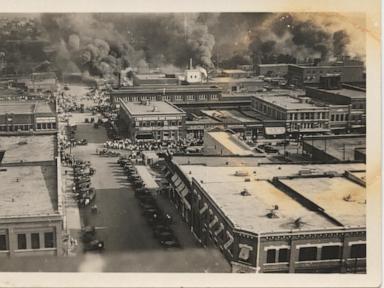
To understand why the legal fight is so bitter, you have to look at what was actually lost. In 1921, Greenwood boasted over 300 Black-owned businesses, including hotels, theaters, and doctor's offices. When a white mob, deputized by local officials, burned 35 blocks to the ground, they didn't just kill up to 300 people. They liquidated the generational wealth of an entire community.
Modern economists estimate that the cumulative loss of wealth, including the missed opportunity for compound interest and property appreciation, sits in the hundreds of millions of dollars. This is the core of the reparations argument. It is a debt that has been accruing interest for 105 years. When lawyers like Damario Solomon-Simmons argue that the state owes a debt, they aren't talking about a "handout." They are talking about an unpaid insurance claim and a state-sanctioned theft that remains on the books. For broader information on this issue, in-depth reporting can also be found at TIME.
Why the Courts Keep Saying No
The primary hurdle for the Tulsa survivors—now over 100 years old—has been the statute of limitations. In any other context, a crime or a tort committed a century ago would be barred from the courtroom. The legal strategy used by the survivors relied on Oklahoma's "public nuisance" law, the same tool used to sue opioid manufacturers. The argument was that the massacre created a lingering "nuisance" of poverty and blight that still exists in North Tulsa today.
However, the Oklahoma Supreme Court dismissed this approach in 2024. The justices ruled that the public nuisance law was never intended to provide a remedy for historical grievances, no matter how horrific. This creates a terrifying precedent for those seeking racial justice through the courts. It suggests that if you can run out the clock for long enough, the law eventually forgives the crime.
The Counter-Argument of Finality
Opponents of reparations often point to the "Pandora's Box" theory. They argue that if Tulsa is forced to pay for the sins of 1921, every city in America with a history of racial violence or discriminatory redlining will face bankruptcy. This isn't just a legal theory; it’s a fiscal fear. Municipalities operate on tight budgets. A massive payout would likely require a significant tax hike for current residents, many of whom argue they had no personal hand in the events of the past.
But this argument ignores the fact that the City of Tulsa and the State of Oklahoma are continuous legal entities. A corporation is liable for its debts even after the original board of directors dies. Why should a city be any different?
The Failure of Symbolic Gestures
In recent years, the City of Tulsa has leaned heavily into tourism and education. They built "Greenwood Rising," a world-class history center that chronicles the massacre. They held centennial commissions. They issued formal apologies.
For many in the community, these gestures feel hollow. They are "symbolic reparations." While the museum attracts tourists and revenue to the city, the actual residents of North Tulsa—descendants of the survivors—live in a district with a life expectancy 11 years shorter than the whiter parts of the city.
The disparity is measurable:
- Homeownership rates: In North Tulsa, homeownership remains significantly lower than the city average, a direct result of the 1921 destruction of the housing stock.
- Commercial investment: Large parts of the original Greenwood area are now occupied by a highway (I-244) and a baseball stadium, land use choices that further disconnected the Black community from its economic roots.
The Soul Redeeming Narrative vs. The Bottom Line
Civil rights advocates have started framing the movement as "soul-redeeming" work for the United States. This is a clever shift in rhetoric. It moves the conversation away from "guilt" and toward "healing." If the US wants to claim moral leadership on the world stage, it must address its own internal human rights violations.
But "soul-redeeming" doesn't pay for a mortgage or a college education. The harsh reality is that the US government has a long history of paying reparations to other groups—most notably Japanese Americans interned during WWII—while consistently denying them to Black Americans. The difference in the Tulsa case is the presence of documented evidence. We have the names. We have the property records. We have the death certificates.
The Problem of Identifying Beneficiaries
One of the most complex hurdles in the Tulsa debate is determining who gets paid.
- Direct Survivors: There are currently only two known living survivors (Lessie Benningfield Randle and Viola Fletcher).
- Descendants: There are thousands of people who can trace their lineage back to Greenwood in 1921.
- The Community: Should the money go to individuals, or should it be invested in a "Greenwood Trust" for local development?
When the pot of money is finite, these groups often find themselves at odds. The legal system thrives on this ambiguity. If the victims cannot agree on a distribution model, the court finds it easier to dismiss the claim entirely.
The Role of Private Enterprise
If the courts and the government refuse to budge, the focus may shift to the private sector. Several major banks and insurance companies active today were active in Tulsa in 1921. These institutions held the policies that were never honored.
There is a growing movement to audit the books of these corporations. If a company denied a claim in 1921 based on a "riot clause" that was invoked unfairly, that is a breach of contract. Contract law doesn't care about the "soul" of the nation; it cares about the terms of the agreement. This is the new front of the investigative war: moving the fight from the emotional sphere of civil rights into the cold, hard world of corporate liability.
The Myth of the Riot Clause
For decades, insurance companies avoided paying Greenwood claims by classifying the massacre as a "riot." Most standard policies at the time did not cover riot damage. However, eyewitness accounts and historical records show that the "mob" was essentially a state-sanctioned militia.
The city provided the weapons. The city provided the uniforms. This wasn't a spontaneous riot; it was an ethnic cleansing sanctioned by local law enforcement. Under that definition, the insurance companies' reliance on the riot clause was a fraudulent act. Proving this in a modern court, however, requires a level of archival evidence that many fear has been lost or destroyed.
The Political Deadlock
In Oklahoma, the political climate is increasingly hostile to anything that resembles "Critical Race Theory" or "woke" policy. The state government has passed laws restricting how the history of the massacre can be taught in schools if it makes students feel "discomfort."
This legislative pushback is a direct response to the reparations movement. By controlling the narrative of the past, the state can control the liability of the present. If the massacre is taught as a tragic, unexplainable "clash" between two groups, the state's culpability is minimized. If it is taught as a systematic destruction of a successful Black economy by the government, the case for reparations becomes undeniable.
A Path Forward or a Dead End
The Tulsa Race Massacre is a test case for the American experiment. Can a democracy admit to a state-sponsored atrocity and then provide a tangible remedy? So far, the answer is a resounding "no."
The legal avenues are narrowing. The survivors are fading. The city is gentrifying the very land it once burned. If reparations are truly about "soul-redeeming," then the American soul is currently in a state of default.
The next step isn't another commission or another museum. It is a forensic accounting of the wealth stolen in 1921 and a direct transfer of that wealth back to the community it was taken from. Anything less is just a performance of regret.