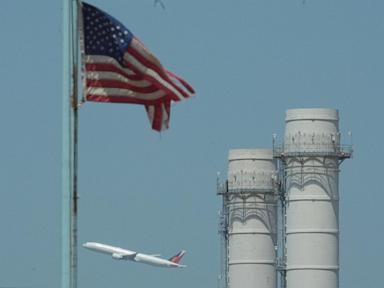
The era of predictable, relatively affordable air travel died on February 28, 2026. While the geopolitical shockwaves of the war with Iran dominate the evening news, the most immediate consequence for the average citizen is the rapid disintegration of the global flight network. Airfares are not just rising; they are being fundamentally restructured as carriers face a liquidity crisis driven by a 130% surge in jet fuel costs. If you are holding a ticket for this summer, there is a statistically significant chance your flight will be rerouted, delayed, or scrapped entirely as airlines prioritize fuel-efficient corridors over passenger convenience.
The Invisible Ceiling of Jet Fuel Costs
For decades, the airline industry operated on a razor-thin margin where fuel accounted for roughly 20% to 30% of operating expenses. That math has evaporated. Since the escalation of the conflict, jet fuel prices have catapulted from $90 a barrel to over $209. In North Europe, the price per metric tonne has breached $1,250, a level unseen since the most volatile weeks of the 2022 energy crisis.
This is not a simple matter of airlines being greedy. When the price of the primary input more than doubles in six weeks, the business model breaks. We are seeing a "phased retreat" from the skies. United Airlines and American Airlines have already signaled that they are cutting unprofitable routes for the next two quarters. They are effectively betting that oil will remain above $100 through 2027.
Consumers are currently feeling this through a barrage of "ancillary fee" hikes—the $10 increase for a checked bag here, a $50 fuel surcharge there. But these are stop-gap measures. The real shift is in the "load factor" requirements. Airlines can no longer afford to fly a plane that is only 70% full. If a flight doesn't meet a strict profitability threshold based on current fuel spot prices, it is being consolidated. Your Tuesday morning direct flight is becoming a Wednesday afternoon connection.
The Geography of Airspace Avoidance
The physical map of the world has changed for pilots. The closure of Iranian airspace and the surrounding "gray zones" in the Middle East has forced a massive rerouting of the lucrative "Kangaroo Route" between Europe and Southeast Asia.
When a flight from London to Singapore has to avoid Iranian and potentially Iraqi or Syrian airspace, it adds hours to the journey. A three-hour detour on a Boeing 787-9 isn't just an inconvenience for the passengers; it consumes an additional 15 to 20 tonnes of fuel. At current prices, that detour alone can cost a carrier an extra $25,000 per flight.
- Longer flight times: Expect 10% to 15% increases in duration for transcontinental routes.
- Weight restrictions: To carry the extra fuel needed for longer paths, airlines are sometimes forced to leave cargo—or even passengers—behind to keep the aircraft within safe takeoff weights.
- Crew timeouts: Longer flights push flight crews toward their legal duty limits, leading to more "cascading" cancellations when a small delay at the gate pushes a pilot over their allowed hours.
The Strait of Hormuz, which handles roughly 20% of the world's oil supply, is the bottleneck. With tanker traffic down by 70%, the physical supply of refined jet fuel is tightening. In some regions, like Nigeria and parts of Southeast Asia, airlines aren't just worried about the price; they are worried about whether the fuel will be at the airport when the plane lands.
Why Your "Hedged" Ticket Isn't Safe
There is a common misconception that because airlines "hedge" their fuel—buying it in advance at set prices—consumers are protected from sudden spikes. This is only partially true. Most hedges are short-term or cover only a percentage of the total fuel burn.
Lufthansa and EasyJet have already warned that as their existing hedges expire late this summer, ticket prices will undergo a secondary "correction." We are essentially in a grace period. The flights you see today are being fueled by contracts signed months ago. The flights you book for August will be fueled by the current, wartime market rates.
Furthermore, "force majeure" clauses in airline contracts of carriage are being scrutinized. While a price hike doesn't usually allow an airline to cancel your specific ticket, a "lack of fuel availability" or "airspace closure" does. Carriers are using these geopolitical realities to prune their schedules of any flight that doesn't produce a high yield.
The Strategy for the 2026 Traveler
If you must travel during this window, the old rules of booking no longer apply. The "wait for a deal" strategy is effectively dead.
Book now, but book flexible. The price you see today is likely the lowest it will be for the next eighteen months. However, the risk of schedule change is at an all-time high. Only purchase tickets that allow for a full refund—not just a credit—if the airline changes the flight time by more than a few hours.
Avoid the "Choke Point" Hubs. If possible, bypass hubs that are geographically adjacent to the conflict zone. Dubai, Doha, and Istanbul are world-class transit points, but they are also the most sensitive to sudden airspace closures. Routes that take a more northerly or southerly path, even if they seem longer on a map, are currently more stable.
Monitor the "Fuel Surcharge" Line. Look closely at the breakdown of your ticket price. Many airlines are now separating the "base fare" from the "YQ" or "YR" fuel surcharge. In some cases, the surcharge is now higher than the seat price itself. If the conflict de-escalates, these surcharges are theoretically the first thing to drop, but history suggests airlines are slow to remove them once the market accepts the new price floor.
The global aviation system is currently a "diamond under pressure," as one industry analyst put it. It is strong, but it is being squeezed to its breaking point. For the traveler, this means the luxury of choice is being replaced by the necessity of survival. The sky is still open, but the cost of entry has never been higher, and the certainty of arrival has never been lower.
Directly monitor the status of your carrier’s fuel surcharges and route cancellations at least 72 hours before departure.


