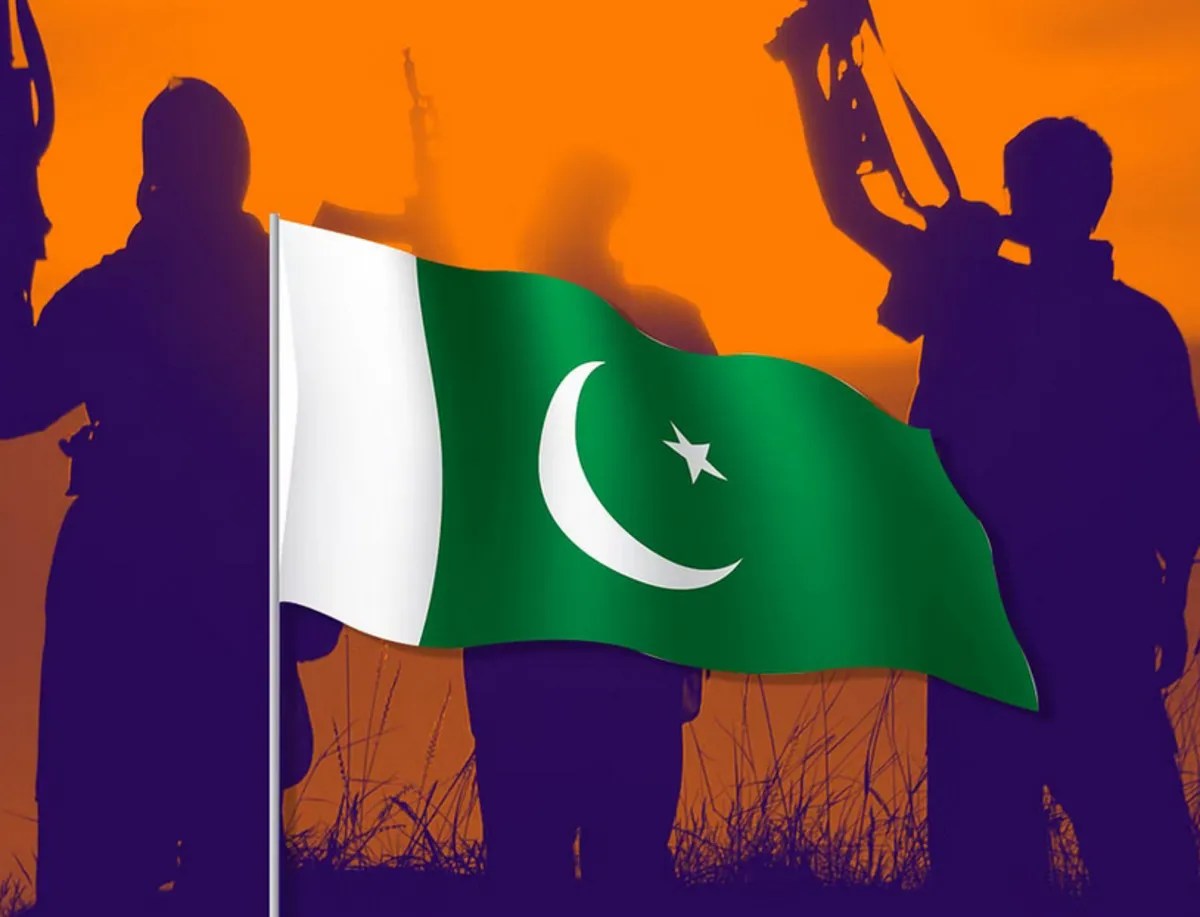
New Delhi is about to launch a high-stakes diplomatic offensive on American soil, trading traditional white papers for visceral imagery. Starting next week, a series of exhibitions across major U.S. cities will document decades of state-sponsored terrorism originating from Pakistan. This isn't just another photo op. It is a calculated move to force Washington's hand at a time when the Biden-Harris administration is balancing a delicate regional seesaw.
The timing is surgically precise. By bringing the evidence of the 2001 Parliament attack, the 2008 Mumbai carnage, and the Pulwama bombing directly to the American public and policy circles, India is attempting to strip away the clinical detachment of "geopolitical strategy." They want the visceral reality of the blood on the ground to be unavoidable.
Beyond the Diplomatic Briefing
For years, the standard operating procedure for the Ministry of External Affairs (MEA) was the "dossier." Thick binders filled with intercepted signals, satellite imagery, and confession transcripts would be handed over in wood-paneled rooms. Usually, they gathered dust.
The upcoming exhibitions represent a shift toward public diplomacy with a jagged edge. This isn't meant for the eyes of career diplomats who have already seen it all. It is meant for the staffers on Capitol Hill, the think-tank analysts who shape the Sunday talk show narratives, and the influential Indian-American diaspora.
If you want to change a country’s foreign policy, you don’t just talk to the leaders. You change the atmosphere those leaders breathe. India has realized that while the Pentagon values Pakistan for logistical access to the region, the American electorate has zero appetite for groups like Lashkar-e-Taiba or Jaish-e-Mohammed. By putting a human face on the victims—families torn apart in the narrow lanes of Mumbai or soldiers vaporized in Kashmir—India is trying to make the cost of U.S. silence too high.
The Washington Disconnect
There is a persistent friction in the U.S.-India relationship that these exhibitions aim to resolve. Washington views the world through the lens of Great Power Competition, primarily focusing on containing China. In that framework, Pakistan often appears as a necessary, if troublesome, tactical partner.
New Delhi sees this as a dangerous delusion.
The Indian perspective is that you cannot compartmentalize terror. You cannot fund a military in Islamabad to help with regional stability while that same military’s intelligence wing, the ISI, maintains a stable of proxies to use against Indian infrastructure. These exhibitions will use physical evidence and survivor testimony to argue that the "neighborhood bully" narrative is actually a "global security threat" narrative.
Why Now
Several factors have converged to make this the opportune moment for such an aggressive move.
- The FATF Grey List Aftermath: Since Pakistan was removed from the Financial Action Task Force grey list, New Delhi has observed a resurgence in infiltration attempts and targeted killings in the Jammu region.
- The China Factor: As Pakistan leans further into Beijing's embrace via the China-Pakistan Economic Corridor (CPEC), India is betting that the U.S. will be more receptive to evidence showing how these terror networks operate within that orbit.
- Domestic U.S. Politics: With an election cycle looming, no American politician wants to be seen as soft on global terrorism.
The Logistics of Truth
The exhibitions are expected to feature high-definition digital archives, artifacts recovered from encounter sites, and declassified documents that map the financial trails of terror organizations. This is an attempt to create a permanent record in the American consciousness.
It is a risky strategy. Critics argue that "airing dirty laundry" on the international stage can backfire, making India look obsessed with its neighbor rather than focused on its own rise. But the veterans in the South Block aren't worried about appearances anymore. They are worried about the next 26/11. They are tired of the "strategic restraint" that has historically defined India’s response to cross-border provocations.
Tracking the Money Trail
A significant portion of the exhibition reportedly focuses on the hawala networks and crypto-conduits used to fund operations. It’s a technical deep dive designed to appeal to the Treasury Department and financial regulators. By showing how easy it is to move money from a front company in Europe or the Middle East into the hands of a sniper in Rajouri, India is highlighting the holes in the global financial net.
The argument is simple. If you allow these networks to exist to target India, they will eventually be used to target you. It is a grim reminder that the terrorists of the 1990s in Afghanistan became the nightmare of 2001 in New York.
The Counter Narrative
We should expect a fierce response from the Pakistani mission in Washington. They will likely characterize this as "Hindutva-driven propaganda" designed to distract from internal Indian issues. They will point to human rights reports in Kashmir. This is the standard back-and-forth that has characterized the subcontinent's rivalry for seventy years.
However, India’s new approach skips the middleman. By taking the evidence to the public square, they are daring the observers to look at the photos of the dead and call them propaganda. It is hard to argue with a bullet-riddled backpack or a GPS device recovered from a terrorist that shows a starting point in Muridke.
The Diaspora as a Force Multiplier
The Indian-American community is no longer just a group of doctors and engineers sending money home. They are a potent political bloc. These exhibitions will serve as a rally point. When a Congressman sees five hundred high-net-worth constituents in his district demanding a tougher stance on Pakistani-based terror groups, he listens.
This is the democratization of intelligence. By making the data accessible, India is arming its supporters with the talking points they need to influence local and federal policy.
The Operational Reality
While the photos and videos will garner the headlines, the real work is happening in the sidebar meetings. Indian security officials are expected to hold closed-door sessions with U.S. law enforcement and counter-terrorism units. Here, the focus won't be on the tragedy, but on the tradecraft.
They will discuss the evolution of "hybrid" terrorists—local recruits with no prior criminal records who are radicalized online and directed via encrypted apps. They will talk about the use of drones to drop weapons and drugs across the International Border. This is the "how" that the competitor articles missed. It isn't just about showing that terror exists; it’s about showing that the methods are evolving faster than the current international laws can handle.
The Cost of Silence
India is signaling that the era of "quiet diplomacy" on terrorism is over. If the international community, led by the U.S., continues to treat the ISI’s double game as a manageable nuisance, India will take its case to the people.
The exhibitions are a warning shot. They suggest that New Delhi is willing to disrupt the comfortable status quo of South Asian diplomacy to ensure its own security. For the American public, it will be a rare, unvarnished look at a conflict that is often buried in the back pages of the newspaper.
For the planners in Islamabad, it is a nightmare scenario. Their primary asset—the ability to maintain "plausible deniability"—is being systematically dismantled in the most influential capital in the world.
A Shift in the Global Order
This move also reflects India's growing confidence. A decade ago, India might have asked for a meeting to discuss these issues. Now, it sets up a storefront in the heart of Washington D.C. and invites the world to see for themselves. This is the behavior of a power that no longer feels it needs permission to protect its interests.
The exhibitions will focus heavily on the 26/11 Mumbai attacks, specifically because of the American lives lost at the Taj and the Jewish center at Nariman House. By highlighting the American casualties, India is bridging the gap between "their problem" and "our problem." It is a cold, calculated appeal to shared grief.
Technical Evidence and Forensics
The display of recovered equipment is particularly telling.
- Thuraya satellite phones with logs showing calls to Pakistani handlers.
- Ammunition markings from the Pakistan Ordnance Factories (POF).
- Captured training manuals that detail urban warfare techniques taught in camps across the Line of Control.
This isn't hearsay. It is physical, forensic proof. When an American official stands in front of a crate of weapons with Pakistani military stamps, the "non-state actor" defense begins to crumble.
The Final Calculation
Washington finds itself in a tight spot. It needs India as a counterweight to China, but it still relies on Pakistan for access to geography that remains critical for counter-intelligence in Afghanistan. India knows this. By launching these exhibitions, they are essentially telling the U.S. that the "two-timing" must end.
The brutal truth is that terrorism in South Asia isn't a glitch in the system; for some, it is the system. India is no longer willing to be the silent victim of that system while its allies look the other way for the sake of convenience.
As the first exhibition opens its doors next week, the images of the past will collide with the politics of the present. The goal isn't just to remember the dead. It is to ensure that the living are forced to make a choice. You are either with the victims, or you are funding the perpetrators. There is no longer a middle ground for "nuanced" diplomacy when the evidence is staring you in the face from a gallery wall.
The red carpets are being rolled out, but the images they lead to will be stained with a different color. India has decided that if the world won't listen to its words, it will have to look at its scars.
The strategic silence of the past is being replaced by a loud, documented, and undeniable scream for accountability. Washington's response will determine the trajectory of the Indo-Pacific alliance for the next decade.