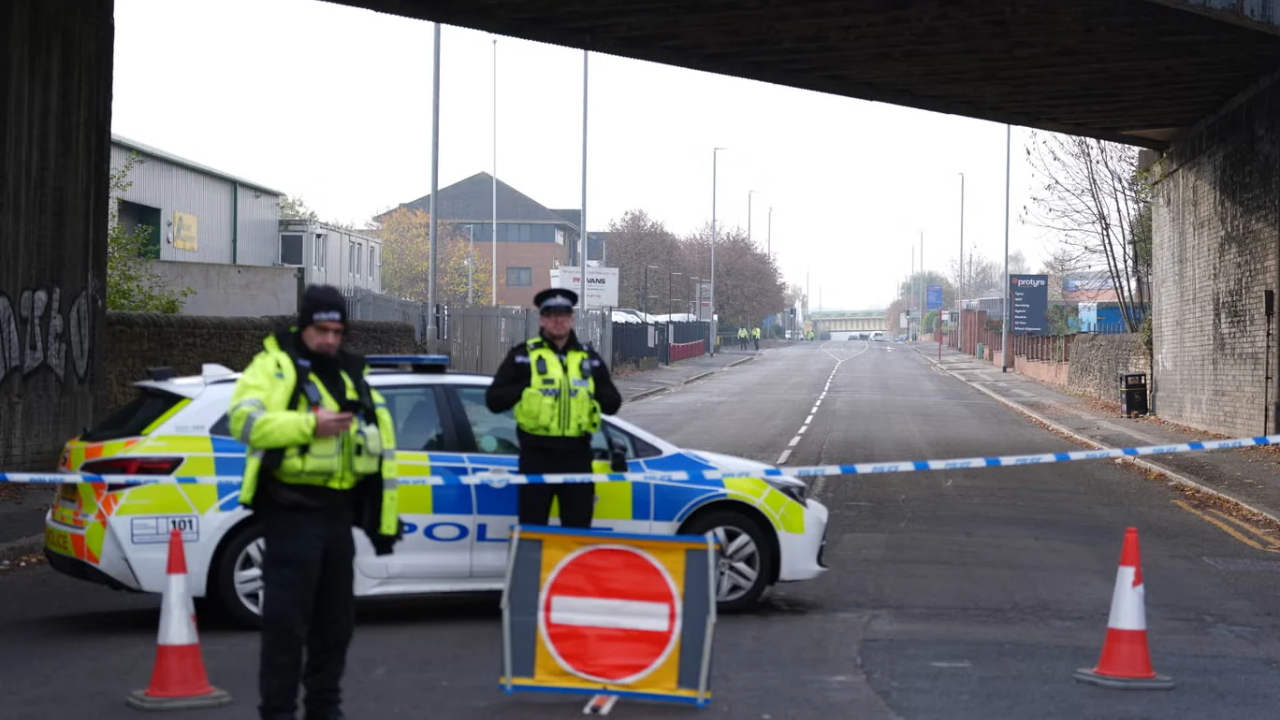
Two people are dead and four are under arrest in the UK after a vehicle fleeing police slammed into a Volkswagen, turning a routine traffic intervention into a fatal street-level tragedy. This collision is not an isolated lapse in driver judgment. It is the predictable outcome of a systemic tension in British law enforcement—the friction between apprehending suspects who refuse to stop and protecting innocent motorists sharing the same tarmac. When a pursuit escalates, physics takes over, and the margin for human error vanishes within seconds.
Every year across England and Wales, hundreds of police pursuits end in collisions, serious injuries, or fatalities. The Independent Office for Police Conduct (IOPC) routinely investigates these incidents, yet the core mechanics remain stubbornly unchanged. A suspect makes a split-second decision to floor the accelerator. Officers, bound by strict operational protocols, must weigh the immediate threat of the suspect escaping against the catastrophic risk of a high-velocity chase through residential or arterial roads. Learn more on a connected topic: this related article.
The Anatomy of a Split-Second Escalation
Most fatal police pursuits do not begin with bank robbers fleeing a heist. They start with minor infractions. A broken taillight, an unverified insurance flag on an Automatic Number Plate Recognition (ANPR) camera, or erratic lane discipline.
When blue lights flash in the rearview mirror, the driver faces a binary choice. Most pull over. A tiny, desperate fraction panics. More reporting by Associated Press explores related views on this issue.
Once that accelerator hits the floor, the dynamic shifts entirely. The fleeing driver is typically untrained, often impaired, and operating under extreme adrenaline. They treat red lights as suggestions and blind corners as straightaways. Meanwhile, the pursuing officers—despite undergoing rigorous Initial Phase Pursuit (IPP) or Tactical Pursuit and Containment (TPAC) training—are bound by the laws of momentum and reaction time.
Consider a hypothetical example of how quickly distance collapses on a standard 30 mph urban road. If a fleeing vehicle accelerates to 70 mph, it covers roughly 102 feet every single second. The average human reaction time to an unexpected hazard—such as an uninvolved Volkswagen pulling out of a side junction—is approximately 1.5 seconds. Before the fleeing driver even touches the brake pedal, the car has already traveled over 150 feet. At that kinetic energy, modern crumple zones and airbags simply cannot absorb the impact.
Why Innocent Bystanders Pay the Ultimate Price
The tragedy of the Volkswagen crash highlights the most disturbing statistic in pursuit analysis. The people who die in these collisions are disproportionately those who had nothing to do with the original offense.
- The Third-Party Vulnerability: Uninvolved motorists and pedestrians have zero warning. While the police car has sirens and high-visibility strobes, the fleeing vehicle ahead of it is silent and dark, acting as a kinetic battering ram moving at highway speeds through local streets.
- Tunnel Vision: Fleeing drivers suffer from severe perceptual narrowing. Their focus locks exclusively onto the road immediately ahead and the mirrors behind them, rendering cross-traffic virtually invisible until the moment of impact.
- Vehicle Disparity: Suspects frequently drive stolen, high-performance hatchbacks or heavy SUVs, while ordinary commuters drive standard family cars. The mass and velocity differential guarantees asymmetrical devastation upon collision.
Inside the Police Control Room
Public perception often frames a police pursuit as a rogue officer chasing a suspect with unchecked aggression. The reality inside a modern UK force control room is far more bureaucratic, scrutinized, and tense.
Under the College of Policing Authorized Professional Practice (APP) guidelines, a pursuit is not a free-for-all. The moment a driver fails to stop, the pursuing officer must transmit a live risk assessment over the radio. They have to state the reason for the stop, the road conditions, traffic density, weather, and the suspect's manner of driving.
A Force Incident Manager (FIM)—usually an inspector sitting miles away in a control room—listens to that commentary and holds the ultimate authority to authorize or abort the chase.
[Trigger Event: Failure to Stop]
        │
        ▼
[Officer Live Risk Assessment] ──► (High Risk / Pedestrian Density) ──► [FIM Aborts Pursuit]
        │
  (Manageable Risk)
        │
        ▼
[TPAC / Air Support Deployment] ──► [Containment / Stinger] OR [Collision]
The FIM has to make a cold calculation in real time. If they order the police car to back off, the suspect escapes. That suspect might be an uninsured teenager, or they might be an armed offender on their way to commit a violent crime. If the FIM allows the pursuit to continue and someone dies, the officers face years of grueling IOPC investigations, potential misconduct hearings, and even criminal charges of dangerous driving.
The Legal Tightrope for Pursuit Drivers
For decades, UK police drivers operated in a legal gray area. Under the Road Traffic Act 1988, emergency exemptions allowed officers to exceed speed limits and pass red lights, yet the law still judged their standard of driving against that of a "careful and competent" civilian driver.
That changed with the Police, Crime, Sentencing and Courts Act 2022. The legislation introduced a specific test comparing a police driver's actions against a competent and careful constable with the same level of training, rather than a member of the public.
While police federations welcomed the clarity, critics argue it lowered the threshold for accountability. The fundamental problem remains untouched by legislation. Changing the legal standard in a courtroom does not alter the coefficient of friction between rubber tires and wet British asphalt.
The Four Arrests and the Aftermath
When a crash like the Volkswagen collision results in four arrests, investigators immediately pivot from traffic reconstruction to criminal conspiracy and culpability.
In multi-occupant fleeing vehicles, determining who was behind the wheel is rarely straightforward. Suspects routinely scramble over seats in the chaotic seconds following an impact, or flee the wreckage on foot in different directions. Forensic collision investigators must rely on DNA swabs from deployed airbags, seatbelt bruising patterns on chests and shoulders, and granular CCTV mapping to prove beyond reasonable doubt who had control of the steering wheel.
Beyond the driver, the remaining three passengers face intense scrutiny. Under UK law, passengers are not automatically guilty of a driver's dangerous maneuvers. However, if prosecutors can prove the occupants encouraged the flight, were jointly engaged in a theft of the vehicle, or were fleeing the scene of a coordinated crime, charges of aggravated vehicle taking or joint enterprise offenses quickly follow.
The Mandatory IOPC Referral
Whenever a death or serious injury occurs following police contact, the force involved must immediately refer the matter to the Independent Office for Police Conduct.
- Scene Preservation: The stretch of road becomes a sterile crime scene, often closed for 12 to 24 hours while laser scanners map every skid mark, gouge in the tarmac, and debris field.
- Telematics Extraction: Investigators download the "black box" data from both the police cruiser and the involved civilian vehicles. This reveals exact speeds, throttle positions, steering angles, and braking inputs down to the millisecond.
- Audio and Video Review: Every second of dashcam footage, body-worn video, and control room radio transmission is synchronized to determine whether the pursuit should have been called off before the crash occurred.
This process is agonizingly slow. Families of the deceased often wait eighteen months to two years for an inquest to conclude, trapped in a bureaucratic limbo while investigators dissect whether the police response was proportionate.
The Tactical Alternatives and Their Limits
If high-speed chases are so inherently lethal, why do police still engage in them? The answer lies in the severe limitations of the alternatives.
The National Police Air Service (NPAS) is the gold standard for safe tracking. A helicopter equipped with thermal imaging can follow a suspect vehicle from thousands of feet up, allowing ground units to turn off their sirens, drop back out of sight, and wait for the driver to slow down once they believe they have escaped. Yet helicopters are expensive, scarce, and grounded by heavy fog, high winds, or low cloud cover—all staples of the British climate.
Tactical Contact—where a specially trained police driver deliberately nudges a fleeing vehicle to spin it out—is effective against mopeds and small cars at low speeds, but attempting it at 70 mph on a busy roadway carries a massive risk of sending both vehicles careening onto the pavement.
Stingers (hollow spike strips deployed across the road) deflate tires gradually, preventing immediate blowouts. However, officers must physically stand near the carriageway to throw them across the tarmac, putting themselves in the direct path of a desperate driver who may swerve toward them.
| Tactical Method | Primary Advantage | Critical Operational Flaw |
|---|---|---|
| Ground Pursuit (TPAC) | Immediate response; no specialized external assets needed to initiate. | High risk of third-party collisions; escalates suspect panic. |
| Air Support (NPAS) | Removes ground pressure; suspect often slows down when sirens fade. | Vulnerable to bad weather; limited fleet availability across regions. |
| Stinger Deployment | Controlled deflation brings vehicles to a mechanical halt. | Requires advance positioning ahead of the suspect's unpredictable route. |
| Automatic Disengagement | Eliminates immediate pursuit collision risk entirely. | Emboldens repeat offenders; leaves dangerous drivers active on the road. |
The Deterrence Dilemma
There is a hard truth that criminal justice analysts quietly acknowledge. If word spreads on the street that police will automatically abandon any pursuit the moment a driver crosses 70 mph or drives on the wrong side of the road, refusing to stop becomes a guaranteed get-out-of-jail-free card.
Law enforcement faces an impossible double bind. Pursue aggressively, and innocent people in Volkswagens die at intersections. Disengage universally, and the streets belong to anyone willing to drive recklessly enough to force a police stand-down.
Real reform requires moving the intervention upstream before the keys ever turn in the ignition, or deploying remote immobilization technologies that cut fuel delivery without requiring a two-ton cruiser to match a suspect's suicidal speed. Until vehicle manufacturers and lawmakers bridge that technological gap, British roads will remain the staging ground for high-stakes gambles where ordinary drivers pay with their lives.