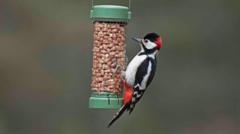
The traditional image of the British garden—a wooden table topped with seeds and a colorful array of tits and finches—is under serious scientific scrutiny. For decades, the Royal Society for the Protection of Birds (RSPB) and other conservation bodies encouraged year-round feeding to offset habitat loss. Now, the messaging is shifting toward a more cautious, seasonal approach. The primary reason for this pivot is that providing high-energy bird food during the warmer months can inadvertently trigger disease outbreaks, disrupt natural nesting cycles, and leave chicks malnourished. While your intentions are pure, your bird feeder may be a biological hazard.
The Disease Trap in Your Backyard
When temperatures rise, so does the risk of infection. During the winter, cold weather naturally suppresses some pathogens, but the warmth of spring and summer creates a petri dish effect on plastic and wooden feeders. We are seeing a terrifying rise in Trichomonosis, a parasite that causes throat swelling in finches, eventually leading to death by starvation or dehydration.
The issue is one of density. In the wild, birds forage across vast distances, spreading their droppings and saliva over a wide area. A garden feeder forces hundreds of birds from different social groups into a space the size of a dinner plate. If one greenfinch carries the parasite, the damp residue left on a perching peg becomes a transmission site for every bird that follows. During the summer heat, these parasites survive longer outside the host. If you aren't scrubbing your feeders with a weak bleach solution every single week, you are running a high-risk transmission hub.
The Junk Food Crisis for Nestlings
There is a metabolic mismatch between what an adult bird wants to eat and what a chick needs to survive. Most commercial bird food is heavy on sunflower seeds, peanuts, and suet. These are calorie-dense "power foods" that help adults survive a frost. However, spring is the season of the caterpillar.
Nesting birds require massive amounts of protein and moisture found in soft-bodied insects. When adults find an easy source of dried seeds or suet pellets in a garden, they often feed these to their young. A chick’s digestive system is not designed to process hard, dry seeds or fatty suet. In the worst cases, large chunks of peanuts can cause physical choking. Even if they manage to swallow it, the lack of dietary diversity leads to "angel wing" or other developmental deformities. By providing an easy meal, you are effectively offering a toddler a diet of protein shakes and candy bars instead of the vegetables they need to grow.
Evolutionary Interference and the Loss of Instinct
We are fundamentally changing the behavior of wild species. Ornithologists have observed that birds living near consistent urban feeding stations are beginning to shift their nesting dates. This might seem like a minor adaptation, but it creates a "phenological mismatch." If a blue tit hatches its brood two weeks early because the local bird feeder made the environment seem more resourceful than it actually is, the chicks may miss the natural peak of the oak leaf caterpillar.
Once the natural food source disappears, the birds become entirely dependent on human intervention. This creates a fragile ecosystem. If you go on holiday for two weeks in July and your feeders run dry, a generation of birds that never learned to forage in the woods could perish. We are breeding the "wild" out of our wildlife, creating a population of garden dependents that lack the resilience to survive without a plastic tube of niger seeds.
The Hidden Danger of Whole Peanuts
Peanuts are a staple of the industry, but they are perhaps the most dangerous item in the summer pantry. Beyond the choking hazard for fledglings, peanuts stored in warm, humid conditions are prone to developing Aflatoxin. This is a potent toxin produced by certain molds. While it may not kill an adult bird instantly, it causes long-term liver damage and weakens the immune system, making the bird more susceptible to the aforementioned Trichomonosis or Avian Flu. If your peanuts look dusty or smell slightly musty, throw them away immediately.
Rethinking the Summer Garden
If the goal is truly to help birds, the solution isn't a better feeder—it's a better habitat. A manicured lawn and a bird table are a poor substitute for a functioning ecosystem. Instead of buying bags of seed, we should be "planting" the food.
- Native Hedges: Species like hawthorn and blackthorn provide late-season berries but, more importantly, they are host plants for hundreds of insect species.
- Water Safety: A birdbath is more important than a feeder in July. However, stagnant water is a death sentence. It must be emptied and scrubbed daily to prevent the spread of Avian Pox.
- Long Grass: Letting a patch of your lawn grow long encourages grasshoppers and beetles, the exact high-protein prey that parent birds are searching for.
The "lazy gardener" approach is actually the most scientific one. Decaying leaf litter and untidy corners are the real engines of avian survival. They produce the bio-mass that sustains a bird population far better than a bag of imported grain ever could.
The Case for Selective Feeding
There are exceptions to the "no feed" rule, but they require precision. During a severe summer drought, the ground becomes too hard for blackbirds and thrushes to pull up worms. In these specific windows of extreme weather, soaking dried mealworms in water can be a literal lifesaver. The key is the moisture. A dry mealworm offers protein but can dehydrate a bird that is already struggling to find water.
If you choose to continue feeding during the summer, you must move the feeders every few days. This prevents the buildup of droppings on the ground below, which is where ground-feeding birds like dunnocks and chaffinches pick up most of their infections.
The Commercial Conflict of Interest
It is worth noting why the "feed year-round" myth has been so persistent. The wild bird food industry is worth hundreds of millions of pounds. Marketing campaigns from seed producers have long leaned on the emotional satisfaction humans get from seeing birds at a window. They frame feeding as an essential act of mercy. While it was a useful message when bird populations were plummeting due to the intensification of farming in the 1970s, the science has evolved. Our understanding of viral transmission and nutritional requirements is now far more sophisticated than the slogans on the back of a seed bag.
The hard truth is that feeding birds in the summer is often more about our own enjoyment than their survival. We like the proximity to nature, the flash of color, and the feeling of being a "provider." But true conservation requires a level of detachment. It requires us to step back and ask if our presence is helping the species or just satisfying our own desire for a connection to the wild.
Stop treating your garden like a zoo and start treating it like a nature reserve. Empty the feeders, clean them with a stiff brush, and put them in the shed until the first frost hits in October. Let the birds be birds.