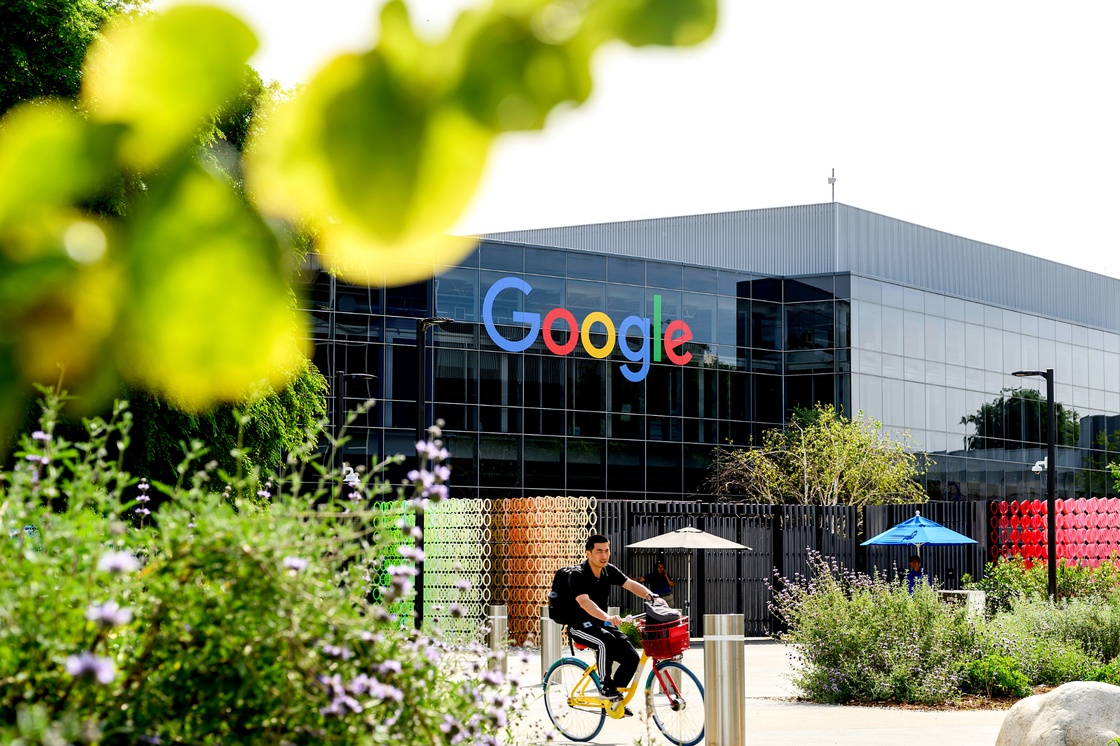
The European Union has a new target in its sights. Brussels wants to force Alphabet to share its prized search data and strip away Android defaults to give rival artificial intelligence firms a fighting chance. It is a bold, sweeping plan. But it is fundamentally flawed. By treating artificial intelligence as a simple add-on to existing web search, European regulators are fighting yesterday's war with outdated weapons. The real battlefield is not the search bar. It is the operating system itself, and the EU's proposed remedies might actually end up cementing Google dominance rather than shattering it.
To understand why the EU intervention is stalling out before it even begins, you have to look at the plumbing of modern mobile software.
The Illusion of the Level Playing Field
The European Commission believes that if you force Google to hand over its search click-and-query data, competitors will magically build equivalent search engines. This is a fantasy.
Search data is not a static pool of water you can bucket out to competitors. It is a living, breathing feedback loop. Google processes billions of queries a day. The machine learning models that parse these queries are continuously tuned by real-time user behavior. Giving a rival a hard drive full of last month's search logs is like giving a runner a photograph of a marathon and expecting them to win the race.
More importantly, the nature of how we retrieve information is shifting.
Users do not want a list of blue links anymore. They want answers. When a user asks an AI assistant to plan a trip, book a table, or summarize a document, the assistant does not just run a traditional web search. It orchestrates a complex sequence of API calls, personal data retrieval, and contextual reasoning.
[Traditional Search] ---> User Query ---> Index Lookup ---> List of Blue Links
[AI Agent Era]      ---> User Query ---> Intent Parsing ---> App Integration ---> Action/Answer
By focusing so heavily on forcing Google to share raw web search data, the EU is regulating a declining asset. The true value has migrated upstream to the models that interpret user intent and the operating system integration that allows those models to take action.
Why Android Defaults Are a Red Herring
The second pillar of the European strategy involves forcing Google to open up Android. Regulators want to ban Google from pre-installing its own Gemini AI as the default assistant. They want a "choice screen" for AI, similar to the browser choice screens mandated under the Digital Markets Act (DMA).
It sounds fair. In practice, it is useless.
Choice screens are a friction point for users, not an empowerment tool. Most consumers click the easiest option to get past the setup screen and start using their phone. When forced to choose, they tend to select the brand they already know. On Android, that brand is Google.
Furthermore, integrating a third-party AI assistant deep into an operating system is a technical nightmare. Google Gemini works well on Android because it has deep, low-level access to the system hardware and private APIs. It can read what is on your screen, access your local app data, and run on-device machine learning chips with minimal battery drain.
Will Google be forced to hand over those same low-level system privileges to OpenAI, Anthropic, or a homegrown European startup?
If they do, they open up massive security and privacy vulnerabilities. If they do not, the rival AI assistants will be slow, battery-hungry, and functionally crippled compared to the native Google offering.
- The Security Dilemma: Granting third-party AI deep system access risks user privacy.
- The Performance Gap: Denying that access makes rival AI feel broken and sluggish.
- The Monopolization Trap: Either way, Google wins the user experience battle.
No regulator in Brussels has explained how to resolve this technical paradox. They simply demand "equal access" without defining what equal access looks like at the silicon level.
The Secret Subsidy of Android
There is a dirty secret that nobody in Brussels wants to talk about. Android is free because of search.
Google spends billions of dollars a year developing, maintaining, and securing the Android open-source project. They distribute this software to hardware manufacturers like Samsung, Xiaomi, and Motorola for free. In exchange, Google requires these manufacturers to pre-install Google services, which drives the search queries that fund the entire ecosystem.
If the EU successfully strips Google of its ability to monetize Android through search and default AI placements, that business model breaks.
Google will not continue to fund Android out of charity. They will find other ways to extract value. They could charge hardware makers licensing fees for Android. This would instantly drive up the price of budget smartphones, hitting lower-income European consumers the hardest. Alternatively, they could restrict the best AI features to their own Pixel hardware, turning Android into a fragmented, second-class ecosystem.
The European Union's regulatory push is driven by a noble goal: fostering competition. But by treating AI as an isolated software application rather than an integrated hardware-software ecosystem, they are missing the target entirely.
If you want to break Google's grip on mobile AI, you cannot do it by tweaking the settings menu of an operating system that Google owns, builds, and controls. You have to fund, build, and support entirely new, open hardware platforms that bypass the app store gatekeepers altogether. Until regulators realize that, every decree out of Brussels is just rearranging deck chairs on a ship Google built.