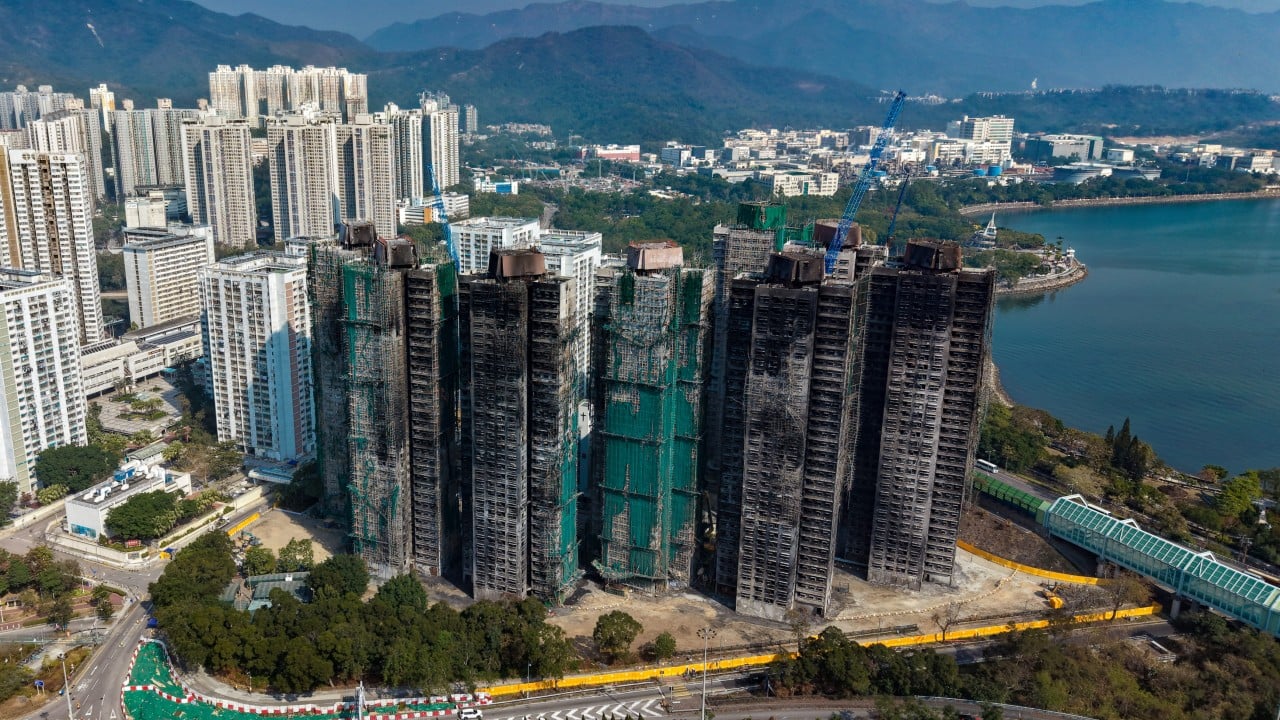
The buy-back offer at Wang Fuk Court was never just a financial transaction. It was a pressure test for the Private Sector Participation Scheme (PSPS) and the fragile social contract governing Hong Kong’s subsidized housing. For the homeowners who flatly rejected the government’s recent exit strategy, the victory of keeping their keys may soon feel like a heavy burden. They are now entering a legal and financial wilderness where maintenance costs, plummeting liquidity, and the weight of a decaying building structure will dictate their future far more than any property deed.
The core of the crisis stems from the inherent flaws in the PSPS model used for Wang Fuk Court. Unlike standard Housing Authority projects, these developments were built by private developers to government specifications. When structural issues or aging infrastructure appear, the lines of responsibility blur. The owners who stayed behind are now betting that they can force a better deal or maintain their quality of life in a building that the government has effectively marked for obsolescence. It is a high-stakes gamble with no clear path to a winning hand.
The Financial Trap of Declining Liquidity
When a significant portion of a housing estate is bought back by the government, the remaining private units fall into a valuation vacuum. Banks are notoriously allergic to risk in aging subsidized housing. For the holdouts at Wang Fuk, securing a mortgage or a refinancing deal is becoming an uphill battle. Valuers look at the "comparable sales" in the area, but when the government is the primary buyer, the open market essentially evaporates.
Holdouts often believe their property will appreciate as land value rises. This ignores the reality of the Hong Kong secondary market for subsidized flats. Without a steady stream of private transactions, these units become "dead assets." They have value on paper, but if no bank will lend against them and no buyer can secure a mortgage to purchase them, that value is purely theoretical. The owners are effectively locked into a depreciating asset while the rest of the market moves on.
The Maintenance Nightmare Nobody Wants to Fund
Buildings do not age gracefully in Hong Kong’s humidity. Wang Fuk Court is reaching a point where cosmetic repairs are no longer enough. We are talking about concrete spalling, outdated lift systems, and systemic plumbing failures. In a typical estate, these costs are spread across hundreds of owners. But as the government takes over more units, the dynamics of the Owners' Corporation change.
The government, as a majority stakeholder in many of these scenarios, operates on different timelines and budget priorities than a private individual. If the government decides to mothball certain sections or prep the site for long-term redevelopment, the remaining private owners may find themselves forced to pay massive "special contributions" for repairs that they cannot afford.
There is a historical precedent for this. When private owners are outnumbered by a single large institutional entity, their voice in how the sinking fund is spent—or how much it must be topped up—diminishes. The holdouts are not just keeping their homes; they are keeping 100% of the liability for a structure that was never built to last a century.
The Illusion of Ownership Rights in Subsidized Schemes
The term "homeowner" carries a specific weight in the private market, but in the realm of subsidized housing like Wang Fuk Court, that ownership is hemmed in by dozens of restrictive covenants. These are not "fee simple" properties in the traditional sense. The land leases and the specific terms of the PSPS mean the government always holds the stronger hand.
Those who rejected the buy-back offer often cite emotional attachment or the "unfairness" of the price. While those feelings are valid, they do not change the legal reality of the Deed of Mutual Covenant (DMC). The government has the legal machinery to ensure that its broader housing policy objectives are met, even if a handful of owners disagree. By staying, these owners are effectively trying to fight a war of attrition against an opponent with infinite time and resources.
A Ghost Town in the Making
There is a psychological toll to living in a building that is being systematically emptied or transitioned. As neighbors take the payout and leave, the sense of community that once defined Wang Fuk Court dissolves. Security becomes harder to manage. Small shops in the vicinity that relied on a full population start to close.
The holdouts may find themselves living in a "vertical ghost town." The services that make an estate livable—regular cleaning, prompt repairs, a vibrant local economy—will inevitably degrade as the building’s status remains in limbo. It is a slow-motion decay. This isn't just about the four walls of an apartment; it’s about the viability of the entire ecosystem surrounding it.
The Harsh Math of the Buy Back
Many owners argued the buy-back price was below market value. On the surface, they were right. But market value is a reflection of what a willing buyer will pay. For an aging unit in a troubled PSPS estate, the pool of "willing buyers" is incredibly small. The government’s offer, while perhaps not a windfall, represented a guaranteed exit.
In the private market, you pay for liquidity. By rejecting the offer, owners chose to trade that liquidity for an asset that is increasingly difficult to sell. If they need to move for health reasons, or if they want to pass an inheritance to their children, they will find that a "tainted" property is a poor legacy. The children will be the ones left to navigate the bureaucratic nightmare of trying to offload a unit in a building the government no longer wants to support.
Engineering Obsolescence
There is a quiet strategy often employed in urban planning: tactical neglect. While no official will ever admit it, when a building is slated for eventual redevelopment or a mass buy-back, the urgency to upgrade its infrastructure vanishes. The government will do the bare minimum required for safety, but they will not invest in the future of Wang Fuk Court.
The elevators will get slower. The hallways will get dimmer. The cracks in the exterior will be patched with the cheapest possible sealant. This isn't malice; it’s simple math. Why invest millions in a structure that you intend to eventually demolish or completely repurpose? The holdouts are essentially trapped in a building that has no future.
The Myth of a Better Deal
The biggest risk for the Wang Fuk holdouts is the belief that a second, better offer is coming. In the history of Hong Kong public housing interventions, the first offer is often the most straightforward. As time goes on, the government’s leverage increases. They can point to the deteriorating state of the building as a reason to lower future valuations. They can wait for the owners to grow older and more desperate for an exit.
Waiting for a "premium" payout in a subsidized housing dispute is a strategy that rarely ends well for the individual. The state has the luxury of patience; the elderly homeowner does not. Every year spent in a decaying building is a year of declining quality of life, and that is a cost that never shows up on a balance sheet but is the most expensive price of all.
Why the Developer Escaped the Blame
The private developers who built these estates under the PSPS have long since moved on. They took their profits decades ago and left the government and the homeowners to bicker over the fallout of subpar construction and poor long-term planning. This is the structural failure of the entire scheme. It privatized the profits and socialized the long-term maintenance risks.
The holdouts are effectively trying to hold the government accountable for the developer's shortcomings. It is a noble fight, but one that is being fought on a tilted playing field. The government has already pivoted its housing strategy multiple times since Wang Fuk was built. They are looking at the next thirty years, while the owners are looking at the next thirty days.
The Legal Deadlock Ahead
Expect to see a rise in litigation within the estate. As the government-occupied units and the privately-owned units clash over building management issues, the courts will become the primary battleground. This is a lose-lose scenario. Legal fees will eat into the remaining equity of the homeowners, and the tension will make the estate an even less attractive place to live.
The holdouts have won the right to stay, but they have yet to realize that staying is the easy part. The hard part is surviving the consequences of that choice. They are now the stewards of a sinking ship, and the lifeboats have already been deployed for everyone else.
Move your capital while it still has a pulse. Those who think they are "protecting their investment" by staying in a condemned or government-targeted estate are usually just protecting their own path to poverty. The smart money in Hong Kong has always known when to cut losses and pivot. For the residents of Wang Fuk Court, the window for a clean pivot is closing fast, leaving behind nothing but the cold comfort of a deed to a dying building.



