The tactical reality on the ground in South Lebanon has diverged sharply from the scripted rhetoric of "divine victory" or "total deterrence." While political leaders in Beirut and Tel Aviv trade threats, the actual combat is defined by a decentralized, high-friction insurgency designed to bleed a modern military through attrition. Hezbollah is not fighting to hold territory in the traditional sense; they are fighting to make the cost of holding that territory unbearable for the Israel Defense Forces (IDF). This shift from a semi-conventional force back to a localized guerilla structure marks a return to the group’s 1990s roots, but with 21st-century weaponry.
The Architecture of Invisible Defense
The backbone of Hezbollah’s current strategy rests on the "Nature Reserve" system—a vast, subterranean network of reinforced bunkers and supply tunnels carved into the limestone hills of the Galilee panhandle and the Litani River basin. Unlike the high-profile tunnels discovered and destroyed in previous years, these are smaller, more numerous, and deeply integrated into the civilian topography.
A commander in the field operates with significant autonomy. Centralized command and control are vulnerabilities in the age of electronic warfare and precision strikes. Instead, the group utilizes a "mission-type tactics" approach. Small cells of three to seven fighters are given a sector and a set of objectives, then left to execute them without needing constant radio contact. This reduces the electronic signature that Israeli signals intelligence (SIGINT) relies on to locate targets.
When an IDF armored column moves into a valley, they aren't facing a front line. They are entering a kill zone where the enemy is beneath their treads or hidden in a scrub-covered ridge a kilometer away. The fight is characterized by the Kornet—the Russian-made anti-tank guided missile (ATGM)—which has become the primary tool for halting Israeli advances. These are not just used against tanks. Hezbollah now employs them against infantry gathered in buildings or behind temporary berms, treating the expensive missile as a long-range sniper rifle.
The Drone Sieve and the Failure of Iron Dome Parity
The air over Lebanon is thick with a different kind of threat. While the world watches the exchange of heavy rockets, the real damage is being done by low-cost, one-way attack drones. Hezbollah has learned that mass-producing cheap UAVs can overwhelm even the most sophisticated air defense systems.
The logic is simple math. If you fire twenty drones simultaneously, and it costs the defender $50,000 per interceptor to shoot down a $2,000 drone, the economic and logistical strain eventually causes a rupture. More importantly, these drones are used for real-time battle damage assessment. In previous conflicts, a Hezbollah unit might fire a mortar and have no idea if they hit the target. Today, a spotter drone provides a live feed, allowing for immediate corrections.
This technological leap has forced the IDF to change its posture. Israeli troops can no longer rely on clear skies. Every movement is watched. The psychological weight of knowing a silent, lawnmower-sounding device could drop a grenade or crash into a command post at any moment has slowed the tempo of Israeli operations significantly.
The Civilian Shield and the Rubble Logic
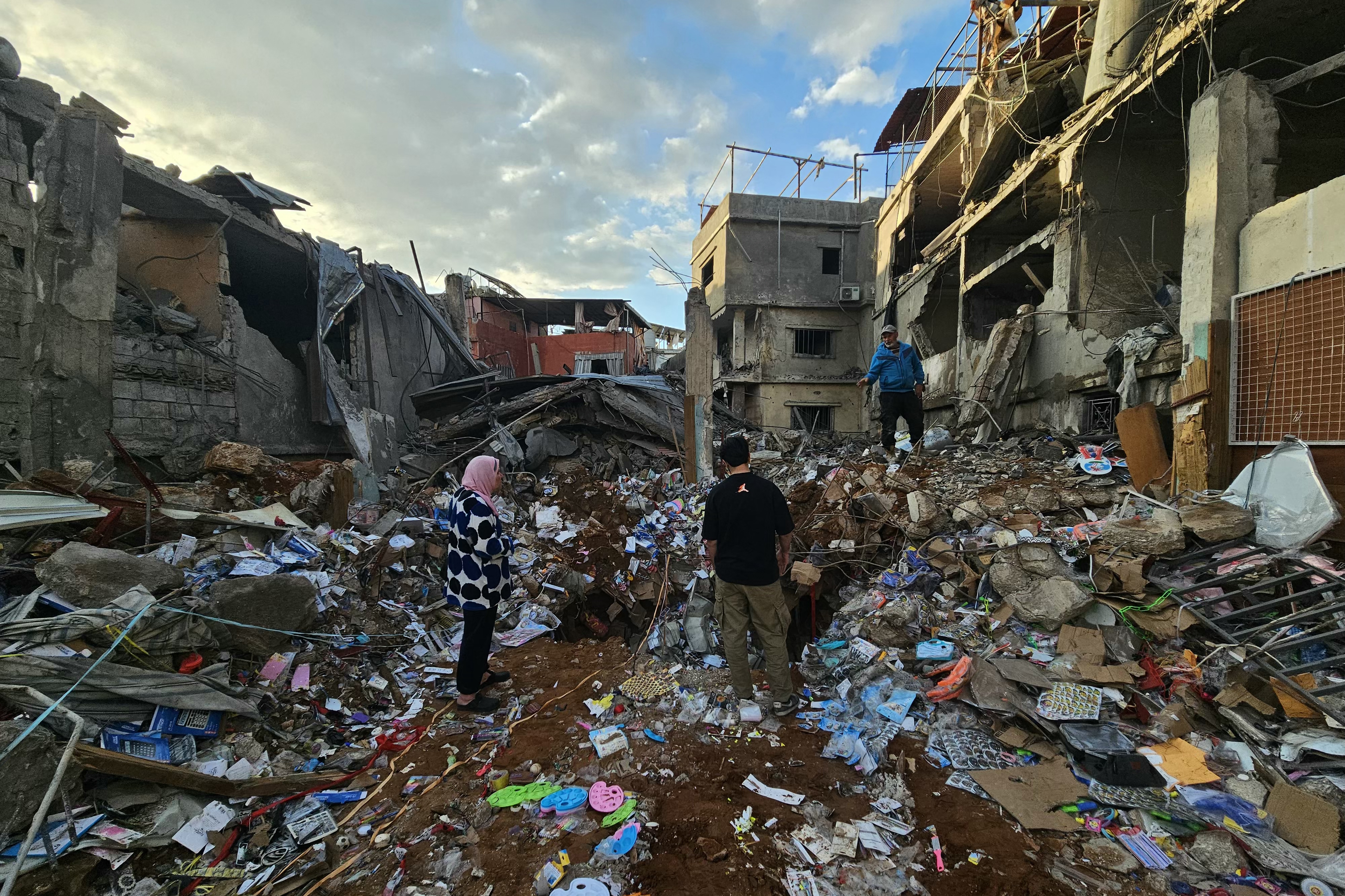
The use of urban centers as defensive hubs is a cornerstone of the group's survival strategy. By embedding command centers in the basements of apartment blocks and launching rockets from the outskirts of dense villages, Hezbollah forces the IDF into a binary choice: allow the attacks to continue or flatten the area and face international condemnation.
This is not a byproduct of the war; it is the strategy. The "Rubble Logic" dictates that every destroyed house serves as a recruiting tool and a physical obstacle for invading tanks. Moving through a destroyed village is much harder for an armored unit than moving through an intact one. Debris creates natural chokepoints and hiding spots for IEDs. Hezbollah fighters are often locals who know every alleyway and basement, giving them a home-field advantage that no amount of high-tech thermal imaging can fully negate.
Logistics of the Long War
The supply lines from Iran, through Iraq and Syria, remain the heartbeat of the resistance. Despite hundreds of Israeli "war between wars" airstrikes on convoys, enough material gets through to keep the stockpiles full. The group has moved away from large, vulnerable warehouses. Ammunition is now dispersed into hundreds of micro-depots—sometimes nothing more than a buried shipping container in an olive grove.
This decentralization makes the "Decapitation" strategy—killing top leaders—less effective than it would be against a standard army. When a mid-level commander is killed, the cell structure is designed to continue functioning. The replacement is usually already in the field, having been trained for the specific geography of that sector for years.
The Fatigue of Intelligence
Israel’s primary advantage has always been superior intelligence. However, intelligence has a shelf life. As the conflict drags on, the "target bank" begins to run dry. Once the pre-planned targets are hit, the IDF is forced to rely on real-time intelligence, which is far more dangerous to acquire.
Hezbollah units have adapted by using "silent" periods. They will cease all movement and communication for days, luring Israeli units into a sense of security before launching a coordinated ambush. This test of patience is where the veteran guerrilla excels and the young conscript struggles. The objective for the Lebanese fighter isn't to win a decisive battle; it's to survive until the political pressure in Israel forces a withdrawal.
The war in the south is currently a stalemate of lethal intent. Hezbollah has transitioned into a "stay-behind" force that operates within the very ground the IDF seeks to clear. Until a solution is found for the decentralized ATGM cells and the swarming drone threat, the northern border remains an open wound that no amount of traditional air power can close. The battle isn't for the hills; it's for the will to keep dying for them.