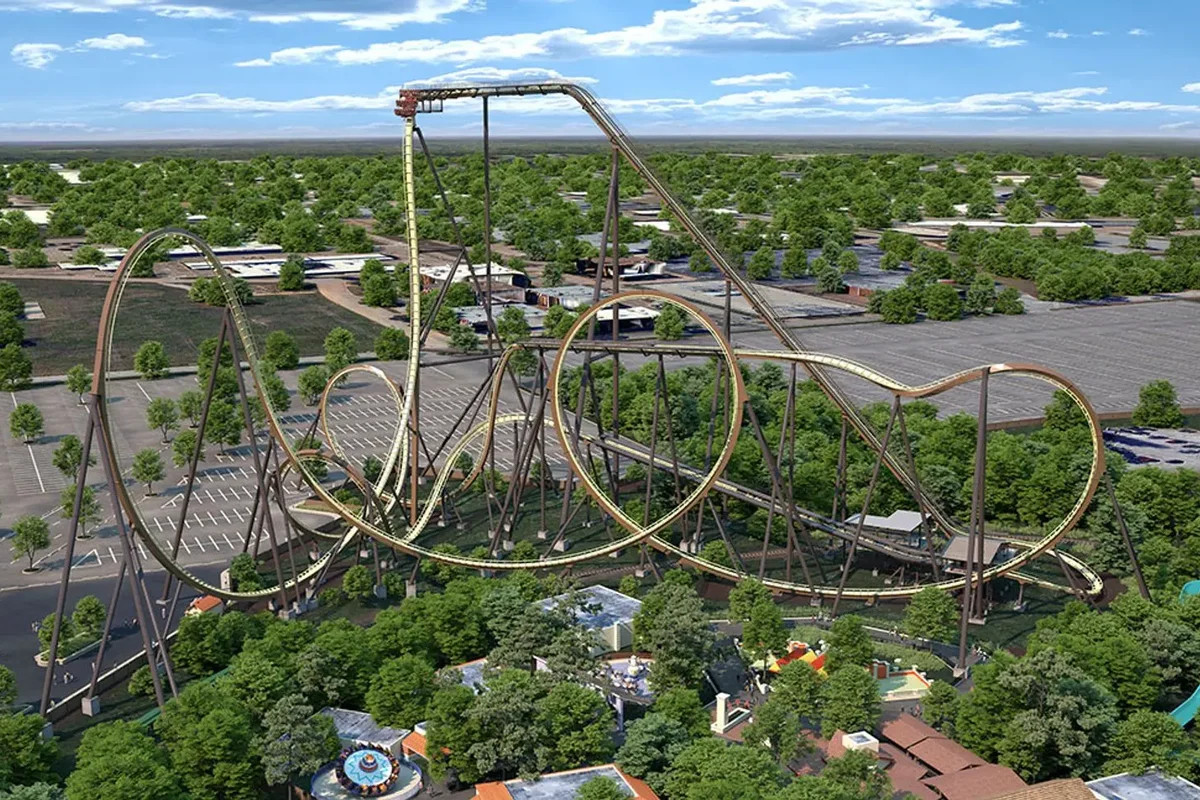
Six Flags Over Texas is about to test the absolute limits of human equilibrium and regional theme park economics. Scheduled to open for the park's 65th anniversary season, Tormenta Rampaging Run is not merely another addition to the Arlington skyline. It is the world’s first "giga dive" coaster, a massive engineering marvel designed to break six separate world records simultaneously.
By ascending to 309 feet and plummeting down a 285-foot, 95-degree beyond-vertical drop at 87 miles per hour, Tormenta aims to solve a deeply rooted problem for the newly merged Six Flags and Cedar Fair entity. The company needs massive, undeniable capital investments to justify rising pass prices. The question isn't whether the coaster will frighten passengers. The question is whether a multi-million-dollar engineering gamble can reshape the financial fortunes of modern regional amusement parks.
The Engineering Chaos of the First Giga Dive
To appreciate what is happening in Arlington, you have to understand the specific mechanical limitations that have kept "dive coasters" relatively low to the ground for decades. Dive coasters, traditionally manufactured by Swiss firm Bolliger & Mabillard (B&M), rely on massive, extra-wide trains. Instead of the standard two or four seats per row, Tormenta uses sprawling rows of eight riders.
When you push a train that wide into the sky, physics throws a tantrum. The aerodynamic drag increases exponentially, and the structural stress on the track during high-velocity turns requires an absurd amount of steel reinforcement.
Standard Dive Coaster (Yukon Striker)  --->  223 feet
Tormenta Rampaging Run                 --->  309 feet
This is why Tormenta is a massive leap forward. It shatters the previous dive coaster height record held by Canada’s Yukon Striker by a staggering 86 feet.
The physical layout of the ride reads like a fever dream of modern stress-testing. After crawling up a steep 45-degree lift hill to the 309-foot apex, the train will creep around a sharp left turn before being caught by a mechanical holding brake. For a few agonizing seconds, riders in the front row are suspended directly over a 95-degree drop. It is a calculated psychological torment. When the brake releases, the train does not just drop straight down; it pitches inward, tucked slightly underneath itself, accelerating to 87 mph into a 218-foot Immelmann inversion—the highest inversion ever built on Earth.
Six World Records Falling in a Single Ride
Amusement parks love to manufacture hyper-specific records to fill out marketing brochures. "The tallest green hybrid coaster operating on a Tuesday" is the kind of industry jargon that guests see right through. Tormenta, however, is collecting legitimate, heavy-hitting engineering milestones.
- Tallest Dive Coaster: 309 feet.
- Fastest Dive Coaster: 87 mph.
- Longest Dive Coaster Track: 4,199 feet.
- Highest 95-Degree Beyond-Vertical Drop: 285 feet.
- Highest Immelmann Inversion: 218 feet.
- Tallest Vertical Coaster Loop: 179 feet.
Building a ride this large introduces major operational headaches. Massive structures mean massive code compliance hurdles, staggering insurance premiums, and highly complex maintenance schedules. The 179-foot vertical loop alone will subject the wide steel chassis of the trains to immense gravitational forces. Keeping those wheel assemblies pristine will require near-constant ultrasound testing by park mechanics to detect microscopic structural fatigue before it turns into a maintenance nightmare.
The Corporate Merger Behind the Steel
The timing of this project is anything but accidental. The amusement park industry underwent a massive shakeup with the landmark merger between Six Flags and Cedar Fair. Historically, the legacy Six Flags brand was notorious for under-investing in thematic experiences, relying instead on concrete midways and uninspired DC Comics branding tacked onto off-the-shelf roller coasters. Cedar Fair, by contrast, brought a reputation for operational excellence and high-capacity gargantuan rides.
Tormenta was actually conceived in the corporate offices of Cedar Fair before the merger closed. Initial design surveys were pitched to parks like Kings Island and Carowinds before executives realized that the ultimate proving ground for a record-shattering monster layout was the birthplace of the Six Flags franchise itself.
By anchoring the ride inside a completely overhauled Spanish-themed village called Rancho de la Tormenta, the park is attempting to copy the Disney and Universal playbook. It is no longer enough to throw up a scaffold of steel. You need upscale scratch-kitchen restaurants like the upcoming Cocina Abuela nearby to capture the discretionary spending of parents who have absolutely no intention of dropping 285 feet at 87 miles per hour.
The Operational Risk of the Mega Attraction
Every industry veteran knows that breaking records means breaking new ground in mechanical vulnerability. When you build the first of anything, you are effectively running a live, multi-million-dollar beta test with paying customers.
The holding brake system on a dive coaster is incredibly complex. It has to reliably stop and release a fully loaded train weighing tens of thousands of pounds on a precipice, dozens of times an hour, day after day, in the brutal Texas summer heat. If the sensors register even a millimeter of variance due to thermal expansion of the steel, the entire ride will safely but abruptly fault, leaving guests stranded on the lift hill and maintenance crews scrambling.
Then there is the guest capacity problem. Wide rows of eight passengers require massive loading stations and highly efficient ride operators. If a guest struggles with a seat restraint or takes too long putting their loose articles into a bin, the dispatch times crater. For a ride with this much hype, a drop in operational efficiency translates directly into a grueling three-hour line in 100-degree Arlington weather.
The park's immediate financial success relies on whether Tormenta can consistently cycle its trains without frequent technical downtime. If it behaves smoothly, Six Flags has a massive anchor asset that can drive season pass sales across the entire Southwest region. If it proves temperamental, it becomes a beautiful, 309-foot monument to corporate hubris. The final steel track piece was bolted into place using a symbolic golden bolt this past March, and the industry is now watching closely as the giant undergoes rigorous pull-through testing. Thrill seekers want the adrenaline; the corporate board just wants the machine to run.


