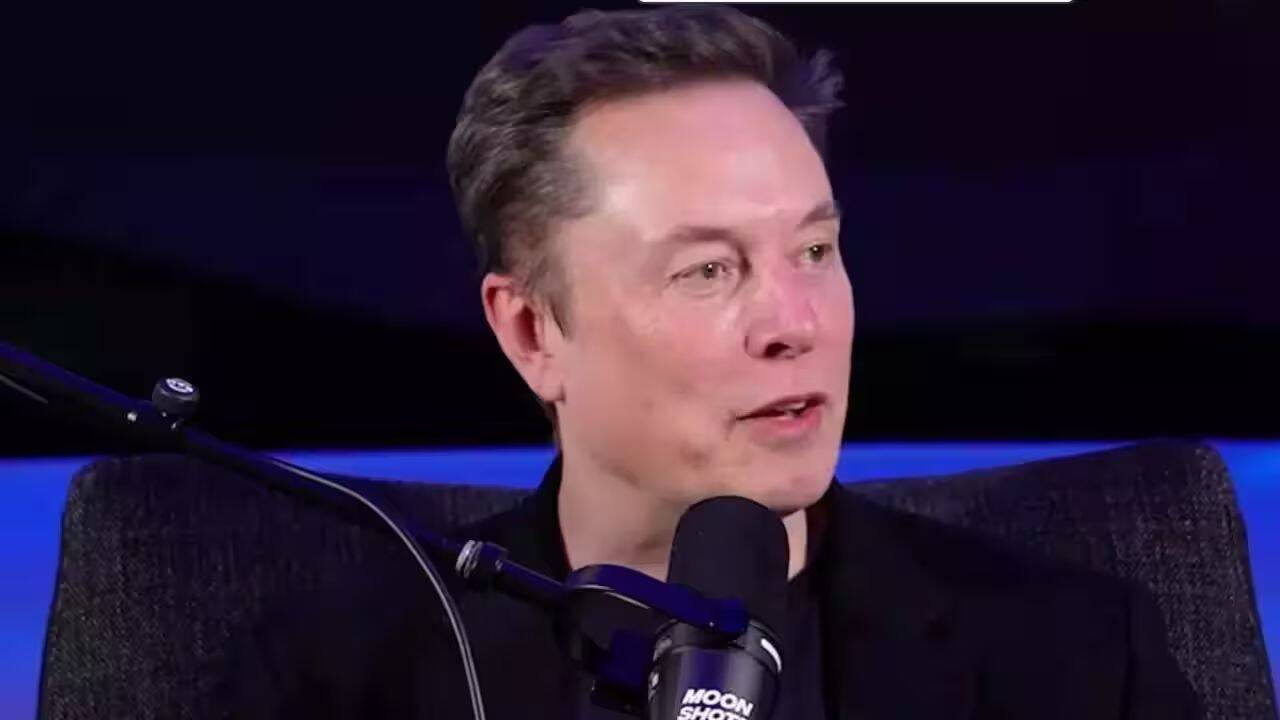
Elon Musk recently doubled down on his claim that SpaceX will transport thousands of people to the Moon and Mars within the next decade. It is a familiar refrain, designed to inspire and attract capital. However, the aerospace industry’s engineering and financial realities tell a different story. While SpaceX has fundamentally changed the economics of low-Earth orbit, stretching that success into a mass-migration pipeline to deep space within ten years ignores fundamental laws of physics, planetary alignment, and human biology. The timeline is not just optimistic; it is functionally impossible.
To understand why, we have to look past the spectacular launch footage and examine the cold, unyielding mechanics of deep space transit.
The Tyranny of the Launch Window
SpaceX relies on the Starship architecture to achieve its interplanetary goals. The vehicle is a marvel of stainless steel and raw thrust, powered by liquid methane and oxygen. Yet no amount of engineering can alter the orbital mechanics of our solar system.
Earth and Mars align favorably for travel just once every 26 months. This brief opening, known as a Hohmann transfer window, dictates the entire schedule of Mars exploration. If you miss a window, you wait more than two years for the next one. Within the ten-year horizon Musk frequently references, humanity will see exactly four of these opportunities.
Moving thousands of people requires an armada. To send just one thousand travelers, assuming an incredibly crowded 100 people per ship, requires ten Starships. But you cannot just launch ten ships from the pad and head to Mars. Each Mars-bound Starship requires multiple orbital refueling flights just to leave Earth's gravity well.
Current estimates suggest it takes anywhere from five to eight tanker flights to top off a single Mars-bound Starship in low-Earth orbit. For a fleet of ten ships, SpaceX would need to execute 50 to 80 flawless launches within a matter of weeks to catch a single transfer window. The logistics of managing that much cryogenic propellant in orbit, without massive boil-off and loss, remain entirely unsolved. The company has not yet demonstrated a single commercial orbital refueling deployment, let alone the industrial-scale depot operations required for a mass migration.
The Radiation Problem No One Wants to Fund
Getting to Mars is only half the battle. Surviving the trip is another matter entirely.
Deep space is flooded with galactic cosmic rays and solar particle events. Earth's magnetic field protects us from this constant bombardment, but space travelers lose that shield the moment they leave low-Earth orbit. A transit to Mars takes roughly six to nine months with current propulsion technology. During this time, passengers will absorb radiation doses that significantly raise their lifetime risk of cancer and cause neurological damage.
Heavy shielding is the obvious solution, but shielding adds mass. In aerospace, mass is the ultimate enemy. Every additional kilogram of lead, water, or specialized plastic used to line the cabins of a Starship robs the vehicle of payload capacity. If you shield the ship adequately to keep a hundred people safe, you can no longer carry the cargo those people need to survive once they land.
Musk often brushes this aside by suggesting that the radiation risk is manageable or that a slight increase in lifetime cancer risk is an acceptable trade-off for pioneers. This perspective overlooks the immediate threats. A single major solar flare during transit could induce acute radiation sickness in the entire passenger cabin. Dealing with vomiting, immune system failure, and severe illness in a zero-gravity environment with no hospital access would turn a colony ship into a floating morgue long before it reached the red planet. No government agency or private insurer will sign off on a civilian passenger manifest under those conditions.
The Life Support Bottleneck
SpaceX excels at building rockets. They are less experienced in building closed-loop ecosystems.
The International Space Station has served as a testbed for life support systems for decades. Despite billions of dollars in development, the systems on the ISS still require regular resupply missions from Earth to deliver fresh water, spare parts, filters, and oxygen tanks. The machinery breaks down constantly. On a journey to Mars, there are no resupply runs.
Consider the basic inputs required to keep a human alive for a year: roughly one kilogram of oxygen, two kilograms of water, and nearly a kilogram of dry food per day. Multiply that by thousands of people over a multi-month transit, and the numbers become staggering.
The ship must recycle nearly 100 percent of its water and air. Current technology cannot achieve this level of efficiency without massive, heavy equipment that requires constant maintenance. If a critical component of the environmental control system fails three months into a voyage, the passengers cannot open a window. They will suffocate or dehydrate long before Mars comes into view. SpaceX has yet to reveal a functioning, long-duration, closed-loop life support system capable of sustaining more than a handful of astronauts, let alone thousands of civilians.
The Myth of the Self-Sustaining Colony
The narrative shifts seamlessly from the journey to the destination. Musk envisions a city on Mars, a self-sustaining civilization that could survive if Earth were to go dark. This concept conflates a beachhead with a city.
A colony requires an industrial base. To stop relying on Earth, a Martian population needs to manufacture its own solar panels, mining equipment, plastics, medicines, and microchips. This requires factories, refineries, and mines.
Mars has resources, but they are locked in the soil and ice. Extracting them requires heavy machinery and immense amounts of power. A nuclear reactor or an array of solar panels the size of several football fields would be needed just to generate the fuel for a return trip, let alone power a city.
The weight of the equipment needed to start an industrial revolution on Mars is orders of magnitude greater than the weight of the human beings traveling there. Every person landed on Mars requires tons of life-sustaining infrastructure already waiting for them on the surface. We have not landed a single automated factory on Mars. We have not even landed an empty Starship on Mars. To suggest that thousands of people will live there in ten years ignores the decades of unglamorous, automated cargo hauling that must precede the first human bootprint.
The Financial Reality of the Lunar Pivot
While Mars captures the headlines, the Moon is where the money is. SpaceX is currently bound by its contracts with NASA for the Artemis program.
The Human Landing System contract requires SpaceX to develop a variant of Starship that can land American astronauts on the lunar surface. This program is already facing delays. NASA's strict safety standards and the sheer complexity of the lunar Starship architecture have slowed progress.
SpaceX must prioritize the Moon because NASA is paying the bills. The company is a business, and while Musk's personal goal may be Mars, his engineers must deliver a working lunar lander first. The technical challenges of landing a vehicle as large as Starship on the moon without kicking up dangerous amounts of lunar regolith or tipping over on uneven terrain are consuming vast amounts of engineering talent.
This lunar pivot drains resources from the Mars timeline. Every hour spent modifying Starship for the vacuum of the Moon and NASA's specific safety requirements is an hour not spent solving the deep-space radiation, artificial gravity, and Martian atmospheric entry problems. The ten-year clock is ticking, and the majority of SpaceX's heavy-lift development is currently tethered to the moon.
The Atmospheric Entry Barrier
Landing a massive vehicle on Mars is vastly different from landing it on Earth or the Moon. Mars has an atmosphere, but it is incredibly thin, about one percent as dense as Earth's.
This thin atmosphere presents a nightmare for aerospace engineers. It is thick enough to generate extreme friction and heat, requiring a robust thermal protection system, but it is too thin to slow down a heavy spacecraft sufficiently using parachutes or aerodynamic drag alone.
Starship must utilize retro-propulsion, firing its engines directly into the oncoming supersonic airflow to slow down enough for a controlled vertical landing. This technique has never been attempted with a vehicle of Starship's scale in a real Martian environment. The atmospheric dynamics are unpredictable, and the thermal stress on the engine skirts will be immense. A single miscalculation during the entry, descent, and landing phase means total destruction. Until SpaceX sends uncrewed Starships to Mars and successfully proves they can survive this aerodynamic gauntlet, talking about passenger flights is premature.
SpaceX has achieved the unthinkable before, defying critics by landing and reusing orbital rocket boosters. But scaling that technology to ferry thousands of people across the solar system within a decade requires breaking laws of scheduling and physics that do not bend to sheer willpower or venture capital. The infrastructure does not exist, the biology remains unhedged, and the math simply does not add up.