The Mathematics of Decay
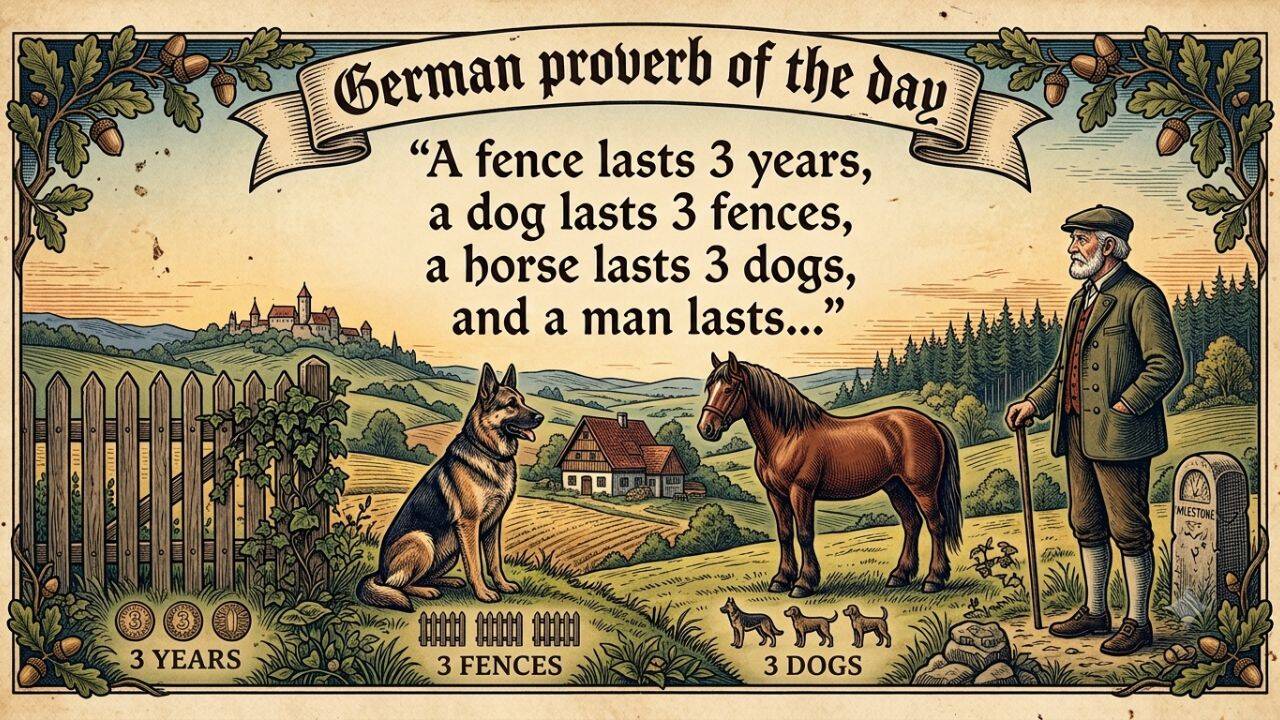
Old European folklore loved geometric progressions of ruin. A classic German folk maxim maps the lifespan of domestic capital through a stark downward curve: a fence lasts three years, a dog lasts three fences, a horse lasts three dogs, and a man lasts three horses. The progression is ruthless, nonlinear, and fundamentally preoccupied with the finite boundaries of physical utility. It reduces generational existence to a series of cascading failures where every asset begins dying the exact moment it clears the workshop floor.
Modern commercial manufacturing took this grim folk wisdom, stripped out the poetry, and rebranded it as planned obsolescence.
We no longer build things to endure three iterations of anything. We build them to fail right on schedule. Walk through any modern corporate headquarters or suburban development, and you will see the modern descendant of that German proverb written in cheap drywall, subscription-locked software updates, and appliances engineered with plastic gears where steel once sat. The central question of asset longevity has shifted from how long a thing can possibly survive to how quickly a consumer can be coerced into buying a replacement.
This is the hidden tax of modern efficiency. By optimizing supply chains for maximum velocity and minimum upfront cost, society has traded enduring quality for perpetual consumption. The math is simple, brutal, and entirely intentional. If a product lasts forever, the enterprise goes bankrupt. Therefore, durability becomes an enemy of the business model.
The Economics of Planned Failure
Look closely at the consumer goods market over the past fifty years, and a clear pattern emerges. Devices are lighter, cheaper, and vastly more complex, yet their operational lifespans shrink with every manufacturing generation. This is not an accident of engineering capability. We possess the metallurgy, the chemistry, and the manufacturing precision to build refrigerators, automobiles, and smartphones that function for decades without major intervention.
The corporate boardrooms choose otherwise.
When a washing machine manufacturer designs a drum assembly using a sealed outer tub that makes bearing replacement impossible without destroying the entire appliance, they are practicing applied economics. The marginal cost of making a serviceable part is pennies higher than the cost of a sealed unit. Multiply those pennies by millions of units, and the savings pad the quarterly earnings report. The downstream consequence—a functional machine headed to a landfill because a five-dollar bearing failed—is treated as an externalized cost borne entirely by the buyer and the environment.
The Software Trap
Physical goods are only half the equation. The digital economy introduced a more insidious method of shortening asset lifespans: software deprecation.
- Hardware that remains physically robust is rendered useless when operating systems drop security updates.
- Connected appliances lose core functionality because cloud servers are shut down by parent companies chasing new revenue streams.
- Proprietary charging cables and locked operating ecosystems prevent third-party repair, forcing premature upgrades.
This dynamic transforms durable goods into subscription-like consumables. A car with an internal combustion engine can theoretically run for a million miles with proper maintenance, but modern vehicles are rolling computer networks. When modules become obsolete and manufacturers stop writing firmware patches, the vehicle becomes an electronic brick long before the pistons wear out.
The Illusion of Value and the Replacement Cycle
Consumers are caught in a cognitive trap. We chase low initial purchase prices while ignoring the total cost of ownership over time. A cheap rotary lawnmower that dies after two seasons looks like a bargain on a big-box store shelf compared to a commercial-grade cast-iron deck mower that costs four times as much. Yet over a ten-year horizon, the consumer buying the cheap option goes through four replacements, generates mountains of plastic waste, and spends more cumulative cash than the person who bought once and cried once.
This race to the bottom alters how we value labor and materials. Craftsmanship is penalized in a marketplace dominated by algorithmic pricing and overnight delivery expectations. If an artisan spends forty hours hand-stitching a leather briefcase designed to last forty years, the market label will price it out of reach for the average wage earner. The market responds by flooding digital storefronts with polyurethane alternatives that peel within twelve months, priced so cheaply that discarding them feels trivial.
"We are trapped in an economic loop where cheapness is subsidized by hidden costs, and durability is treated as a luxury luxury item for the wealthy."
This reality exposes a profound fracture in modern prosperity. True wealth used to be measured by the permanence of one's possessions—houses built of stone, tools forged from high-carbon steel, furniture joined with dovetails instead of staples. Today, high-frequency consumption masquerades as abundance. We have more things, but those things hold virtually zero intrinsic long-term value.
Breaking the Cycle of Perpetual Waste
Reversing this trajectory requires a fundamental psychological shift among buyers and regulatory pressure on producers. The European Union's recent push toward a right-to-repair framework offers a rare glimpse of institutional pushback against disposable engineering. When manufacturers are legally compelled to provide spare parts for a decade and make devices open to standard tools, the economic calculus of planned obsolescence begins to break down.
However, legislation alone cannot fix a culture addicted to instant gratification and constant upgrades. Real change demands a return to critical evaluation of what we bring into our lives.
- Prioritize repairability over aesthetic minimalism when purchasing tools and technology.
- Calculate the cost per year of use rather than the sticker price at checkout.
- Support local repair economies, from cobblers to electronics hobbyists, who keep functional goods alive.
The old German maxim mapped human mortality against a backdrop of reliable beasts and wooden boundaries, acknowledging that all things wear out eventually. That wear was natural, earned through heavy labor and exposure to the elements. The artificial decay we engineer into our world today is entirely different. It is an insult to human ingenuity, turning our best scientific achievements into monuments to landfill capacity.
The fence rots, the dog ages, and the human eventually returns to the earth. That is the unchangeable baseline of existence. What we build in the interim, however, does not need to be designed for the dumpster before the ink on the receipt has even dried.