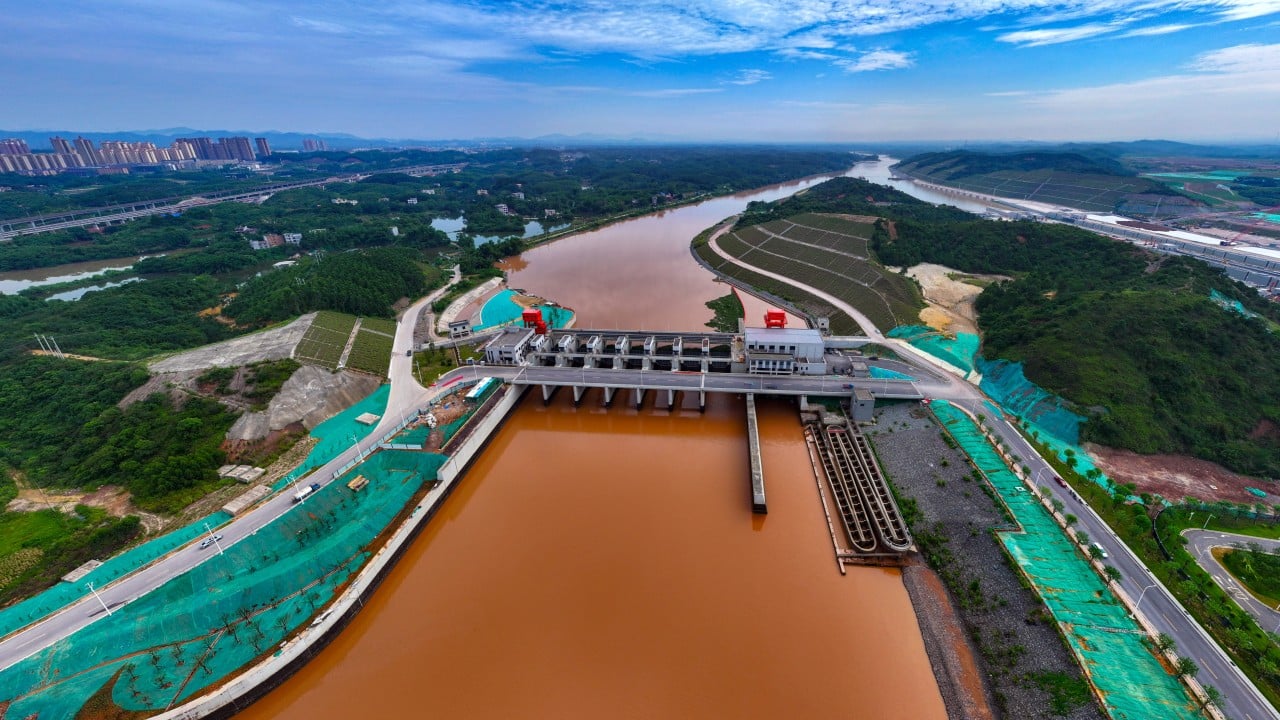
Cargo containers do not care about regional pride. They care about friction, fuel consumption, and the ticking clock of demurrage fees. For decades, goods originating from China’s rugged southwestern interior and flowing toward the ocean faced a frustrating geographical bottleneck. They crawled down the Xijiang River toward the Pearl River Delta, passing through congested locks, skirting around booming Guangdong ports, and taking a circuitous route to global shipping lanes. The Pinglu Canal is designed to slash hundreds of kilometers off that journey by carving a direct man-made aquatic corridor from Nanning straight to the Beibu Gulf. Labeling it the Yangtze of the southwest sounds like promotional hype generated by provincial propaganda bureaus, but the underlying engineering ambition and economic stakes are entirely real. This multi-billion-dollar trench is an aggressive attempt to redraw the logistics map of southern China.
Geography has always punished Guangxi. While coastal provinces like Guangdong and Zhejiang capitalized on immediate maritime access during the early decades of China's economic reforms, Guangxi remained an inland-facing transit zone rather than a primary maritime beneficiary. The Xijiang River acts as the main artery, yet navigating it to reach Guangzhou or Shenzhen requires threading a crowded commercial waterway laden with heavy barge traffic and seasonal water level fluctuations.
The Pinglu Canal changes the vector entirely. By connecting the Xijiang River system at Hengzhou directly to the Beibu Gulf ports of Qinzhou, Beihai, and Fangchenggang, planners are shortening the maritime haul to Southeast Asia by more than five hundred kilometers for certain cargo streams. This is not merely about moving regional coal or agricultural produce. It is about creating a dedicated industrial shipping lane optimized for modern container vessels, positioning the region as a primary trade gateway to the Association of Southeast Asian Nations bloc.
Carving Granite and Geopolitics
Heavy civil engineering on this scale defies casual description. Millions of cubic meters of earth, rock, and ancient karst limestone must be excavated, displaced, and managed. Water management in a terrain characterized by dramatic elevation changes requires colossal multi-stage ship locks capable of lifting or lowering heavily laden cargo vessels by tens of meters.
Engineers face a constant battle against local geology. The region is riddled with subterranean water systems and unstable soil layers that complicate structural foundations for massive concrete containment walls. Pouring concrete across these distances generates immense logistical hurdles, demanding a continuous supply chain of aggregates, cement, and specialized heavy machinery operating around the clock.
Yet the geopolitical motivation outweighs the physical difficulty. Beijing views internal logistical efficiency as a core pillar of national security and economic resilience. By opening a shorter southern maritime exit, the state reduces its reliance on congested eastern estuaries and distributes shipping capacity across multiple coastal hubs. This decentralization prevents single points of failure in the national supply chain, ensuring that regional manufacturing bases in Yunnan, Guizhou, and Guangxi retain competitive export costs even as global shipping dynamics shift.
Breaking the Guangdong Monopoly
Guangdong has long reigned supreme as the undisputed trade powerhouse of southern China. Every ton of freight originating from the interior that had to pass through Pearl River ports cemented Guangdong's middleman status and economic gravity. Regional leaders in Nanning viewed this dependency with growing frustration. Why should Guangxi’s industrial output enrich transport hubs hundreds of kilometers downstream when a direct path to the Gulf of Tonkin could keep that value within the autonomous region?
The new canal alters provincial competition dynamics. Factories in landlocked industrial parks can load goods onto barges that travel a shorter, less congested route directly to deep-water maritime terminals. Ports like Qinzhou are undergoing aggressive expansion, adding container handling capacity, automated gantry cranes, and specialized rail-sea intermodal transfer yards designed to absorb the expected surge in freight.
Shipping companies calculate transit times down to the minute. Shaving a full day or more off a voyage from inland manufacturing centers to Vietnamese or Malaysian ports translates directly into lower operating expenditures and higher profit margins. This efficiency differential threatens to draw investment away from traditional Pearl River manufacturing clusters, tempting supply chain managers to relocate factories closer to the new canal corridor.
The Hydrological Gamble
Water is a finite resource, and southern China experiences dramatic seasonal volatility. While monsoon rains periodically threaten the region with catastrophic flooding, dry autumns and winters can cause river levels to drop precipitously. A deep canal requires reliable water depth year-round to support fully laden commercial barges without risking groundings or hull damage.
To maintain required drafts, planners must construct sophisticated reservoirs, pumping stations, and water-saving lock designs that recycle water during each vessel transit. Without these mitigation measures, drawing massive volumes from the Xijiang River could disrupt regional hydrology, affecting agricultural irrigation and municipal water supplies downstream.
This creates a delicate balancing act for environmental regulators and civil engineers. If water levels drop too low during an extended drought, the canal risks becoming an underutilized ditch rather than a bustling trade artery. Conversely, heavy downpours test the structural integrity of floodgates and embankments designed to hold back millions of gallons of water atop elevated terrain. The entire system operates on a razor-thin margin between functional brilliance and hydrological vulnerability.
Financing the Beton Beast
Mega-infrastructure projects of this magnitude carry staggering price tags. Hundreds of billions of yuan are flowing into excavation, concrete work, resettlement programs, and port upgrades. In an economic climate marked by mounting local government debt and slowing property markets, funding a project of this scale requires creative financial engineering.
Traditional provincial revenues cannot cover the capital expenditure alone. Funding models rely on a combination of special-purpose government bonds, state-owned enterprise equity investments, and future toll revenues collected from commercial vessels using the waterway. This debt burden places immense pressure on the project to deliver promised freight volumes almost immediately upon completion.
If regional industrial growth stalls or if global trade headwinds depress export demand, the revenue projections underpinning the canal's financial model could fall short. Local authorities would then find themselves servicing massive debt loads tied to a concrete asset operating well below capacity. The history of modern infrastructure development is littered with cautionary tales of expensive transit corridors that failed to generate the projected economic activity, leaving taxpayers and provincial banks holding the bag.
Environmental Fallout Beneath the Surface
Ecological disruption is an unavoidable byproduct of altering a natural watershed on a continental scale. The construction zones carve through delicate rural ecosystems, fragmenting habitats for endemic species of fish, birds, and amphibians. Migratory aquatic life faces impassable concrete barriers despite the inclusion of rudimentary fish ladders and ecological migration channels.
Furthermore, dredging operations stir up accumulated sediment, releasing heavy metals and agricultural runoff trapped in riverbeds for decades. This turbidity starves downstream aquatic vegetation of sunlight and chokes filter-feeding organisms. While environmental impact assessments mandated strict mitigation protocols, the sheer scale of earth movement makes total containment nearly impossible.
Agricultural communities situated along the new alignment face profound disruption. Farmland has been requisitioned, generational homesteads demolished, and local irrigation networks completely reconfigured. While compensation packages aim to ease the transition, the social cost of displacing rural populations to make way for a concrete shipping lane leaves deep scars that financial restitution rarely heals entirely.
What Happens When the Digger Stops
The concrete will eventually cure, the construction equipment will clear out, and the first commercial flotilla will break the ribbon on the completed waterway. Whether the Pinglu Canal genuinely transforms into the southwestern equivalent of the Yangtze depends entirely on factors outside the control of the engineers who designed it.
If global supply chains continue their fragmented trajectory and regional trade agreements like the Regional Comprehensive Economic Partnership successfully stimulate cross-border commerce between China and Southeast Asia, the canal will likely hum with continuous barge traffic. Factories will sprout along its banks, ports on the Beibu Gulf will surge into international prominence, and Guangxi will finally secure its long-sought status as a primary maritime gateway.
Yet if structural economic deceleration persists, or if logistical bottlenecks simply migrate from the river to the congested ports at the Gulf terminus, the project risks becoming an expensive monument to state-directed ambition. The water will flow through the locks regardless, carrying whatever tonnage the market demands, but the true return on investment will be judged decades from now by the economic health of the towns and cities lining its banks