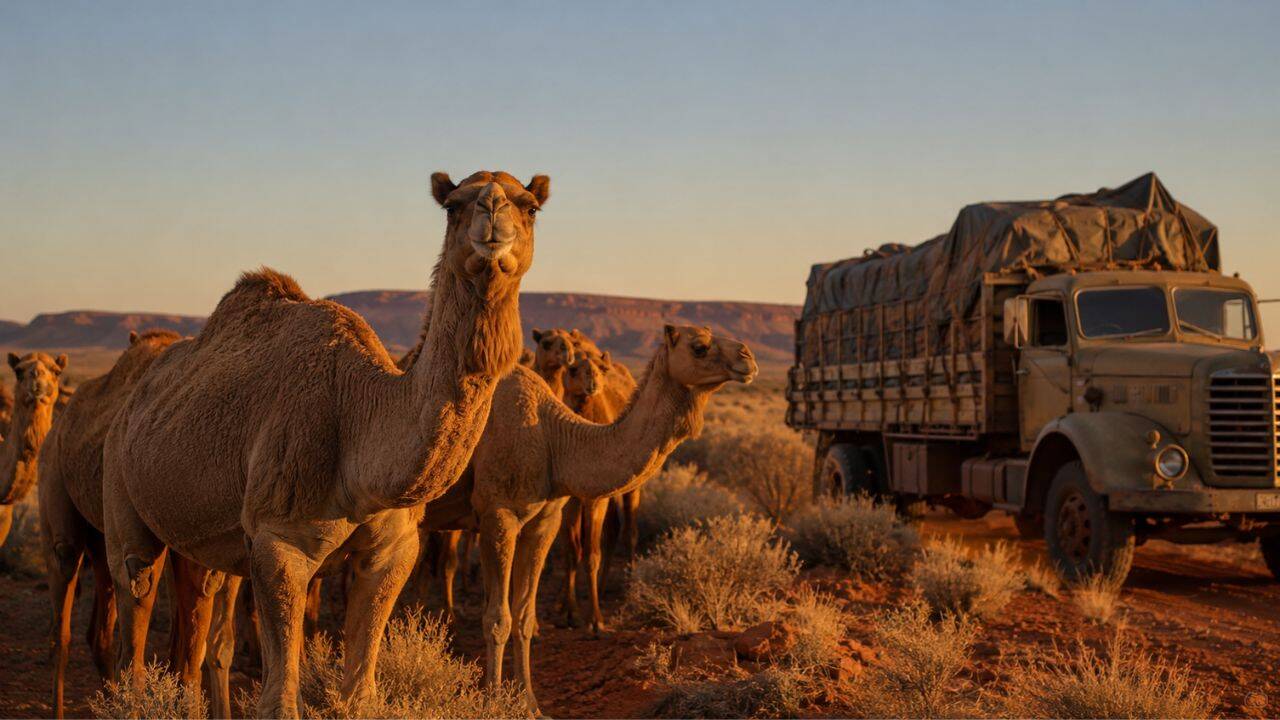
Somewhere past the red dirt tracks of Alice Springs, hundreds of thousands of one-humped dromedaries roam an empty interior that stretches across millions of square kilometres of Australian desert. They possess something priceless. Complete and total isolation from the viral pathogens that ravage captive herds across the Arabian Peninsula. While Gulf breeders eye this genetic goldmine with intense desire, the reality of turning a wild outback pest into a high-value export commodity runs headfirst into a wall of crushing logistics, exorbitant transport costs, and cold economic friction.
Australia holds the largest population of wild dromedaries on earth. That herd is an accidental inheritance. Nineteenth-century colonists imported beasts of burden from British India and Afghanistan to freight supplies into an interior that broke horses. When motorized trucks replaced them in the early decades of the twentieth century, owners simply turned the animals loose.
The desert welcomed them. With no natural predators, endless scrub, and a reproductive rate capable of doubling herd sizes every decade, the population exploded toward an estimated peak of one million animals. Pastoralists watched fences flatten, sacred waterholes foul, and delicate ecosystems take a beating from an animal that consumes a vast cross-section of native flora. Millions of dollars poured into government culls to bring the numbers down, framing the camel strictly as an environmental disaster on four legs.
Yet that same isolation created an unexpected biological asset. A landmark surveillance study published in One Health demonstrated that Australia's feral herds completely lacked antibodies for Middle East Respiratory Syndrome, commonly known as MERS. Descended from animals shipped out before 1907 and separated from the global trade networks that spread disease, these outback dromedaries represent one of the last major disease-free gene pools remaining on the planet.
Gulf breeders noticed. In nations where camel racing and elite breeding stables command massive prestige and capital, access to fresh, virus-free bloodlines is worth a substantial premium.
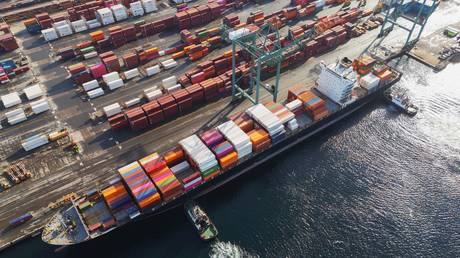
The romance of supplying elite breeding stock to the Middle East crashes hard against basic market numbers. Economic data compiled for Meat and Livestock Australia highlights the brutal disparity of the trade. While global live camel transactions trade at average prices near four hundred US dollars, the actual cost for an Australian operator to muster, process, quarantine, and ship a single wild animal out of the Simpson Desert ranges from one thousand to fifteen hundred dollars before air freight even enters the equation.
Mustering a wild dromedary is dangerous, specialized work. Helicopters push animals across unforgiving terrain toward temporary yards, where handlers attempt to calm creatures possessing raw, unpredictable wild instincts. Transporting them to coastal ports requires heavy trucking across corrugated tracks, followed by stringent veterinary clearance. Air freighting a large herbivore internationally transforms an expensive operation into an astronomical one.
Those economic realities mean the trade only functions in extreme high-value niches. Industry analysts estimate that Middle Eastern demand for Australian breeding stock accounts for roughly a mere 150 animals annually. Despite years of academic workshops, trade delegations, and conference networking meant to bridge the gap between outback pastoralists and Gulf buyers, actual signed contracts remain frustratingly rare.
For all the international headlines about Gulf demand, actual export volumes tell a modest story. Australian customs data shows shipments moving in tiny trickle batches—often heading to regional neighbours like Malaysia and Indonesia rather than the Arabian Peninsula—while the more established commercial outlet remains processed camel meat hitting international food markets.
Australia sits astride a million-head biological treasure while treating it primarily as a pest management ledger item. Bridging the gap between a destructive outback nuisance and a prized international export requires overcoming a logistical chasm that current market prices simply cannot span. Until transport efficiencies change or foreign buyers absorb the true cost of moving wild desert freight, the world's cleanest camels will remain locked in the red heart of the Australian desert.