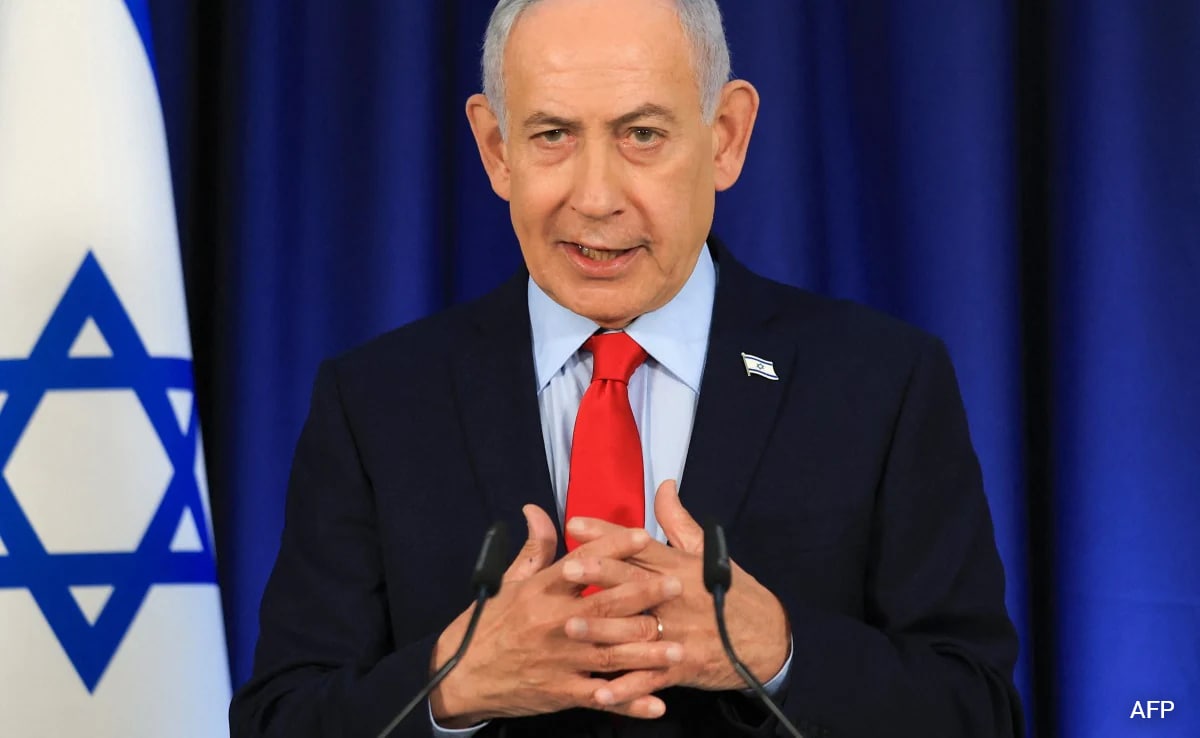
Israel is not just fighting a war of attrition against Hezbollah; it is systematically dismantling the political leverage of the Lebanese state while diplomats in Beirut and Washington trade drafts of a ceasefire that may never materialize. Prime Minister Benjamin Netanyahu’s insistence that military operations will continue "under fire" is more than a rhetorical flourish for his domestic base. It represents a fundamental shift in Israeli security doctrine that prioritizes the total degradation of Hezbollah’s infrastructure over any paper guarantee from an international body.
The fundamental disconnect lies in the definition of "peace." For the Biden administration and the Lebanese government, peace is the absence of active shelling. For the Israeli security cabinet, peace is the enforced absence of Hezbollah from the border—a goal they now believe can only be achieved through sustained, violent pressure rather than diplomatic signatures. This strategy aims to ensure that even if a deal is reached, Hezbollah returns to a landscape so thoroughly scorched and monitored that the status quo of October 7 becomes physically impossible to recreate.
The Mirage of the Litani Buffer
The diplomatic chatter focuses on UN Resolution 1701, a framework that has technically existed since 2006 but has failed to prevent the buildup of an estimated 150,000 rockets in Southern Lebanon. Netanyahu’s current military posture suggests he views 1701 as a relic. He is no longer asking the Lebanese Armed Forces (LAF) to police the border because the Israeli Defense Forces (IDF) have concluded the LAF is either unwilling or incapable of confronting Hezbollah.
Instead, the IDF is creating a "security reality" through demolition. By leveling entire villages that served as launch sites and storage hubs, Israel is attempting to push the Iranian-backed militia north of the Litani River by force. This is a cold, mathematical approach to warfare. If the homes are gone and the tunnels are collapsed, there is nothing for the militants to return to. The tragedy of this strategy is the civilian cost, but from a hardline military perspective, it is the only way to facilitate the return of 60,000 displaced Israelis to their northern communities.
The Problem of Verification
Diplomats talk about "monitoring mechanisms" and "international observers." To a veteran analyst, these words sound hollow. In 2006, the world promised Hezbollah would stay north of the river. They didn't. They built a subterranean fortress right under the noses of UNIFIL peacekeepers.
Netanyahu’s current demand—the "right to strike" if Hezbollah violates a future agreement—is the ultimate deal-breaker for Lebanese sovereignty. No government in Beirut can officially sign away its right to defend its borders from foreign incursions. Yet, Israel refuses to stop its sorties without this clause. We are watching a standoff where the physical reality on the ground—Israeli jets over the Bekaa Valley and tanks in the south—is the only "signature" that actually matters.
Tehran’s Diminishing Returns
Hezbollah was always intended to be Iran’s insurance policy, a deterrent meant to prevent a direct strike on Iranian nuclear facilities. That insurance policy is being cashed in. With the elimination of Hassan Nasrallah and the decapitation of nearly the entire senior leadership, Hezbollah is fighting a decentralized, guerrilla war. They are still capable of launching drones into Haifa and rockets into Tel Aviv, but the strategic coherence of the group is fractured.
The Iranian leadership now faces a grim choice. They can continue to pour resources into a meat grinder, or they can signal to Hezbollah to accept a humiliating retreat. For now, the Supreme Leader seems content to fight to the last Lebanese militant. This suits Netanyahu’s timeline. As long as the rockets fall, he has a political mandate to keep the war going, effectively delaying his own domestic legal troubles and the inevitable commissions of inquiry into the failures of October 7.
The US Election Factor
Washington’s influence on the Israeli cabinet has reached an all-time low. The Biden administration’s push for a "60-day pause" is viewed in Jerusalem as a temporary fix for a permanent problem. Israeli officials are looking past the current White House, betting that the next administration will provide even more latitude for military action. This creates a dangerous window where the intensity of the bombing will likely increase as Israel tries to maximize its gains before any new diplomatic pressure takes hold.
The Economic Collapse of a Nation
Lebanon is already a failed state, and the continued bombardment of its financial hubs and infrastructure is the final nail in the coffin. Israel is targeting the Al-Qard al-Hassan "banks," which serve as Hezbollah’s financial lungs. While these strikes are intended to bankrupt the militia, they also wipe out the life savings of thousands of ordinary Lebanese citizens who had no other place to store their money.
The strategy is clear: make the cost of hosting Hezbollah so high that the Lebanese population eventually turns on them. History, however, suggests this rarely works. More often, it breeds a new generation of resentment and radicalization. When you destroy a man's home and his bank account, you haven't necessarily bought peace; you may have just bought twenty years of silence until his son grows up.
Tactical Superiority vs Strategic Victory
Israel’s intelligence successes in this conflict have been staggering. From the pager explosions to the precise targeting of underground bunkers, the Mossad and Unit 8200 have demonstrated a level of penetration that has left Hezbollah paranoid and paralyzed. But tactical brilliance does not always translate to strategic victory. You can kill every commander in the organization, but if the underlying grievance and the Iranian funding remain, the vacuum will eventually be filled.
The IDF is currently engaged in a massive engineering project in Southern Lebanon. They aren't just patrolling; they are remapping the geography. This includes clearing ridgelines that provide a line of sight into Israeli kibbutzim and destroying the "Nature Reserves"—the camouflaged launch zones Hezbollah spent two decades perfecting.
The Buffer Zone Dilemma
Israel insists it does not want a long-term occupation of Southern Lebanon. They remember the quagmire of 1982 to 2000 all too well. However, if they don't stay, who fills the void? The Lebanese Army is broke. UNIFIL is toothless. If Israel pulls back without a powerhouse international force to replace them, Hezbollah will be back at the border fences within months. This is the "Netanyahu Trap." He cannot afford to stay, but he cannot afford to leave.
The Irony of the Ceasefire
The irony of the current peace talks is that both sides need them to fail for different reasons. Netanyahu needs the war to maintain his coalition and his personal political survival. Hezbollah needs the war to maintain its brand as the "Resistance." For the people of Northern Israel and Southern Lebanon, this means the cycle of sirens and strikes is the new permanent.
The ceasefire drafts currently being circulated are essentially a list of things Israel will do if Hezbollah stops firing. But Hezbollah cannot stop firing without admitting defeat, and Israel cannot stop striking without a guarantee of security that no one is able to provide. It is a circular logic that ends in more munitions and more funerals.
The war in Lebanon has moved beyond the stage where a simple handshake can end it. We have entered an era of "permanent security operations," where the border is a fluid concept defined by whoever has the most drones in the air at any given moment. Israel’s goal is no longer a treaty; it is a permanent state of dominance that renders a treaty unnecessary.
The escalation is the policy. By striking Dahiyeh and the border villages simultaneously, Netanyahu is telling the world that he has no intention of returning to the pre-October 7 arrangement. He is betting that the international community’s appetite for outrage is exhausted and that the physical destruction of his enemies will provide more safety than the promises of his allies. It is a high-stakes gamble that assumes the fire he is lighting in Lebanon won't eventually spark a regional conflagration that even the IDF cannot contain.
The reality on the ground is that the "Peace Talk" is a ghost. The only thing speaking right now is the artillery.