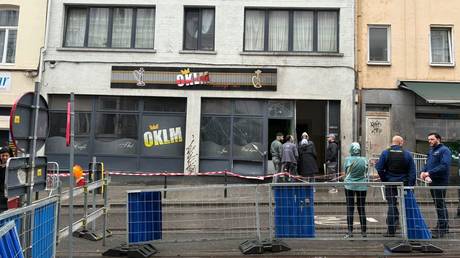
Brussels doesn't feel like the capital of Europe right now. It feels like a pressure cooker. Over the last week, a string of suspected gang-related blasts hit the suburb of Saint-Gilles, leaving residents shaken and local authorities scrambling for answers. If you’ve been following the news, you know this isn't an isolated incident. It’s part of a violent escalation tied to the drug trade that’s been simmering under the surface for years. Explosives are becoming the new language of the underworld here.
The most recent attacks involved heavy pyrotechnics or improvised devices targeting specific buildings. This isn't random chaos. It’s a targeted message. When a grenade or a pipe bomb goes off in a residential neighborhood at 3:00 AM, the goal isn't just property damage. It’s about territory, debt, and intimidation. If you live in Saint-Gilles or Forest, the sound of sirens has become a rhythmic part of the night.
Why Saint Gilles Is the New Ground Zero
Saint-Gilles used to be known for its trendy cafes and art deco architecture. Now, it’s the frontline of a turf war. Local police sources and neighborhood reports suggest the violence stems from a fracturing of the local narcotics market. We’re seeing a shift from traditional organized crime hierarchies to younger, more volatile "neighborhood crews" that are willing to use extreme violence to settle minor disputes.
The geography of the area plays a role too. Saint-Gilles is densely packed. It’s easy to disappear into the side streets after tossing a device. It’s also close to the Midi station, a major transport hub that, frankly, has become a magnet for crime and insecurity. When you combine high-density housing with a lucrative drug trade, you get a recipe for disaster. The police are doing what they can, but they’re playing a permanent game of Whac-A-Mole. One cell gets busted, and two more pop up to claim the corner.
The Weapon of Choice Is Shifting
Traditionally, gang violence in Belgium involved shootings—drive-bys with Kalashnikovs or handguns. But the recent wave of "blasts" signals a tactical change. Explosives are loud. They create a spectacle. They ensure the entire neighborhood knows who’s in charge.
Using explosives also lowers the risk for the perpetrator. You don't have to look your target in the eye. You light a fuse, drop the bag, and you're gone before the first window shatters. The federal judicial police have noted that many of these devices are modified industrial fireworks or "Cobra" firecrackers, often sourced from Eastern Europe or the Netherlands. They aren't military-grade C4, but they’re powerful enough to flip a car or take down a front door.
Federal Response vs Local Reality
The Belgian government recently announced a "Plan Midi" to increase police presence and clean up the areas around the major train stations. It sounds good on paper. They talk about "integrated security" and "multi-agency cooperation." But if you ask the shopkeepers in Saint-Gilles, they’ll tell you the police presence is often fleeting. They show up for a few hours, clear the sidewalk, and as soon as the blue lights fade, the dealers return.
There’s a massive disconnect between the high-level political rhetoric and the daily reality on the ground. The federal police are understaffed and underfunded. Investigations into these bombings take months, sometimes years, because the forensic trail is often burnt to a crisp. Meanwhile, the residents are the ones left picking up the glass. They’re tired of being told that "the situation is under control" when their windows are shaking in their frames twice a week.
The Antwerp Connection You Cant Ignore
You can't talk about Brussels without talking about Antwerp. For years, Antwerp has been the cocaine gateway to Europe. The violence there has been legendary—hand grenades under cars, "torture containers," and daylight assassinations. What we’re seeing in Brussels is the "Antwerp-ization" of the capital.
The supply lines from the Port of Antwerp feed the distribution networks in Brussels. When there’s a hiccup in the supply chain—a seized shipment or a stolen load—the ripples are felt in Saint-Gilles. The violence travels down the A12 highway. It’s a interconnected web of misery. If the authorities don't stop the flow at the port, they’ll never stop the explosions in the suburbs. It’s that simple.
What This Means for Your Safety
Is Brussels safe? Generally, yes. If you’re a tourist visiting the Grand Place, you’re likely fine. But for those living in the "grey zones" of the city, the sense of security has evaporated. These blasts aren't intended to kill bystanders, but the risk of collateral damage is skyrocketing. A misplaced device or a fire that spreads too quickly could easily turn a "message" into a massacre.
People are moving out. Families who have lived in Saint-Gilles for generations are looking for apartments in the suburbs or further out in Flanders or Wallonia. When the middle class flees, the vacuum is filled by more crime. It’s a death spiral that Brussels has seen before, and right now, the city is staring into the abyss.
How to Stay Informed and Stay Safe
If you live in or near these hotspots, don't ignore the signs.
- Avoid hanging out in areas known for open-air drug dealing after dark.
- Keep an eye on local neighborhood groups on social media; they often have news faster than the mainstream press.
- Report any suspicious behavior—people loitering with bags near building entrances or motorcycles circling the block—directly to the police.
Don't assume someone else has called it in. The "bystander effect" is real, and it’s exactly what these gangs count on to operate with impunity. Demand more from your local commune leaders. Hold the mayor of Saint-Gilles and the Brussels Minister-President accountable. They work for you. If they can't guarantee that you won't be woken up by a bomb, they aren't doing their jobs.
Brussels is a beautiful city, but it’s currently being held hostage by a handful of people who think they’re in a movie. It’s time to stop treating these blasts as "isolated incidents" and start treating them like the domestic terrorism they are. The clock is ticking before the next fuse is lit. If the state doesn't reclaim the streets now, the gangs will have finished the job for them. Don't wait for the next siren to start caring about this. Look at your neighborhood today and ask if you're okay with this being the new normal. I’m certainly not.