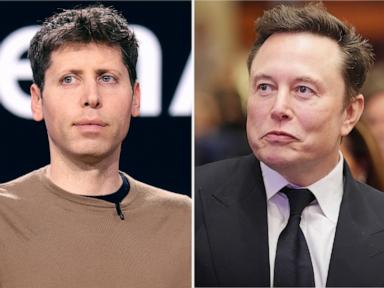
The courtroom was quiet, but the air felt heavy with the weight of a broken friendship. When Elon Musk sued OpenAI and its co-founder Sam Altman, the legal documents read like a corporate dispute over breach of contract and fiduciary duty. But anyone who has watched the trajectory of human ambition knows this wasn't just about law. It was a civil war between two men who once shared a singular, terrifying vision of the future.
When the judge finally dismissed the lawsuit, ruling firmly in favor of OpenAI and Altman, the tech world breathed a collective sigh of relief. Or perhaps it was a sigh of resignation.
To understand how we arrived at this courtroom betrayal, you have to go back to 2015. Imagine a dinner table in Silicon Valley. The wine is expensive, but the conversation is apocalyptic. Musk and Altman sat together, genuinely terrified that Google’s rapid acquisition of AI talent would lead to a closed, monolithic corporate monopoly over the smartest software on Earth. They shook hands on a promise. They would build a counterweight. It would be a non-profit. It would be open source. It would belong to humanity.
They called it OpenAI. The name itself was a manifesto.
Betrayal rarely starts with a villainous plot. It starts with a spreadsheet. By 2019, the idealistic non-profit structure was suffocating under the sheer weight of reality. Training massive neural networks doesn't just require brilliant minds; it requires staggering amounts of electricity and computational power. It requires billions of dollars.
Altman realized that saintly intentions don't pay the electricity bill. He engineered a massive pivot, creating a "capped-profit" arm of the company that allowed billions in investment from Microsoft to flood into their research labs.
Musk, who had already walked away from the board after his own bid to run the company was rejected, watched from the sidelines as the scrappy underdog became the dominant commercial titan of the industry. The open-source laboratory had transformed into a highly guarded corporate fortress.
The lawsuit Musk filed was an attempt to force OpenAI back into its original mold. He claimed the company had abandoned its founding mission to benefit humanity, opting instead to maximize profits for Microsoft. He wanted the courts to declare that OpenAI's latest, most powerful models were essentially artificial general intelligence—the point where AI matches human capability—and therefore exempt from commercial licensing.
But the legal system does not rule on broken hearts or philosophical purity.
The judge’s ruling cut through the emotional noise of the dispute. Legally, the foundational "founding agreement" Musk claimed was breached did not exist as a formal, binding contract. It was a series of emails, shared aspirations, and conceptual pitches. In the cold, unyielding light of contract law, a shared dream is not a legally enforceable obligation.
Furthermore, the court recognized that a non-profit board retains the legal authority to structure its operations to achieve its ultimate goals, even if that means partnering with a trillion-dollar tech giant to secure the necessary infrastructure.
The decision was a total vindication for Altman and OpenAI. It cemented their corporate structure, validated their commercial partnerships, and effectively shut down Musk’s attempt to weaponize the legal system against his former allies.
But winning a lawsuit is not the same as winning the argument.
Consider what happens next. The legal hurdles are cleared, OpenAI is free to sprint forward, and Altman’s vision of commercialized, highly scalable AI is the definitive path of progress. Yet, a nagging question remains for anyone who remembers the idealism of 2015.
If the only way to build the ultimate technology is to become a massive, profit-driven corporation, then the original premise of OpenAI was flawed from the start. It means that altruism alone cannot build the future.
This realization hurts. It forces us to confront a uncomfortable truth about our relationship with technology. We want our creators to be philosophers, but we live in a world governed by venture capital and cloud computing infrastructure.
The true cost of this legal battle isn't measured in billable hours or court costs. It is measured in the loss of a specific kind of optimism. The belief that the most powerful technology in human history could be developed entirely outside the traditional rules of corporate capitalism is officially dead.
The courtroom drama is over, the filings are archived, and the billionaires will continue their public sparring matches on social media. OpenAI will keep releasing faster, smarter, more intuitive models that reshape our daily work and creative lives.
But the name OpenAI now reads less like a description and more like a ghost. It is a monument to an idealistic moment when two friends thought they could save the world by giving it away for free, right before they realized that the future is far too expensive to be left open.