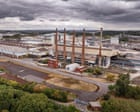
The press is currently swooning over the news that a "Norwegian group" is kicking the tires of the Liberty Steel works in South Yorkshire. They see a savior. They see a resurgence of British manufacturing. They see a green transition in the making.
They are hallucinating.
The fascination with keeping the Liberty Steel assets on life support—specifically the specialty steel plants in Stocksbridge and Rotherham—is a masterclass in sunk-cost fallacy. We are watching a slow-motion car crash where every bystander is cheering for the driver to hit the gas. Sanjeev Gupta’s empire didn't just crumble because of financing issues with Greensill; it stumbled because the underlying economics of UK steel are, and remain, fundamentally broken.
If a Norwegian investment group steps in, they aren't doing it out of a Viking sense of altruism. They are looking for distressed assets to strip, flip, or subsidize. The "lazy consensus" suggests that a change in ownership equals a change in fortune. It doesn't. Without a radical overhaul of the UK’s energy pricing and a brutal admission that we cannot compete in commodity markets, this is just moving chairs on the deck of the Titanic.
The Energy Price Lie
Every mainstream report mentions "high energy costs" as a footnote. It should be the headline. You cannot run an Electric Arc Furnace (EAF) in the UK and expect to compete with mainland Europe, let alone China or India.
The UK industrial electricity price is frequently double that of France or Germany. When you operate a melt shop, electricity isn't an "overhead"—it is the raw material. By keeping these plants open under current British energy policy, we are essentially subsidizing the destruction of capital.
The Norwegian suitors likely come from a land of cheap hydroelectric power. They think they can export that efficiency. They can't. You can't ship Norwegian electrons across the North Sea for free. If they buy Liberty Steel, they will immediately realize they’ve walked into a trap where the UK government expects them to pay "Green Levies" on top of the highest base rates in the developed world.
The Specialty Steel Myth
The narrative is that South Yorkshire is "special." That it produces high-value alloys for aerospace and defense that "nobody else can make."
I’ve spent twenty years watching specialty markets. Here is the cold truth: being "special" doesn't make you profitable if your scale is pathetic. The Stocksbridge plant produces high-quality vacuum induction melted (VIM) and electro-slag remelted (ESR) steels. Yes, Boeing and Airbus need them. But they don't need them from South Yorkshire.
The global supply chain for aerospace grade steel has diversified. The "specialty" moat has dried up. If your production costs are 30% higher than a competitor in Bergamo or Ohio, your "heritage" doesn't mean a damn thing to a procurement officer at Rolls-Royce. They want reliability and price. Liberty Steel has struggled with the former; the UK environment guarantees failure on the latter.
Why Norwegian Capital is a Red Flag
Why Norway? Why now?
Norway’s sovereign wealth and private equity sectors are flush with cash from the very thing the UK is trying to kill: North Sea oil and gas. There is a delicious irony in "Green Norwegian Capital" being used to bail out a British carbon-heavy industry.
But look closer at the mechanics. Private equity in the steel sector rarely focuses on long-term metallurgical innovation. They focus on the balance sheet.
- Debt Loading: They buy the asset cheap, load it with debt, and pay themselves a management fee.
- Subsidy Farming: They wait for the UK government to get desperate enough to offer a "Green Steel" grant—taxpayer money used to install new furnaces that will still be too expensive to run.
- Asset Thinning: They sell off the valuable aerospace contracts and leave the heavy, unprofitable infrastructure to rust.
If you think this deal is about "saving jobs" in Rotherham, you haven't been paying attention to how international M&A works in the 21st century. Jobs are the bargaining chip used to extract concessions from local councils and the Department for Business and Trade. They are not the objective.
The Hydrogen Delusion
The "Green Steel" pivot is the newest way to incinerate money. The proposal is always the same: switch from coal-fired blast furnaces (which South Yorkshire has already largely moved away from in favor of EAFs) to hydrogen-reduced iron.
Here is the thought experiment: Imagine a scenario where the UK actually builds the wind farm capacity required to generate enough green hydrogen to run a steel mill. By the time that infrastructure exists, the cost of that hydrogen will be so high that the resulting steel will cost five times the market rate.
We are trying to build a 22nd-century industry on a 19th-century power grid. It is a fantasy. A Norwegian group knows this. They are betting on the British government’s desperation to meet Net Zero targets. They aren't buying a steelworks; they are buying a seat at the subsidy table.
The Brutal Reality of South Yorkshire
We need to stop treating steel mills like museums.
The emotional attachment to the South Yorkshire works is understandable. It’s the heart of the British Industrial Revolution. But sentimentality is a terrible business strategy. The "Norwegian talks" are a distraction from the real conversation we should be having: What does a post-steel South Yorkshire actually look like?
By constantly chasing the next "buyer"—from Tata to Sanjeev Gupta to the mystery Norwegians—we are preventing the region from evolving. We are keeping thousands of highly skilled engineers trapped in a dying industry instead of incentivizing the pivot to high-end additive manufacturing, modular nuclear reactor components, or advanced carbon capture hardware.
We are fighting for the right to make 1950s-style bulk commodities in a 2026 world.
Stop Asking "Who Will Buy It?"
The question "Who will buy Liberty Steel?" is the wrong question. It assumes the goal is survival.
The right question is: "Why are we making steel in the UK at all?"
If the answer is "National Security," then the government should nationalize it, run it at a loss, and call it a defense expense. Stop pretending it's a viable commercial enterprise.
If the answer is "Economics," then let it fail.
If the Norwegian group closes the deal, expect a honeymoon period of twelve months. There will be a ribbon-cutting ceremony. A junior minister will give a speech about "Northern Powerhouses." Then, the first winter energy spike will hit. The Norwegian "partners" will realize that the UK’s grid is a hostile environment for heavy industry. They will ask for a bailout. When the government refuses, the "strategic review" will begin. We have seen this movie four times in the last decade. The ending never changes.
The South Yorkshire works are a ghost of an industrial past we refuse to bury. Buying them isn't an investment; it's an autopsy.
Stop looking for a savior. Start looking for an exit.
***