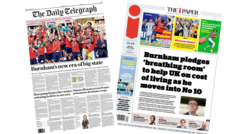
Walk into any local shop in the UK early in the morning, and you're hit with a wall of ink. The front pages don't just report the news. They manufacture an emotional climate. One day you're told the country is entering a glorious political rebirth, and the next, you're staring at a crushing sports defeat.
Look at how the press handled the simultaneous rise of regional political power and massive sporting drama. On one side, headlines screamed about Andy Burnham's new era in Greater Manchester. On the other, sports pages cried out with phrases like Viva España after another football heartbreak. It's a classic media double-act. They give you a local savior to analyze and a foreign triumph to mourn.
This isn't accidental. The way British newspapers slice and dice the national narrative tells us exactly what the media elite wants us to care about. They want us obsessed with localized political soap operas while using national sports losses to trigger collective grief. Let's break down how this works and why the papers keep playing the same emotional chords.
The Myth of the Regional Political Savior
Andy Burnham loves a headline. The Mayor of Greater Manchester has perfected the art of the media pivot, positioning himself as the King in the North. When newspapers run front pages heralding a new era under his watch, they're buying into a carefully constructed PR machine.
But let's look at the reality behind the print.
The media loves a narrative about local empowerment because it distracts from systemic national stagnation. When the papers talk about a new era, they usually mean a revamped bus network or a minor devolution deal. They frame these regional shifts as massive victories. They treat a local politician like a national prime minister in waiting.
It's a smart strategy for selling papers. People in the North want to feel seen. The London-centric press occasionally remembers that life exists past Watford, so they throw a spotlight on Manchester. By framing regional governance as a revolutionary shift, the press creates a false sense of national momentum. You read the headline and think things are finally changing.
Then you look at the actual policy outcomes. Transportation networks remain fragmented across most of the country. Housing waiting lists grow longer. The bold new era starts looking like a modest coat of paint on a crumbling wall. The papers won't tell you that on page one. They need the drama of a fresh start to keep you buying.
Why Football Defeat is Essential for Tabloid Survival
Nothing moves newsprint like English sporting misery. When Spain dominated the pitch and left fans staring at another near-miss, the papers didn't just report the score. They leaned into the cultural angst.
The phrase Viva España on a British front page is always laced with a specific kind of bitter admiration. The tabloids love the tragedy of the heroic loser. It's built into the DNA of British journalism. A victory is great for a day, but a heartbreaking loss provides weeks of post-mortem content. They can blame the manager. They can criticize the tactics. They can question the players' commitment to the shirt.
Think about the sheer volume of content generated by a single lost final. The back pages turn into amateur psychology journals overnight. They dissect the national character. They ask why English players lack the technical grace of their continental rivals.
Sporting events serve as a massive lightning rod for public frustration. If people are angry about the economy, the NHS, or rising costs, a football match gives them a safe place to vent that rage. The papers know this. They channel collective anxiety into sports coverage because it's safer than letting that anger focus on political failures. It's bread and circuses, wrapped in newsprint and delivered to your doorstep.
The Art of the Front Page Distraction
The true power of the press lies in layout. What goes above the fold determines what people talk about at the coffee machine. By balancing serious political rebranding with sports drama, editors create a balanced diet of distraction.
Imagine the editorial meeting. You have a complex story about regional funding blockages, local government debt, and infrastructure delays. That's boring. It doesn't sell copies. So, how do you fix it? You simplify the politics into a personality clash, stick Andy Burnham's face on it, and call it a new era. Then, you balance that heavy prose with a massive, colorful image of Spanish footballers celebrating.
This juxtaposition creates a weird cognitive dissonance for the reader. You're simultaneously told that the local political system is thriving and that the national sporting identity is wounded. Your brain doesn't know whether to cheer or sigh.
This emotional whiplash is entirely intentional. A confused, emotionally volatile reader is an engaged reader. If you buy the paper to read about the football disaster, you accidentally end up consuming the political narrative. If you buy it for the politics, you get sucked into the sports drama. It's a closed loop designed to keep your attention pinned to the page.
Spotting the Media Narrative in the Wild
You don't have to be a passive consumer of this stuff. Once you see the patterns, you can't unsee them. The British press relies on a very limited playbook to grab your attention.
First, look for the savior narrative. Whenever a politician is described as launching a new era or leading a revolution, check the actual budget allocations. True systemic change requires massive capital injection, not just a fresh logo on a bus. If the headline focuses entirely on a politician's personality, it's a distraction from a lack of real substance.
Second, analyze the tone of sporting coverage. Watch how quickly the press shifts from blind optimism before a match to visceral condemnation after a loss. They build teams up specifically to watch them fall. It's a cycle that guarantees high readership during the tournament and even higher readership during the subsequent outrage cycle.
Stop letting the front pages dictate your emotional baseline for the day. The next time you see a headline shouting about a political dawn or a sporting tragedy, ask yourself what else happened that day. Look for the stories buried on page fourteen. That's usually where the real news is hiding, far away from the glossy photos and the manufactured outrage. Turn over the page and look past the noise.