Seven hundred and fifty old tyres per kilometre sounds like a neat trick until you realize how many millions of worn-out car and lorry tyres Britain piles up every single year. Still, blending crumb rubber into M1 asphalt shows how highway engineers are trying to squeeze real utility out of nasty waste streams instead of letting them rot in stockpiles or burn in overseas kilns. I've spent years watching infrastructure pilots get hyped up as miracle cures, and road surfacing is no exception.
When Britain tested waste tyres in M1 asphalt at rates reaching up to 750 tyres per kilometre, the core idea wasn't magic. It was chemistry and mechanics. Old rubber gets ground into fine crumb or blended as a polymer-modified binder, changing how bitumen behaves under heavy freight, rain, and temperature swings. Look closely at what actually happens on a live motorway, though, and the story gets way more complicated than a press release lets on.
What Waste Tyres in M1 Asphalt Actually Do to the Road
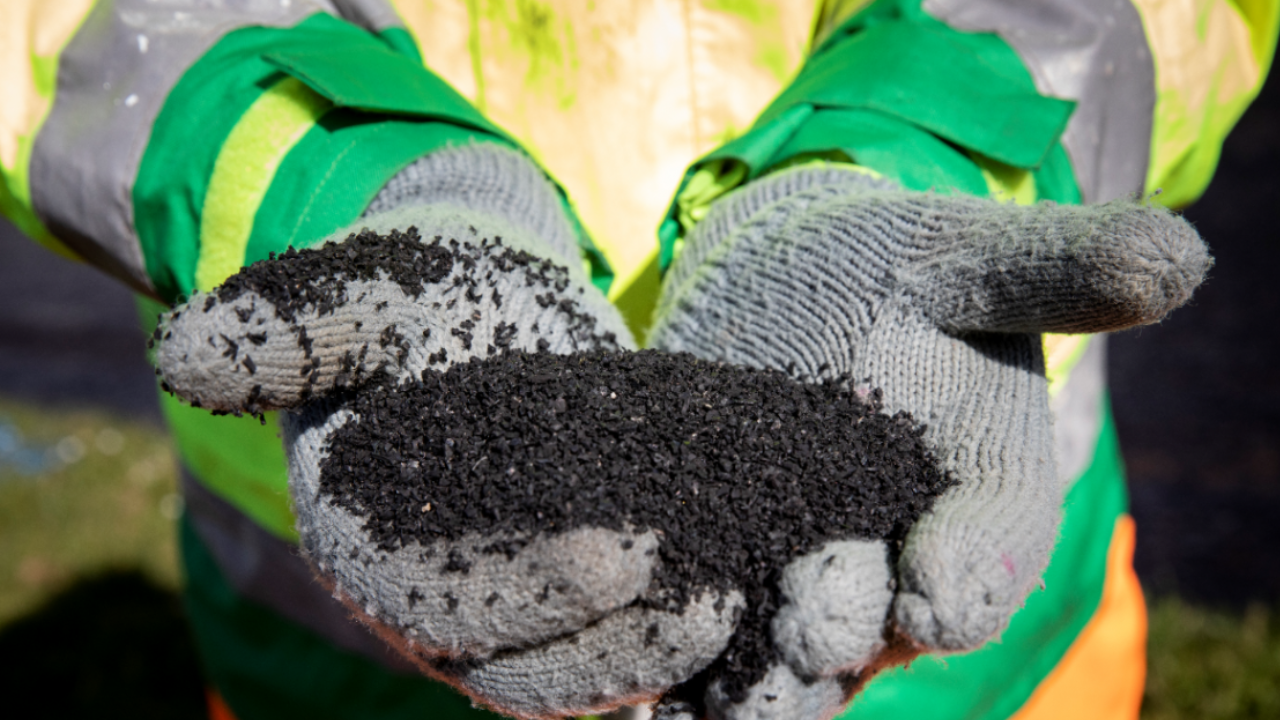
People hear "tyres in asphalt" and picture chunks of Goodyear tread sitting in the tarmac like raisins in bread. Doesn't work that way. In practice, manufacturers shred scrap tyres, strip out the steel wire and textile cord, and mill the rubber into tiny granules—often called crumb rubber—before mixing it into hot bitumen or feeding it directly into the asphalt mix using dry or wet processes.
Why bother? Standard bitumen gets brittle when temperatures drop and turns soft when summer heat bakes a motorway. Adding rubber modifiers can make the binder more elastic. Under repeated axle loads from 44-tonne lorries pounding the M1, a modified mix can resist rutting and cracking better than a plain conventional surface, depending on the exact formulation and aggregate.
Noise is another big selling point. Rougher or specially graded rubber-modified surfaces can dampen tyre-road roar compared with worn traditional slabs, which matters when a motorway cuts right past housing estates and villages. Honestly, residents living 200 metres from the M1 care a whole lot more about cabin-level quiet and fewer midnight road closures than they do about abstract material science.
Still, a highway isn't a lab bench. Getting 750 waste tyres per kilometre into a section of M1 asphalt requires tight quality control at the asphalt plant, careful temperature management so the rubber doesn't degrade or smoke excessively, and strict compliance with UK highway specifications set by National Highways. Miss the viscosity window by a few degrees and you end up with a mix that's hell to compact on site.
The Numbers Behind 750 Tyres Per Kilometre
Let's do some rough, practical math without pretending a single pilot solves a national headache. A typical passenger car tyre weighs around 8 to 10 kilograms, while a heavy commercial truck tyre can weigh 40 to 60 kilograms or more. If a stretch of M1 asphalt absorbs up to 750 waste tyres per kilometre—say a mix of car and commercial casings—you're talking roughly 6 to 15 tonnes of rubber per kilometre, depending on tyre size and mix design.
Sounds decent for one stretch of road. Now zoom out. The UK generates tens of millions of waste tyres every year. Even if National Highways rolled out rubber-modified asphalt across hundreds of kilometres of the M1 and wider strategic road network, highway surfacing alone can't swallow every scrap tyre in Britain. It's a pressure-release valve, not a total cure.
Cost is where real-world engineering gets grumpy. Grinding tyres into uniform crumb takes serious electricity and wear-and-tear on shredders. Shipping heavy rubber granules to mixing plants adds haulage emissions and fuel bills. If a rubber-modified surface costs 15% or 25% more upfront than standard asphalt, budget holders ask a blunt question: will this surface last enough extra years, or cut enough maintenance visits, to pay for itself?
On a busy corridor like the M1, shutting a lane for resurfacing isn't just a line item in a maintenance budget. Traffic queues cost businesses real money in delayed deliveries and lost hours. If a rubber-modified layer pushes out the interval between major overlays by even a couple of years, the economic case starts looking much sharper. If it wears out at the same rate, accountants won't keep funding it.
What Most Coverage Misses About Rubberized Roads
Most surface-level articles treat rubber-modified asphalt like a clean environmental win and move on. That's lazy reporting. In highway engineering, every trade-off has a catch, and pretending otherwise gets engineers burned later.
First, end-of-life recyclability gets tricky. Once rubber is locked into a complex asphalt matrix with aggregates and modifiers, you can't just pull the tyres back out when the road gets milled years later. Reclaimed asphalt pavement (RAP) is heavily reused across UK road projects, and high percentages of modified binders can complicate how easily old surfacing gets recycled again.
Second, emissions and microplastics deserve honest scrutiny. Heating rubberized bitumen at asphalt plants requires careful fume extraction and process control. Meanwhile, every road surface sheds tiny particles as vehicles drive over it, and highway runoff carries particulates into drainage systems and nearby waterways. Swapping one material for another shifts the chemical profile of road dust and runoff—it doesn't make traffic magically harmless.
Third, climate and traffic specifics matter enormously. Techniques proven in hotter, drier parts of the United States—like Arizona or California, where crumb rubber asphalt has decades of track record—don't automatically behave identically under Britain's damp, freeze-thaw-prone climate. Moisture getting into micro-cracks can strip binder from aggregate if the mix isn't tuned properly. UK engineers have to test for local aggregates, damp conditions, and heavy UK axle loads, not just copy-paste foreign specs.
How Britain's Approach Fits Into Wider Road Innovation
Using waste tyres in M1 asphalt sits alongside a whole menu of greener road experiments happening across the UK and Europe. Warm-mix asphalt lowers production temperatures to cut fuel burn. Recycled aggregates crush old concrete and tarmac so quarries get hammered less. Some trials even experiment with bio-binders, plastics, or industrial slags.
From what I've seen on infrastructure projects, the winners rarely rely on a single silver bullet. Instead, asset managers match the material to the problem. High-stress lanes, noise-sensitive stretches, and bridges with tight maintenance windows justify specialized mixes. Quiet rural distributor roads? Plain, proven, cheap surfacing usually wins.
You can see this mindset in how agencies like National Highways approach trials and standards, or how research bodies like the Transport Research Laboratory evaluate durability and safety. Rather than slapping a novelty mix everywhere overnight, cautious highway authorities run controlled trials, monitor rutting, skid resistance, and texture depth over years, and only widen adoption when hard performance data backs it up.
That conservatism frustrates commentators who want instant green headlines. Good. Motorways aren't startup pitch decks. A failed app crashes a phone; a failed surface layer on the M1 causes multi-mile backups and safety headaches.
Practical Takeaways If You're Tracking or Specifying Road Materials
If you work in civil engineering, municipal procurement, sustainability, or simply follow infrastructure policy, don't stop at the headline number of 750 waste tyres per kilometre. Ask sharper questions.
Start with lifecycle cost, not just plant gate price. Compare total cost over a 15- to 25-year design life, factoring in traffic management disruptions, expected resurfacing cycles, and skid resistance retention. A pricier mix that avoids one major lane closure can come out ahead.
Check local supply chains and mix compatibility before pushing a spec. Crumb rubber asphalt only performs as advertised when aggregate grading, binder rheology, and compaction temperatures are dialed in. Cutting corners at the plant ruins good material science.
Look at waste tyres as part of a broader circular economy portfolio. Highway asphalt can absorb meaningful volumes of scrap rubber, especially on high-value corridors like the M1, while other streams still need pyrolysis, devulcanization, or industrial fuel recovery where appropriate. No single outlet will take 100% of Britain's worn tyres cleanly.
Finally, demand transparent post-installation monitoring. Real value shows up after five and ten winters of lorries, salt, and rain—not on the day the roller finishes compacting the mat. Keep watching the data, stay skeptical of hype, and judge road materials by how well they hold up when traffic gets brutal.