BP is offloading its stake in the Gelsenkirchen refinery because the math for traditional oil processing in Northwest Europe no longer works. While the company frames this as part of a $20 billion divestment target aimed at streamlining operations, the move signals a deeper surrender. It is not just about meeting a cost-cutting quota. It is an admission that the age of massive, integrated fossil fuel hubs in Germany is hitting a wall of high energy costs, shrinking margins, and a regulatory environment that has turned hostile to carbon-intensive assets.
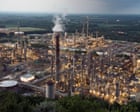
For decades, the Gelsenkirchen site—consisting of the Horst and Scholven facilities—served as a heartbeat for the German industrial machine. Now, it is a line item on a balance sheet that needs to be scrubbed. BP’s decision to exit its 100% stake in this 250,000 barrel-per-day facility is the clearest indicator yet that the "Energy Transition" is less of a gradual shift and more of a brutal amputation of legacy hardware.
The Quiet Collapse of Refining Margins
The public narrative usually focuses on green targets. The reality is more surgical. Refining margins in Europe have been under sustained pressure as global capacity shifts toward the Middle East and Asia. Newer, more efficient refineries in those regions can process cheaper, heavier crudes and ship finished products to Europe at prices that local plants struggle to match.
The Gelsenkirchen plant is particularly vulnerable. Unlike coastal refineries that can easily take in various global crude grades via deep-water ports, inland German refineries rely on aging pipeline infrastructure. When energy prices in Germany spiked following the decoupling from Russian gas, the operational costs for these facilities became unbearable. Refining is an energy-intensive business. You have to burn fuel to make fuel. When the cost of that internal consumption rises, the entire economic model cracks.
BP is not alone in this retreat. We are seeing a pattern where "Big Oil" is becoming "Lean Oil." Shell, TotalEnergies, and ExxonMobil have all spent the last three years either selling, closing, or converting European refining assets into biofuels hubs. By selling Gelsenkirchen, BP is trying to get ahead of a projected glut in refining capacity that many analysts expect will hit by 2027.
Why $20 Billion is the Magic Number
The $20 billion divestment goal is not an arbitrary figure pulled from a hat. It is a shield. BP’s leadership is under immense pressure from shareholders who have grown weary of the company's fluctuating strategy. Under previous leadership, the firm promised a radical pivot away from oil; under current management, there has been a noticeable "rebalancing" back toward the high-margin oil and gas projects that actually pay the dividends.
To fund this dual-track strategy—investing in new oil in the Gulf of Mexico while pretending to build a green future—BP needs cash. Selling a complex, high-maintenance German refinery provides an immediate injection of liquidity and removes a significant future liability from the books.
Maintaining an old refinery is expensive. You have "turnarounds," which are massive maintenance shutdowns that cost hundreds of millions of dollars. By selling now, BP avoids the next cycle of heavy capital expenditure. They are effectively passing the bill for the next decade of maintenance to whoever is optimistic—or desperate—enough to buy it.
The Buyer Problem
Who actually buys a German refinery in 2026? This is the question the market is whispering. The list of potential suitors is short and fraught with geopolitical tension.
- Private Equity Firms: These groups often buy "unloved" assets, strip the costs to the bone, and run them for cash flow. However, the environmental liabilities associated with a site like Gelsenkirchen make this a risky play.
- National Oil Companies (NOCs): Entities from the Middle East or Central Asia often look for "downstream" outlets for their crude. If you own the oil, owning the refinery makes sense. But the German government has become increasingly wary of foreign state ownership of critical infrastructure.
- Specialized Independent Refiners: Companies like Prax or Varo Energy have built business models around buying up legacy assets from majors. They operate with lower overheads and can sometimes squeeze profit where a giant like BP cannot.
The risk for Germany is that if a buyer isn't found, the plant faces closure. A closure doesn't just mean lost jobs; it means a disruption in the supply of heating oil, gasoline, and chemical feedstocks for the entire Ruhr region.
The Petrochemical Domino Effect
Gelsenkirchen is not just a fuel factory. It is a critical supplier to the German chemical industry. Roughly 15% of the plant's output is naphtha and other feedstocks that go directly into the production of plastics, detergents, and pharmaceuticals.
If BP exits and the new owner scales back production or fails to invest in the petrochemical side of the business, the ripple effects will be felt in every industrial park in North Rhine-Westphalia. Germany is already reeling from "deindustrialization" fears. The loss of a stable, integrated refinery at the heart of its industrial corridor would be another blow to a manufacturing sector that is already on life support due to high electricity prices.
BP knows this. By selling the stake rather than shuttering the doors, they are trying to exit gracefully without being blamed for the economic fallout. It is a tactical retreat designed to protect the brand while abandoning the asset.
Labor Unions and the Political Backlash
You cannot talk about German industry without talking about the unions. IG BCE, the union representing chemical and energy workers, has a seat at the table, and they are not going to let BP walk away without a fight.
The workforce at Gelsenkirchen is highly skilled and highly paid. They are also aware that their skill set is tied to a sunset industry. BP’s challenge will be navigating the "social plan"—the German legal requirement to compensate workers and mitigate the impact of such a massive shift. This often costs companies hundreds of millions of euros, which eats into the proceeds of the sale.
If BP tries to rush the exit, they risk strikes that could paralyze their remaining German operations, including their massive Aral retail network. The brand damage of leaving thousands of German workers in the lurch while reporting billions in global profit is a PR nightmare the board wants to avoid at all costs.
The Biofuel Pivot that Wasn't
There was a time when BP suggested these sites could be the future of "Green Hydrogen" or biofuels. That talk has cooled. The capital required to convert an old crude refinery into a modern biorefinery is staggering. In many cases, it is cheaper to build a new, smaller facility from scratch than to retro-fit a 70-year-old maze of pipes and tanks designed for fossil fuels.
The market has realized that the "conversion" narrative was, in many ways, a way to keep valuations high during the peak of the ESG (Environmental, Social, and Governance) craze. Now that the market is focusing back on cold, hard cash flow, the reality is clear: Gelsenkirchen is an oil refinery, and its value is tied to oil.
Global Strategy vs. Local Reality
This sale is a microcosm of the new global energy order. BP is concentrating its bets. They want "advantaged barrels"—oil that is cheap to extract and easy to sell. German refining, with its high taxes, strict carbon prices, and expensive labor, is the opposite of an advantaged barrel.
The company is moving toward a hub-and-spoke model. They will maintain a few massive, world-scale refineries in strategic locations (like the Whiting refinery in the US) and rely on trading and third-party contracts to supply their gas stations elsewhere. It is a shift from being a "producer and refiner" to being a "trader and retailer." It is lower risk, but it also means losing control over the supply chain.
The Hard Truth of Carbon Accounting
Under the EU's Emissions Trading System (ETS), the cost of carbon is a permanent weight on the scales. Every ton of CO2 emitted by the Gelsenkirchen stacks carries a price tag. As the EU tightens the cap on these permits, the "carbon tax" on refining increases every year.
For BP, keeping this asset on the books makes their corporate carbon footprint look terrible. Selling it doesn't actually help the planet—the refinery will likely keep running and emitting under a new owner—but it "cleans" BP’s internal ESG metrics. This is the great shell game of modern corporate climate strategy. Assets aren't being cleaned up; they are being moved to someone else's ledger.
The move to sell Gelsenkirchen is an admission that for a major oil company, Europe is increasingly a place to sell products, not to make them. The regulatory burden has finally outweighed the benefit of being close to the customer.
The End of the Integrated Major
We are witnessing the slow-motion breakup of the "Integrated Oil Major" model that dominated the 20th century. The idea that a single company should own everything from the oil well to the gas pump is dying. It is too capital-intensive and too rigid for a volatile energy market.
By shedding Gelsenkirchen, BP is becoming a more fragmented, agile, and frankly, more cynical company. They are choosing the path of least resistance, which means moving capital to parts of the world where the government won't tax their carbon or question their margins.
Germany, meanwhile, is left to figure out how to keep its trucks moving and its chemical plants humming without the support of the company that spent the last several decades as its primary energy partner. The divorce is final; the only thing left to settle is who gets stuck with the bill for the cleanup.
The Gelsenkirchen sale is not a one-off business move. It is a herald. If a giant with BP’s resources doesn't see a future in German refining, it is unlikely anyone else will find a way to make it work long-term without massive state subsidies. The industrial heart of Europe is getting a little colder.
Expect the sale to be finalized by the end of the fiscal year, provided a buyer can be convinced that there is still some life left in the old iron. For BP, the $20 billion goal is within reach, but the price of hitting that target is the total abandonment of its traditional European industrial base. It is a high price to pay for a cleaner balance sheet.