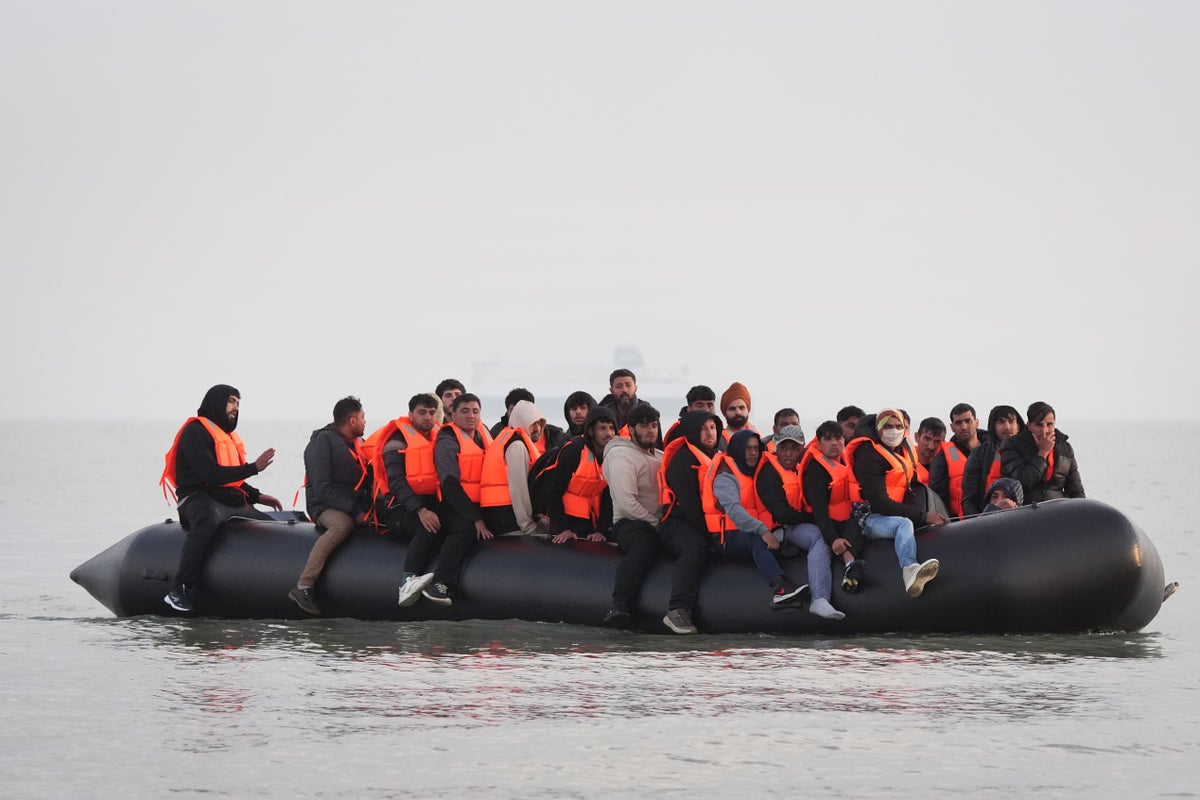
Charities operating along the northern French coastline have flagged an alarming surge in reported violence at the UK-France border, pointing to a dramatic escalation in physical confrontations during interception operations. Independent monitoring groups and humanitarian organizations working in Calais and Dunkirk report that physical abuse incidents tied to law enforcement operations have risen sharply over the past year, increasing by roughly 40 percent compared to preceding baseline periods. This surge highlights a deteriorating situation on the front lines of European migration control, where political pressure from London and Paris collides daily with desperate human movement.
To understand why this friction is worsening, one must examine the mechanics of the bilateral enforcement pacts funding these operations. Millions in British taxpayer funds flow directly across the Channel to finance French riot police, perimeter fences, surveillance technology, and vehicle checks. When political mandates demand visible reductions in small boat departures, enforcement strategies inevitably pivot toward aggressive deterrence.
The Anatomy of Border Enforcement Escalation
Police tactics in northern France have shifted noticeably. Officers operating under state directives increasingly rely on swift, confrontational interventions to disrupt small boat staging before vessels reach the water. These operations frequently involve the preemptive slashing of dinghies, the deployment of tear gas in confined camp environments, and physical clearances of makeshift sleeping sites.
The political calculus driving these measures is transparent. Both governments face intense domestic scrutiny over border security failures. In London, irregular Channel crossings remain a central lightning rod for political debate. In Paris, the presence of migrant encampments along coastal municipalities creates persistent local friction.
When political survival depends on statistical suppression of departures, enforcement agencies face immense pressure to show results. This pressure filters down directly to the tactical level, where individual officers operate in high-stress, volatile environments. The result is a compounding cycle of escalation. As security measures tighten, attempts become more desperate, and enforcement responses grow more severe.
The Financial Engine of Containment
Billions have been funneled into border management infrastructure since the historic Le Touquet treaty signed decades ago, yet the geographic reality remains unchanged. Calais and its surrounding ports represent a natural bottleneck. People seeking passage to the United Kingdom congregate in northern France because the geographical gap is narrowest there, and because historical, familial, and linguistic ties often point toward British soil.
The financial architecture supporting this containment strategy relies on annual funding disbursements from the UK Home Office to the French Ministry of the Interior. Recent agreements have ratcheted up these sums significantly, explicitly earmarked for enhanced drone surveillance, night-vision equipment, and expanded mobile gendarmerie units.
However, funding hardware does not solve human desperation. It merely alters the physics of the crossing. Enhanced port security pushed individuals away from heavy freight trucks and toward maritime smuggling syndicates operating fragile inflatable watercraft. Increased coastal patrols have not stopped departures; they have compressed departure windows, forcing crossings under more hazardous weather conditions and accelerating the reliance on ruthless criminal networks.
The Human Cost Documented by Ground Observers
Humanitarian monitors note that the rise in recorded violence extends beyond physical beatings during coastal raids. It encompasses the systematic destruction of personal property, including tents, sleeping bags, and dry clothing, during dawn clearances designed to prevent the formation of permanent camps.
For individuals sleeping rough in sub-zero winter temperatures, the destruction of shelter is not merely an inconvenience. It is a severe health hazard. Medical organizations operating clinics in the region report treating an increasing number of trauma injuries resulting directly from police interventions, alongside hypothermia and respiratory complications aggravated by the loss of gear during tear gas deployment.
The legal framework governing these operations provides limited recourse for those affected. Foreign nationals stranded at the border exist in a state of administrative limbo. Filing formal complaints against law enforcement officers in a foreign jurisdiction requires navigating complex legal bureaucracies, language barriers, and deep mistrust of institutional authorities. Consequently, the vast majority of violent incidents go unpunished and uninvestigated, fueling a culture of impunity among tactical units on the ground.
The Political Deadlock and Structural Failures
Neither government has presented a viable long-term strategy that addresses the root drivers of irregular migration. Instead, both Paris and London remain locked in a reactive loop of deterrence theatre.
British administrations continually announce tougher legislation, offshore processing proposals, and enhanced enforcement budgets. French authorities deploy thousands of officers to patrol miles of open coastline, an impossible defensive perimeter. This dynamic resembles an arms race between desperate people and entrenched state apparatuses.
The structural flaw in the current approach lies in its refusal to acknowledge market realities. As long as economic disparities, global conflicts, and family networks drive individuals toward the United Kingdom, and as long as legal pathways remain virtually non-existent for asylum seekers without prior connections or wealth, smuggling networks will adapt. Every euro spent on physical deterrence generates a corresponding adaptation by criminal syndicates, driving up prices, increasing vessel capacities beyond safe limits, and raising the stakes for everyone involved.
Looking Beyond the Statistics
The reported 40 percent surge in violent incidents is a symptom of a broken system at breaking point. It demonstrates that increasing the intensity of policing without addressing the structural demand for passage only amplifies human suffering without achieving its stated political goals.
As long as policymakers treat a complex humanitarian and geopolitical challenge solely as a law enforcement problem solvable by more batons, tear gas, and barbed wire, the beaches of northern France will remain a site of chronic friction, institutional violence, and avoidable tragedy.


