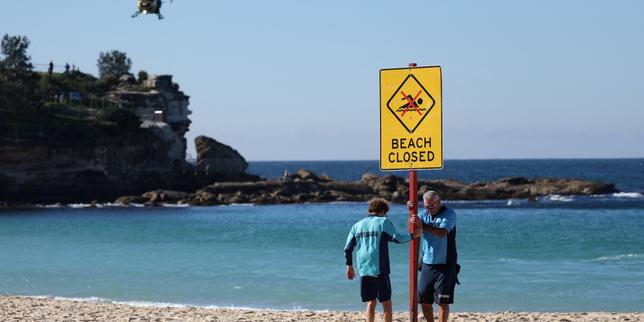
The water off the coast of New South Wales does not look like a graveyard. It looks like an invitation. On a clear morning, the Pacific Ocean laps against the sand with a clarity that makes you feel as though you could reach down and touch the seabed miles out. It is a hypnotic, brilliant turquoise.
But four times this year, that turquoise turned dark.
When an apex predator meets a human in the surf, the aftermath is not just a headline. It is a rupturing of a community. In 2026, Australia has watched four separate families stand on the shore, forced to confront the sudden, violent absence of someone they loved. The immediate, human reaction to that kind of grief is a ancient one. Instinctive. Primal. We want to strike back at the shadows. We want to clear the water.
This impulse has triggered a fierce, polarizing debate across the continent. Should we hunt down the sharks that kill?
To understand the weight of this question, you have to step off the dry pavement of policy and put your feet in the wet sand. Consider a surfer named Marcus—a composite of the men and women who wake up at dawn to chase the swell. For Marcus, the ocean is not a vacation spot; it is a sanctuary. He knows the risks. Every surfer does. They talk about the "men in grey suits" with a mix of dark humor and profound respect. But when a shadow moves beneath the board, the humor vanishes. The adrenaline is cold.
When a fatal attack occurs, the pressure on local governments bakes under a intense public spotlight. Tourism dries up. Beaches close. Parents keep their children on the grass. The political demand for action becomes a roaring engine. The most direct, visceral response is culling—deploying drum lines, which are baited hooks anchored to the ocean floor, or sending out hunting crews to track and kill sharks over a certain size in the vicinity of the attack.
The argument for the cull is simple, rooted in a duty of care: protect human life at all costs. Proponents argue that when a particular shark grows accustomed to hunting near heavily populated beaches, the risk becomes unacceptable. It is a calculus of utility. One shark vs. millions of beachgoers.
But the ocean refuses to comply with simple math.
Marine biologists and conservationists look at the exact same stretch of water and see a different kind of catastrophe unfolding if we choose the path of retaliation. Sharks are not malicious actors entering our territory; they are the architects of the marine ecosystem. They keep the oceans healthy by preying on the weak and sick, regulating the behavior of other marine life. Remove them, and the entire food chain collapses like a house of cards.
The real problem lies elsewhere. Culling is not just ecologically damaging; data suggests it is largely ineffective. Sharks are highly migratory. A great white or a tiger shark can travel hundreds of miles in a matter of days. The shark caught on a drum line twenty-four hours after an attack is rarely the shark responsible. We end up killing a symbol, not the threat. It is an exercise in theater—something done to make the public feel safe, rather than actually making them safe.
So how do we navigate this fragile boundary between two worlds?
The solution is shifting away from blood and toward technology. Australia is increasingly turning into a living laboratory for non-lethal deterrents. Drone surveillance teams now patrol the skies above popular breaks, their cameras scanning the shallows for shapes that do not belong. When a shadow is spotted, sirens wail, and the water clears in minutes. Smart drum lines, which alert authorities the moment an animal is hooked so it can be tagged and towed miles out to sea, are replacing the old, lethal traps.
We are learning to listen to the ocean instead of trying to conquer it.
Yet, the anxiety remains. No drone or tag can guarantee absolute safety. To step into the surf is to accept an unwritten contract with the wild. It is an admission that we are not the apex species in every corner of this planet.
Last week, near the site of one of the 2026 attacks, a group of surfers gathered for a paddle-out to honor their lost friend. They rowed past the breaking waves, formed a circle, and splashed the water, letting out shouts that were swallowed by the wind. A few hours later, as the sun began to dip, some of those same surfers slid back into the water to catch the final waves of the day. They paddled out into the darkening turquoise, fully aware of what might be swimming underneath, choosing to share the water rather than demand its surrender.


