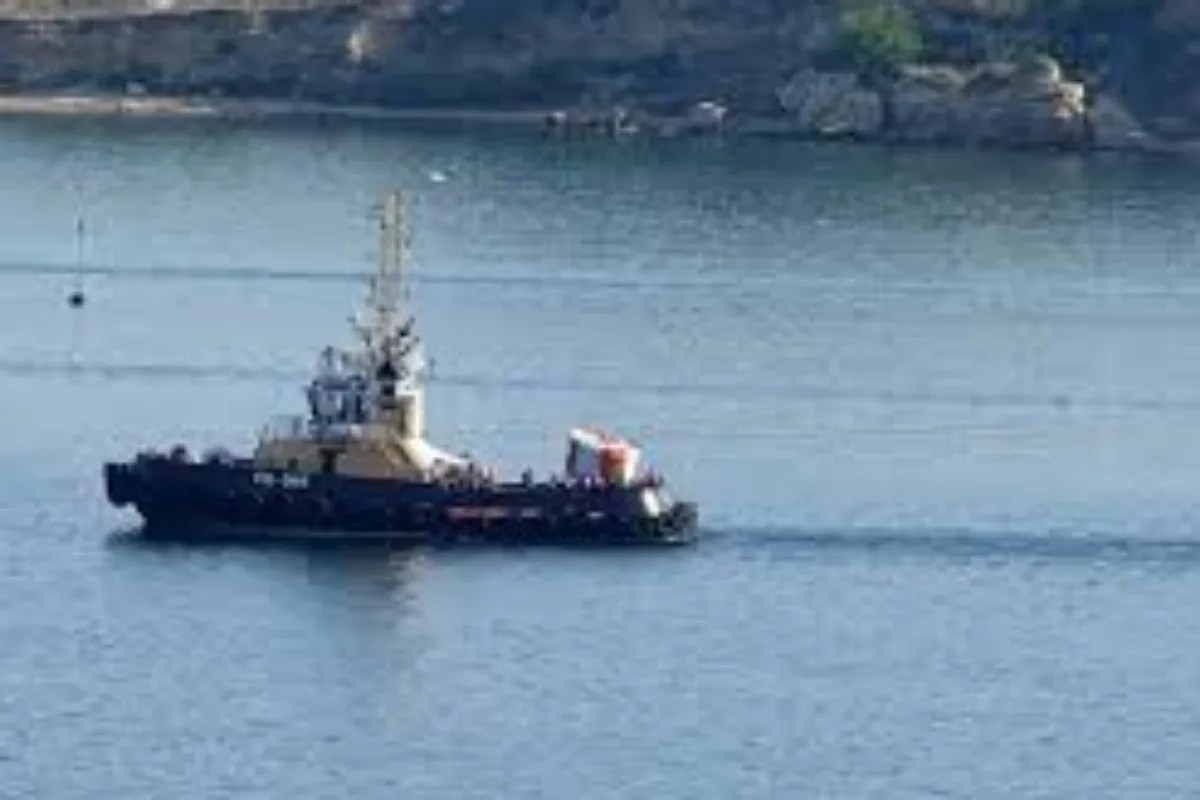
The headlines write themselves with lazy predictability whenever a cargo vessel takes a hit in the Black Sea. Mainstream reports scream about grain blockades, humanitarian crises, and reckless escalations targeting food security. Everyone nods along because the narrative is neat. It paints a picture of innocent merchant vessels carrying life-sustaining wheat getting blasted by unprovoked aggression.
That narrative is dangerously incomplete.
I have watched maritime logistics analysts and desk-bound defense pundits obsess over the wrong variables for years. They treat the Black Sea like a civilian shipping lane suffering from crossfire. It is not. It is a high-stakes, contested maritime theater where commercial registries are routinely weaponized to mask military logistics.
Stop buying the superficial outrage. When a vessel carrying supposed agricultural cargo gets struck, the knee-jerk defense of civilian commerce blinds people to the operational reality of modern hybrid warfare. Dual-use smuggling is the oldest trick in the naval playbook, and the current conflict has turned the Bosporus approaches into a gray-zone free-for-all.
The Grain Alibi
Look at how the corridors operate. Under various export frameworks, international pressure forces a presumption of innocence for any ship flying a commercial flag out of Odesa or Chornomorsk. Insurers take the risk, crews sign up for hazard pay, and bulk carriers slip out past the maritime exclusion zones.
Except cargo manifests are trivial to manipulate.
I have seen logistics chains stretch from industrial hubs through front companies in third-party nations, masking the exact nature of dual-use components, optics, drone parts, and heavy-duty propulsion systems beneath thousands of tons of bulk grain or corn. A bulk carrier does not stop being a legitimate military target just because its lower holds are packed with wheat if its upper decks or container racks are ferrying hardware that directly sustains an opposing army's drone fleet.
Naval intelligence does not operate on charity. When a strike occurs, the attacking force usually has intercepted telemetry, port-loading surveillance, or intelligence pointing directly to cargo discrepancies that Western newsrooms conveniently omit to keep the morality tale clean.
The Insurance Shell Game
The real engine driving this maritime theater is not wheat. It is underwriting risk and maritime insurance arbitrage.
Lloyd's of London and regional underwriters treat the Black Sea like a roulette wheel. Premiums spike, corridors open, and shipowners rake in astronomical freight rates that compensate for the distinct possibility of catching a missile. When a ship
Why Every Headline About Black Sea Grain And Weapons Is Missing The Real War
news
Every single defense analyst writing about the latest maritime strike in the Black Sea is staring at the wrong wave. The consensus narrative pumps out a predictable, lazy panic: a vessel allegedly hauling munitions gets hit, markets twitch, and talking heads scream about escalating supply chains. It is the exact same script recycled from every naval skirmish since the Cold War.
Stop buying the surface-level theater.
The real story in these contested waters is not about a single hull or a hidden stash of ordinance. It is about the complete restructuring of maritime insurance algorithms, the death of traditional freedom of navigation, and a quiet, brutal economic rearrangement that dwarfs whatever cargo was strapped to the deck.
The Fallacy of the Smoking Deck
When news breaks that a commercial freighter taking munitions to Ukraine got targeted near Odesa, the immediate reflex is to look at the fire and count the crates. This is rookie hour. Commercial shipping in a war zone does not operate on naive optimism or accidental routing. Every captain steering through the Bosporus corridor knows the risk profile.
If a ship is carrying military supplies into a theater, it is functioning as a strategic logistics node, regardless of what the manifest says. Pretending this is an unprovoked attack on innocent civilian commerce ignores how modern hybrid conflict works. Both sides treat the maritime corridor as an extension of the front line.
I have watched maritime risk committees sweat over premium adjustments while governments pretend cargo tracking is transparent. It is not. The gray zone between grain carriers and military logistics is where this entire conflict is actually being financed and fought.
Follow the Underwriter Not the Flag
Let us look at the data the mainstream media conveniently leaves out. Look at Lloyd's of London and the specialized syndicates writing policies for Black Sea transit. Premiums spiked to astronomical highs early in the escalation, but they have stabilized into a predatory rhythm.
| Shipping Era | Risk Profile | Insurance Impact | Real Economic Driver |
|---|---|---|---|
| Pre-2022 | Low Risk | Standard 0.25% hull value | Pure commercial volume |
| Active War | Extreme Volatility | Prohibitive surges | State-backed backstops |
| Current Reality | Calculated Gamble | Tiered algorithmic pricing | Speculative margin capture |
The real fight is over who pays to keep the corridor breathing. When a ship goes down or takes a hit, the cost is immediately absorbed not just by the owner, but baked into the global futures price of wheat, steel, and insurance derivatives. The weapons onboard matter less than the financial contagion spreading through London and Singapore boardrooms.
The Geography of Denial
Geography dictates destiny, and the Black Sea is a choke point wrapped in a geopolitical cage. The Montreux Convention governs who brings what through the straits, but maritime law has essentially become a suggestion box.
When analysts claim these strikes threaten global food security, they are relying on emotional blackmail. Ukraine exports a fraction of what it did before the infrastructure took direct hits, and the slack has long been picked up by competitors in South America and the United States. The grain narrative is a convenient emotional shield for a much harder, colder reality: logistics lines are legitimate targets in total economic warfare.
If you want to understand why these strikes keep happening despite international warnings, look at the denial capability. Moscow wants to prove that no corridor is secure without its direct oversight or acquiescence. Kyiv wants to prove that asymmetric drone warfare and coastal missiles can punch holes through a naval blockade. Both sides are playing a game of maritime attrition where the physical cargo is secondary to the psychological pressure on shipping registries.
Unconventional Playbook for Shippers
If you are running supply chain logistics or trading commodities in this environment, listening to cable news pundits will bankrupt you. Throw out the standard risk assessments.
- Ignore the declared cargo manifest; price the vessel entirely on its owner's political affiliation and historical routing through contested ports.
- Treat maritime insurance quotes not as a cost of doing business, but as a real-time sentiment gauge of military escalation windows.
- Diversify land-rail logistics through Eastern Europe, even with the bottleneck delays, because maritime transit in the Black Sea is a permanent high-stakes casino until a formal territorial settlement is signed.
The lazy consensus wants you to view these attacks as tragic anomalies interrupting normal trade. They are not anomalies. They are the new normal of contested globalization.
Every time a ship burns in the Black Sea, a dozen analysts write eulogies for free trade. They are mourning a ghost. Free trade died the moment geopolitical borders became enforced with anti-ship missiles.
Adapt to the friction or get priced out of the basin.

