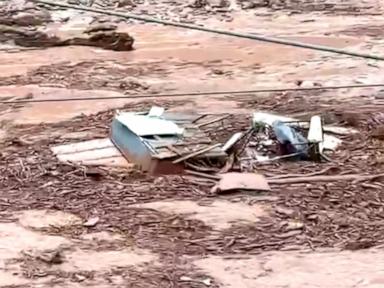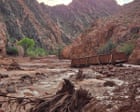
Every time water swallows a hiker or sweeps a campsite in the Grand Canyon, the media runs the same tired obituary. They call it a tragedy born of capricious skies, an act of geological violence, a sudden strike from a cruel wilderness. It is a comforting lie. It absolves the agencies, the outfitters, and the visitors who treat a hyper-arid desert canyon like a landscaped theme park. The conventional narrative focuses entirely on the rain volume, treating the catastrophe as a freak accident of meteorology. That perspective is not just lazy. It is lethal.
The lazy consensus argues that when monsoon season hits, flash floods are inevitable bullets fired from the clouds, and hikers are merely unlucky bystanders in the crossfire. Meanwhile, you can find similar events here: The Ghosts That Follow Every Suitcase.
I have watched tourists march into narrow slots wearing cotton shorts and carrying single plastic water bottles, guided by apps that treat topography like a cartoon background. When the storm hits, the narrative blames the water. It never blames the hubris.
The Physics of a Concrete Desert
To understand why these events turn deadly, you have to throw out the romantic notion of wilderness and look at raw hydrology. The Grand Canyon is not a sponge. It is an industrial-grade chute made of limestone, sandstone, and shale. Decades of overgrazing, historic livestock trampling, and natural aridification have stripped massive plateaus above the canyon of soil and vegetation. To explore the complete picture, we recommend the excellent report by Condé Nast Traveler.
When rain falls on the Esplanade or the Tonto Platform, it does not soak in. It hits bedrock and hard-baked soil that behaves precisely like asphalt.
A one-inch rain event over a ten-square-mile drainage basin does not produce a polite stream. It produces millions of gallons of water funneled instantly into narrow bottlenecks. The velocity increases exponentially because friction against polished rock is near zero. By the time that wall of water hits a side canyon, it is traveling at highway speeds, carrying boulders, uprooted pinon pines, and thousands of pounds of silt.
Call it what it is: a slurry tsunami.
When people ask, "How fast do flash floods happen in the Grand Canyon?", the standard answer is "fast." That is useless. The actual answer is that water can drop forty miles away under a blue sky, travel silently down a dry wash, and hit a camp with zero warning in the time it takes to tie a hiking boot. If you are waiting to hear the roar of the rapids before you move to high ground, you are already dead.
The Bureaucracy of False Security
Park management operates under a liability-fueled paradox. They want to encourage visitation to maintain economic metrics, but they also want to avoid lawsuits when someone gets turned into gravel. The result is a system of warning signs and pamphlets that read like disclaimers written by corporate lawyers.
Visitors are handed permits with vague warnings about weather. They are told to "watch the skies." That advice is criminally negligent in a landscape where the storm generating the flood might be forming fifty miles away over the San Francisco Peaks, completely invisible from the depths of the inner gorge.
Look at how backcountry permits are issued. A hiker applies online, ticks a box acknowledging that bad weather happens, and receives a digital stamp of approval. There is no mandatory check on technical skill, no verification that the camper knows the difference between a safe bench and a death trap, and no real-time telemetry broadcast to the people actually sleeping in the wash.
We have the technology to track every drop of rain via Doppler radar and stream gauges. Yet, that data sits behind institutional paywalls or agency dashboards instead of screaming sirens in high-risk zones like Bright Angel Creek or Havasu Canyon.
The Myth of the Prepared Hiker
Retailers love to sell you safety. Walk into any outdoor gear shop before a canyon trip, and you will find shelves stocked with ultralight satellite messengers, titanium sporks, and waterproof jackets designed to keep you warm while you drown.
The industry pushes gear as a substitute for situational awareness. They convince novices that if they spend enough money on Gore-Tex, they possess immunity to geography.
Imagine a scenario where a group of backpackers sets up tents directly in the bed of a dry creek because it offers flat sand and a nice view of the stars. It looks idyllic. It is also an active drainage channel. When the flash flood arrives at two in the morning, their four-hundred-dollar tent does not anchor them to the earth; it acts as a parachute that drags them into the churn.
Gear cannot save you from bad real estate choices.
The most dangerous person in the canyon is not the total beginner who turns around at the first drop of rain. It is the intermediate egoist who has completed a few rim-to-rim hikes, reads every trip report online, and believes their physical fitness grants them veto power over physics. They see dark clouds, assume they can outrun the surge, and challenge a wall of water that weighs more than a freight train.
Rewriting the Protocol
If we want to stop writing these obituaries, we have to dismantle the tourism culture that treats the Grand Canyon like a national park playground.
First, we need to stop sugarcoating the danger. The language of risk management needs to change from polite suggestions to blunt warnings. A sign that says "Flash Floods Possible" invites complacency. A sign that says "If it rains on the rim, this canyon becomes a wooden chipper within two hours" forces a decision.
Second, backcountry access during monsoon peaks needs strict temporal closures for high-risk drainages. Just as avalanche control shuts down ski slopes, certain slot canyons and narrow washes should be hard-closed when precipitation models hit specific thresholds. Yes, it ruins vacations. Yes, it pisses off photographers. It also keeps breathing people out of body bags.
Third, personal responsibility must be ruthlessly enforced through education. If you cannot point out your escape route to high ground before you unroll your sleeping bag, you do not belong in the backcountry.
The canyon does not hate you. It does not care about you at all. It operates on cold, unfeeling math, and every time we pretend these disasters are random acts of God, we give ourselves permission to let them happen again.