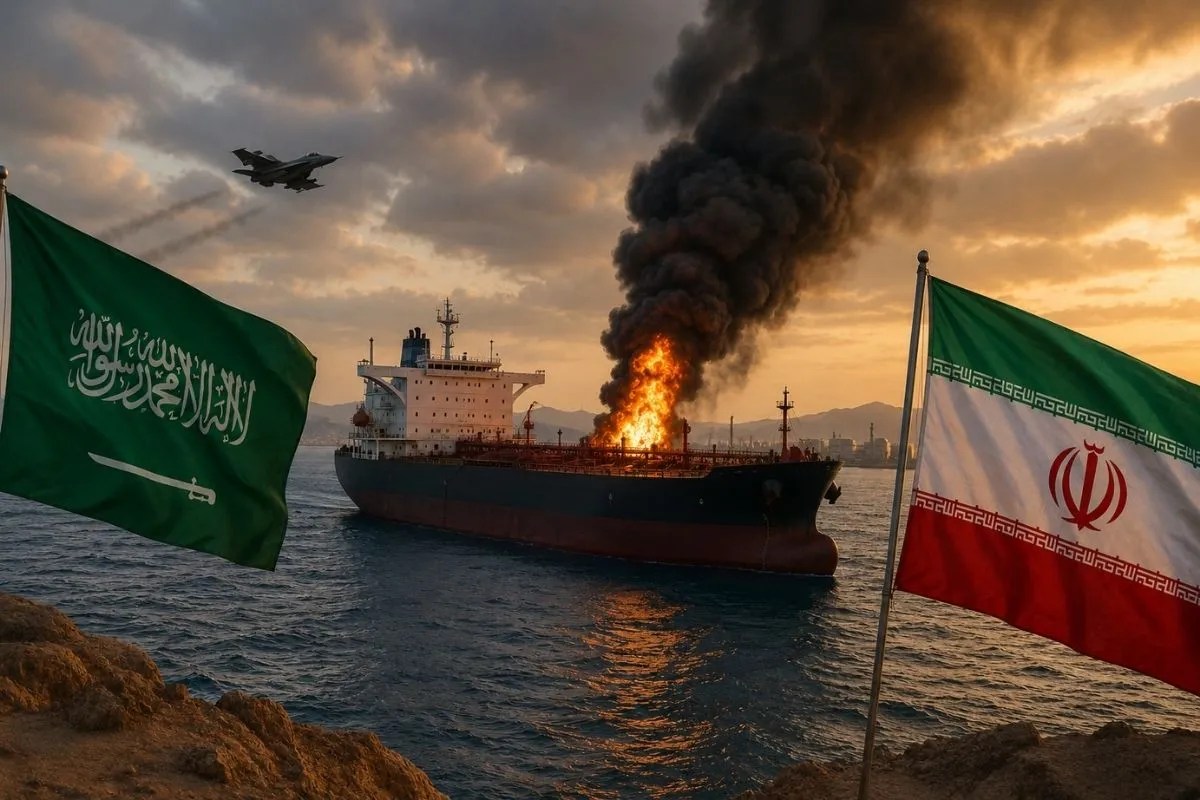
Every time a crude carrier takes a hit near the Strait of Hormuz, the default script unrolls with mechanical boredom. Riyadh points a finger at Tehran. Western media parrots the narrative of Iranian aggression. Markets panic for forty-eight hours, crude futures spike, and defense contractors update their quarterly projections. It is a lazy consensus that serves everyone in power while blinding the public to the actual mechanics of modern maritime sabotage.
The incident involving the oil tanker Sidra in the Persian Gulf was instantly shoehorned into this tired geopolitical template. Saudi Arabia and its regional allies framed the event as another reckless provocation by Iran targeting critical energy infrastructure. This framing relies on an outdated, freshman-level understanding of asymmetric warfare. It assumes that because an event happens in Iran’s backyard, or benefits their strategic posture on paper, they pulled the trigger. That is not analysis; that is administrative narrative-building.
Strip away the diplomatic theater and look at the physical and economic incentives. Iran has spent decades perfecting the art of sub-threshold gray-zone conflict. They understand choke points better than any naval power on earth. Why would a regime desperate to keep oil moving to its few remaining buyers—primarily in East Asia—orchestrate a clumsy kinetic event that guarantees stricter enforcement of sanctions and drives up insurance premiums for tankers carrying their own discounted barrels? The math does not clear the basic threshold of rational state behavior.
To understand why the standard Riyadh-versus-Tehran blame game misses the mark, you have to look past the press releases and examine how modern energy corridors actually operate under pressure.
The Anatomy of a Convenient Crisis
When headlines scream about attacks on shipping lanes, follow the cash and the risk tolerance. The Strait of Hormuz handles roughly a fifth of the world's petroleum consumption. Every time fear spikes in that narrow channel, the value of non-OPEC production rises, spot-market margins shift, and geopolitical leverage recalibrates.
The conventional narrative presents the Persian Gulf as a binary theater where state actors engage in direct, overt harassment. The reality is far messier. The Gulf is crawling with third-party mercenaries, insurgent proxies, unflagged vessels, and intelligence agencies from nations thousands of miles away that benefit immensely from keeping the region perpetually unstable. A localized explosion or mysterious hull breach on a vessel like the Sidra is rarely a clear-cut act of war by a sovereign military. More often, it is a piece of economic theater designed to influence insurance rates, force naval deployments, or disrupt bilateral diplomatic thaws that threaten the defense budget status quo.
I have spent years watching risk analysts panic over ghost threats while missing the quiet structural shifts happening beneath the surface. When an explosion occurs, the immediate reflex is to ask who hates whom. The better question is who profits from the immediate market reaction.
Insurance underwriters do. Defense contractors do. States looking to justify massive naval budgets do. Tehran taking the blame for every floating anomaly in the Gulf is a feature, not a bug, of an ecosystem built on perpetual threat inflation.
Dissecting the Faulty Logic of Retaliation
Let us dismantle the core premise of the official Saudi stance: that maritime security in the Gulf can be achieved solely by deterring Iranian naval forces. This approach treats a complex economic and geopolitical network like a highway patrol problem.
Deterrence only works when both sides operate under a shared set of rules and values. In the asymmetric domain of the Gulf, deterrence is an illusion. When a tanker is struck, the knee-jerk call for increased naval patrols or punitive strikes against Iranian assets ignores the primary vulnerability of global energy transit. You cannot patrol every square mile of open water against low-signature threats using multibillion-dollar destroyers. It is an economic mismatch of staggering proportions. Spending ten million dollars on a missile defense interceptor to neutralize a five-thousand-dollar improvised drone or limpet mine is a masterclass in strategic bankruptcy.
Furthermore, the idea that regional stability depends on isolating Iran collapses the moment you look at trade data. Economic gravity always wins. Even during peak diplomatic freezes, back-channel commerce, ship-to-ship transfers, and financial routing continue through regional hubs like the United Arab Emirates. The public posturing of hostility often masks a pragmatic, high-stakes operational reality where actors on all sides know exactly how to manage the friction without tipping into total war.
When analysts claim that incidents like the Sidra attack bring the region to the brink of catastrophe, they are usually selling subscriptions or lobbying for hardware appropriations. Total war in the Gulf is an existential disaster for Tehran, Riyadh, and every capital in between. No one at the top wants the taps turned off permanently. They want just enough tension to keep domestic populations compliant and foreign allies on the hook, but not enough to trigger the collapse of global trade.
The Uncomfortable Truth About Maritime Vulnerability
If you want to fix maritime security, stop treating isolated sabotage as a unique casus belli and start looking at systemic vulnerability. The global shipping industry operates on razor-thin margins and terrifyingly lax oversight. Flags of convenience, opaque ownership structures, and minimal tracking requirements make the high seas a playground for deniable kinetic action.
Imagine a scenario where a major shipping conglomerate decides to bypass the Persian Gulf entirely, rerouting through overland pipelines and alternative export terminals on the Red Sea and the Indian Ocean. The geopolitical weight of the Strait of Hormuz would evaporate overnight, along with the leverage held by whichever power claims dominance over its waters. Yet, despite decades of recurring crises, the global logistics chain remains stubbornly tethered to this single, vulnerable bottleneck. Why? Because the existing power structures—from state energy monopolies to international defense pacts—rely on the persistence of risk. Risk justifies budgets. Risk justifies control.
The blame game over the Sidra is a distraction from this structural reality. Whether the damage came from a stray projectile, a state-backed proxy, or a opportunistic private actor, the underlying disease is our collective addiction to centralized chokepoints and lazy geopolitical shorthand.
Stop waiting for a smoking gun that points neatly to a single villain in a capital city. The next time a tanker takes a hit in the Gulf, look past the press briefings, ignore the predictable cries for escalation, and watch who adjusts their positions while everyone else is looking at the smoke.