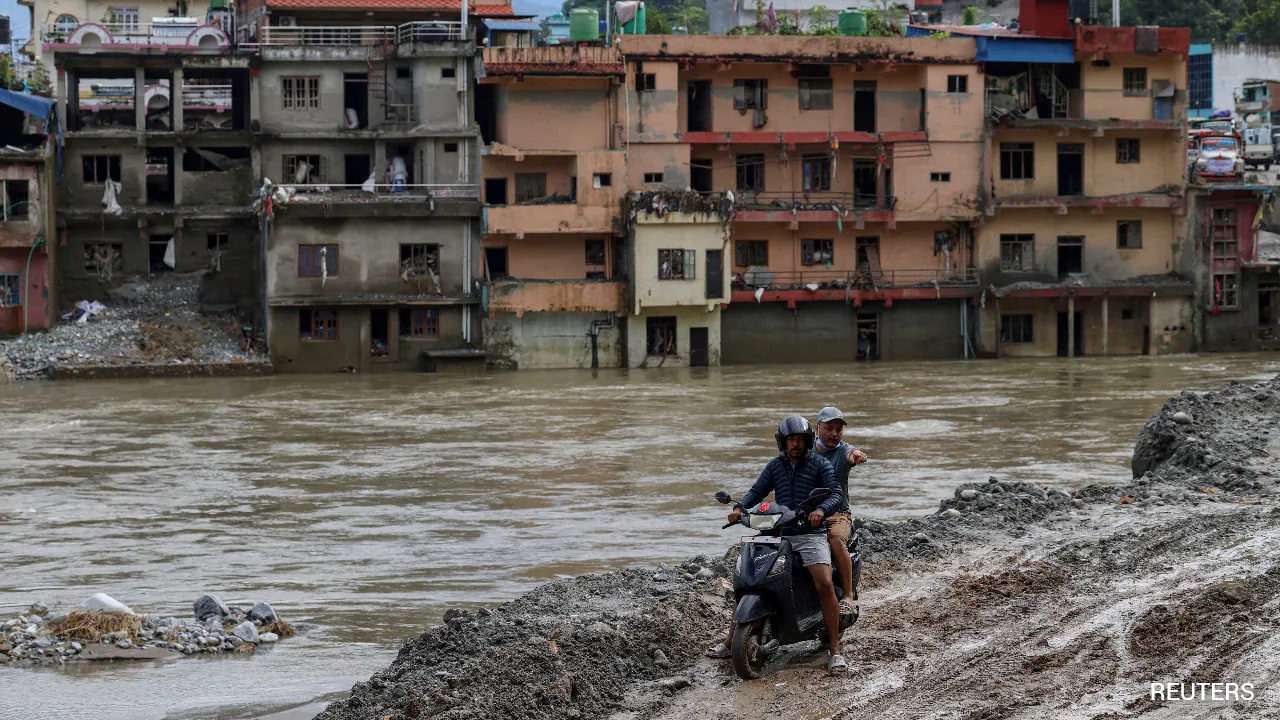
Every time a mountain collapses and water tears through a valley, the headline writes itself before the dust even settles. Scientists point a finger at rising global temperatures. Media outlets echo the chorus. The public nods along, satisfied with a neat, planetary explanation for a localized catastrophe.
It is a tidy narrative. It is also dangerously wrong. If you found value in this post, you should look at: this related article.
Pinning the Nepal glacier collapse entirely on broad climate shifts does something convenient: it absolves everyone on the ground. When the blame belongs to the atmosphere, nobody in local zoning boards, regional ministries, or national infrastructure offices has to answer for green-lighting projects in active hazard zones.
I have watched engineers build roads carved into unstable moraine walls while ignoring basic geotechnical reports. I have seen bureaucrats treat mountain hydrology like a solved math problem instead of a chaotic, shifting variable. Climate change is real, measurable, and accelerating. But treating it as the sole culprit for every alpine disaster is intellectual laziness disguised as environmentalism. For another perspective on this event, see the recent coverage from NBC News.
The Mechanics of the Collapse
Glaciers do not simply melt uniformly from the top down because the thermometer ticked upward by a fraction of a degree. High-altitude collapses are mechanical failures. Water pressure accumulates inside subglacial cavities. Permafrost degrades, turning ancient, frozen rock faces into loose gravel. Seismic activity rattles foundations that were already holding on by friction alone.
When a glacier lets go, it is usually a structural crisis of weight, water, and gravity. Blaming carbon emissions for a localized rock-ice avalanche ignores the physical trigger points happening right beneath our boots. A warming planet sets the stage, but human engineering and poor land management pull the trigger.
Consider how we build infrastructure in the high Himalayas. Roads cut through toe zones of unstable slopes. Drainage systems are engineered for historical rainfall rates that no longer apply, or worse, they are ignored entirely to save on upfront capital costs. When a heavy monsoon hits a slope that has been artificially destabilized by unengineered excavations, the resulting flood is categorized as a natural act of God.
It is not. It is human error compounded by poor geography.
The Danger of a Single Narrative
When every environmental disaster is funneled into the overarching climate change narrative, policy responses become useless. If the problem is global carbon output, local leaders conclude there is nothing they can do at the municipal level until international treaties are signed. That is a convenient excuse to sit on their hands.
Meanwhile, construction continues in direct paths of historic debris flows. Early warning systems remain underfunded or poorly maintained. Hazard mapping is treated as red tape rather than a matter of survival.
We need to talk about regional accountability.
When a dam fails or a glacial lake outburst flood wipes out a downstream settlement, we need to look at the hydro-geological surveys. We need to audit the construction permits. We need to ask why warning sirens failed to sound or why communities were never evacuated despite days of precursor tremors.
Hiding behind global macro-trends while local governance fails is a systemic betrayal of the people living in these valleys.
What Real Preparedness Looks Like
Stop waiting for global emissions targets to solve local mountain risks. They will not.
Real hazard mitigation is unglamorous. It requires investing in high-resolution seismic sensors on unstable peaks. It demands strict enforcement of construction setbacks away from active alluvial fans and outwash plains. It means redesigning hydro-electric projects to handle catastrophic sediment loads instead of assuming steady-state river flows.
The next disaster in the mountains will not wait for a global climate summit. It will happen because we built in the wrong place, ignored the warning signs, and blamed the weather.


