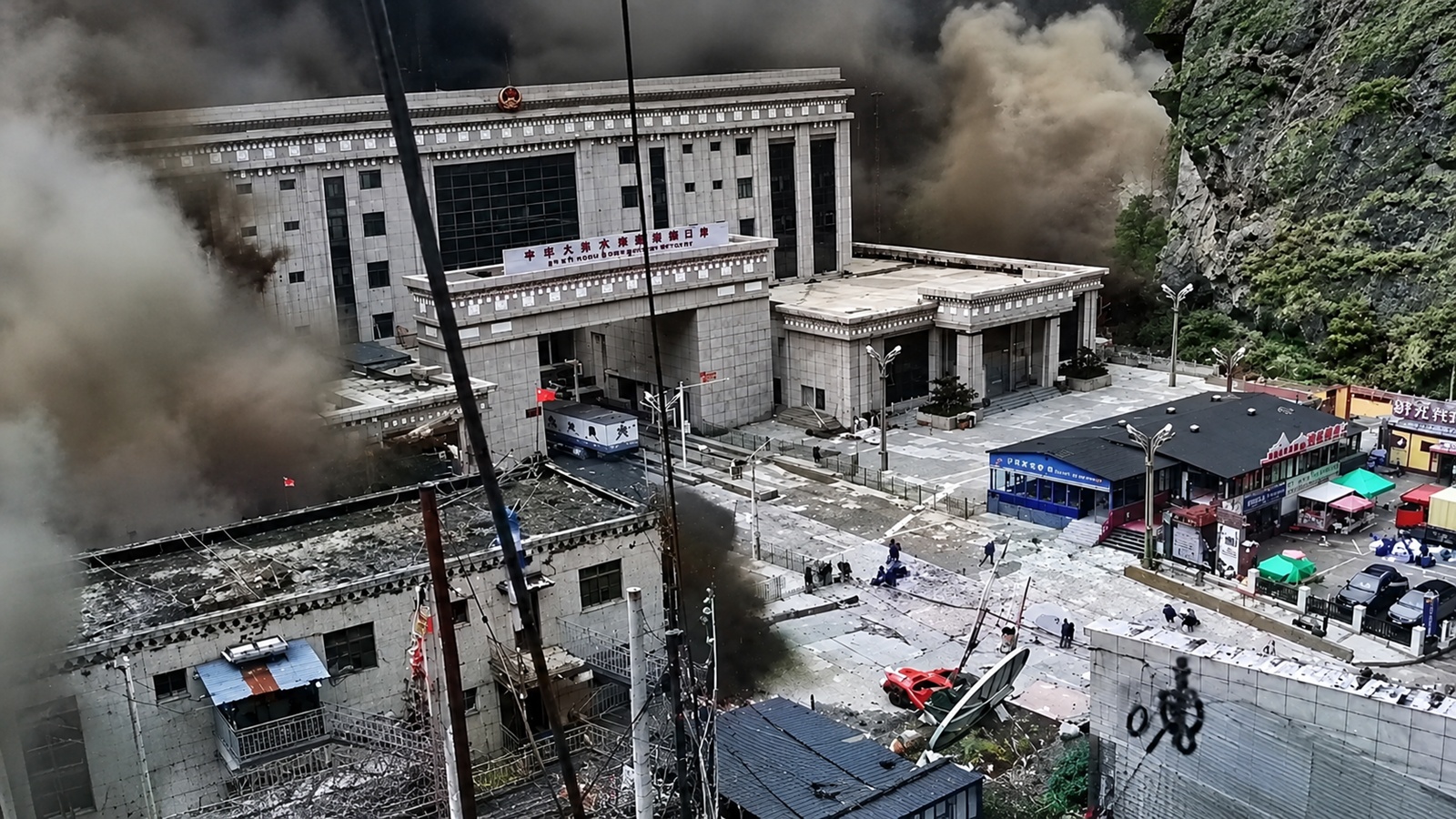
Every time a Himalayan river swallows a concrete hotel, the media machine spins up a predictable script. Terrifying CCTV footage emerges. Buildings crumple like cardboard. Bridges vanish in seconds. Then the talking heads appear to blame global temperature anomalies for sudden flash floods near Tibet, reducing a complex engineering and governance failure to a weather headline.
Stop buying the lazy consensus.
Climate volatility acts as the trigger, but human hubris builds the gun. When water carved gorges through the Himalayas millennia ago, it left behind dynamic floodplains. We responded by paving over them, dumping heavy construction debris into narrow channels, and calling it economic development. The Nepal flash flood near Tibet was not just an act of God. It was a predictable reckoning against decades of reckless land-use planning, unscientific road construction, and regulatory vacuum.
I have walked these valleys after disasters. I have seen multi-story concrete lodges built directly on active alluvial fans where local elders warned builders not to place a single brick. When you constrict a high-velocity mountain river to a fraction of its natural width to maximize riverfront views, physics does not negotiate. It demolishes.
The Geography of Poor Choices
The media obsesses over the speed of destruction. The CCTV clips showing structures swept away in seconds create a narrative of pure surprise. Nothing about this was sudden in terms of systemic risk.
Himalayan watersheds are inherently fragile. They feature steep relief, loose tectonic plates, and intense monsoon dynamics. When upstream glacial lakes breach or cloudbursts drop staggering volumes of water in minutes, the hydrograph spikes violently.
- Natural Sediment Load: Mountain rivers carry massive bedloads of boulders, gravel, and silt. When choked by illegal aggregate mining, the riverbed rises.
- Encroachment: Floodplains are treated as real estate opportunities rather than safety valves for peak discharge.
- Unregulated Engineering: Hill-cutting for road expansion dumps loose muck directly into ravines, creating artificial dams that eventually fail catastrophically.
When officials point exclusively to extreme weather, they provide a convenient shield for corrupt zoning boards, negligent contractors, and short-sighted municipal planners. Weather is the variable. Infrastructure design and zoning enforcement are the constants we completely botched.
Dismantling The Adaptation Myth
Governments love to promise more early warning systems and stronger retaining walls. These solutions sound sophisticated, but they are often expensive band-aids on a severed artery.
Imagine a scenario where every village along the Tibetan border gets a state-of-the-art radar sensor. Sirens blare ten minutes before the wall of water arrives. People scramble up the cliffs. Their lives are saved—which is paramount—but the billion-dollar concrete structures below are still pulverized. The economic system collapses anyway.
Hard engineering like gabion walls and concrete embankments give a false sense of security. They encourage even denser development right up to the water's edge because people assume the barrier protects them. In high-altitude flash flood scenarios, water carries kinetic energy capable of snapping steel-reinforced pillars like matchsticks. You cannot out-build a raging mountain torrent. You can only get out of its way.
The Real Cost of Ignoring Geomorphology
Hydrologists and geomorphologists have screamed this from the academic rooftops for years, but policymakers prefer ribbon-cuttings for riverside promenades.
True risk mitigation requires radical de-development. It means establishing legally binding buffer zones where permanent human habitation is banned, regardless of tourism revenue. It means penalizing local authorities who grant building permits on active debris tracks.
If you visit these zones today, the rebuilding starts almost before the mud dries. Storefronts rise on the exact same vulnerable gravel bars. The cycle repeats because the financial incentives reward immediate short-term tourism profits while externalizing the catastrophic costs onto the taxpayers and disaster relief funds.
Until we stop treating natural geography as a blank canvas for real estate speculation, every monsoon season will yield the same terrifying footage, the same shallow commentary, and the same preventable tragedies.
Move the buildings. Stop throwing concrete at a force of nature.