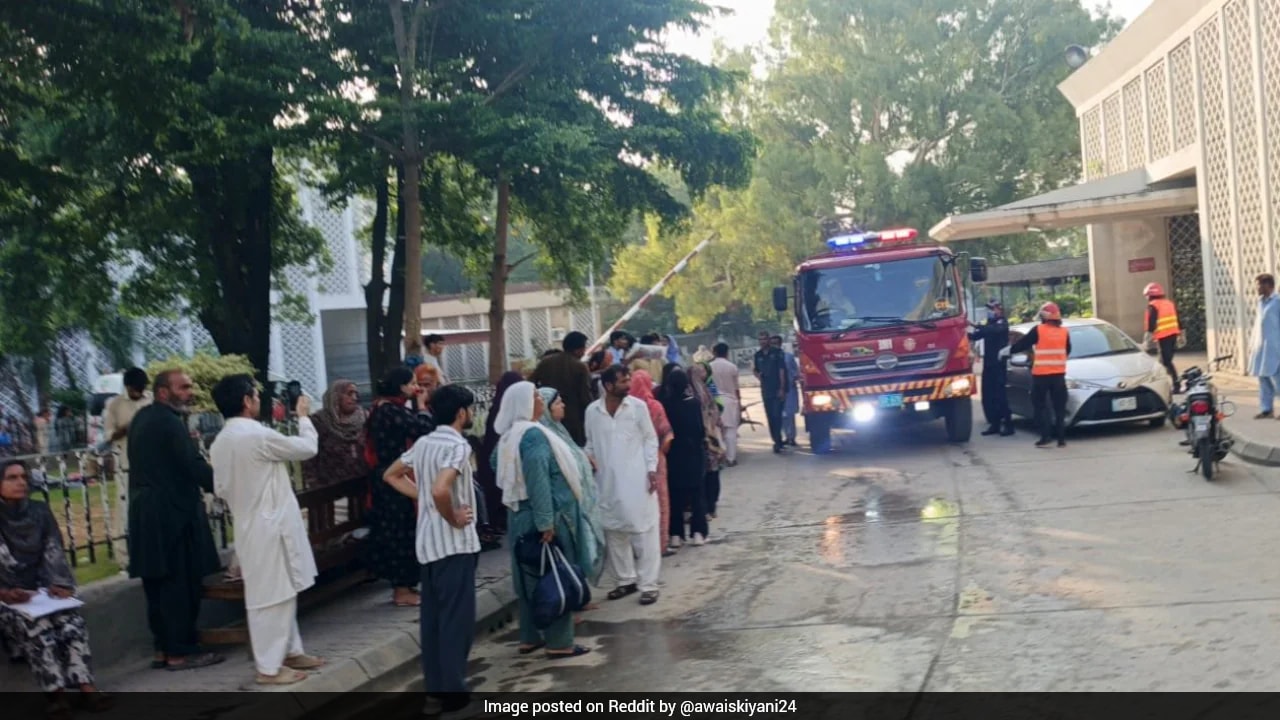
Headlines love a mechanical villain. When fifteen newborns died following a catastrophic blast and fire at a Pakistani hospital, the media reached for the easiest suspect in the room. The air conditioning compressor. It is clean, neat, and gives everyone an inanimate object to point fingers at before moving on to the next tragedy.
It is also entirely missing the point.
Compressors do not spontaneously detonate in a vacuum of bad luck. They fail because of a systemic rot in infrastructure oversight, deferred maintenance cultures, and electrical grid roulette that hospitals across developing regions are forced to play every single day. If you think replacing a copper coil or installing a newer cooling unit solves this crisis, you are falling for the exact lazy consensus that keeps these disasters happening on a loop.
I have spent two decades walking through institutional facilities, staring at electrical panels that look like spaghetti bowls wired by optimism rather than engineering standards. I have seen administrators skim budgets intended for safety redundancy to pad operational margins, crossing their fingers that the grid holds.
Let us dismantle the comfortable fiction that this was simply a rogue appliance.
The Electrical Mirage
The knee-jerk narrative following every hospital HVAC explosion is thermal overload. Technicians whisper about refrigerant pressures, poorly ventilated compressor rooms, or subpar manufacturing quality. While those factors contribute to mechanical failure, they mask the foundational pathology.
HVAC compressors draw immense surge currents. In facilities plagued by chronic voltage fluctuations, brownouts, and wild frequency swings, motorized equipment takes a beating. Without industrial-grade automatic voltage regulators and dedicated, isolated power circuits, an air conditioner is essentially sitting inside an electrical execution chamber.
When the grid surges, cheap breakers fail to trip. When cheap breakers fail, the excess current feeds directly into the compressor windings. Insulation breaks down. Oil bakes and turns to varnish. Pressure spikes inside a sealed metal shell that acts like an unguided ordinance.
Blaming the AC manufacturer is like blaming a car for exploding after you fill the gas tank with nitro-glycerin. The compressor was the symptom, not the disease.
The Maintenance Budget Illusion
Hospital boards treat maintenance as an administrative nuisance rather than an absolute life safety requirement.
In corporate boardrooms, capital expenditures for cooling systems get approved because patients complain when rooms get warm. But preventative maintenance? Filter changes, vibration analysis, thermal imaging of electrical connections, insulation resistance testing? Those line items get slashed the moment the quarterly ledger looks tight.
Here is what actually happens behind closed doors in underfunded public health systems. A certified technician flags a vibrating compressor or an aging capacitor showing signs of thermal stress. The facility manager looks at the replacement cost, looks at the cash flow, and decides to stretch its lifecycle by another twelve months.
That gamble works until it doesn't.
When you defer maintenance on high-capacity thermal machinery in a critical care environment, you are not saving money. You are purchasing a lottery ticket where the jackpot is a forensic investigation.
The Architecture of Vulnerability
Why are high-pressure refrigerant compressors located anywhere near vulnerable populations?
Modern hospital design separates mechanical plants from patient care zones through fire-rated separations, dedicated exterior compounds, or isolated utility basements. Yet, in retrofitted or hastily expanded facilities, equipment is crammed into interstitial spaces, rooftop corners without clearance, or poorly ventilated alcoves adjacent to neonatal intensive care units.
When a compressor fails catastrophically, it releases superheated refrigerant gas, atomized compressor oil, and high-velocity shrapnel. If that equipment shares an unsealed ventilation chase or a common wall with a nursery, the mechanical failure instantly transitions into an environmental catastrophe.
The failure here is structural planning. We design buildings to maximize bed count while minimizing footprint, cramming heavy industrial machinery into spaces meant for human healing.
Dismantling The People Also Ask Fallacy
Every time an incident like this hits the news cycle, search engines flood with queries designed to find a single responsible party.
Did the brand matter? No. High-end rotary and scroll compressors fail just as spectacularly as budget units when fed unstable power and starved of oil cooling.
Was it operator error? Rarely. Frontline nursing staff and facility operators are given zero authority to shut down a failing system if it means admitting that a ward lacks climate control.
The questions we should be asking are entirely different. Why are public health budgets so malnourished that critical care zones rely on patchwork cooling solutions? Why do municipal electrical grids operate with impunity, delivering volatile voltage to facilities housing infants on ventilators?
Unconventional Fixes That Actually Work
If we want to stop reading these obituaries, we have to stop offering thoughts and prayers wrapped in regulatory platitudes. Here is what needs to happen immediately.
First, mandate independent, third-party electrical audits for every healthcare facility housing high-risk patients. These audits must test for harmonic distortion, phase imbalance, and breaker coordination. If a panel cannot safely isolate a fault, the wing gets shut down until it complies.
Second, ban the placement of primary refrigerant compressors within forty feet of patient air intake or nursery walls. Mechanical plants belong outside, underground, or in hardened, isolated outbuildings equipped with automatic suppression systems.
Third, tie hospital accreditation directly to preventative maintenance compliance logs. If a facility cannot produce verifiable proof that its high-load electrical and cooling infrastructure was inspected using thermographic imaging within the last six months, pull their operating license.
Stop treating mechanical disasters as freak acts of God. They are entirely preventable failures of engineering, budgeting, and institutional courage.
The next time an AC compressor blows up, do not look at the brand stamped on the metal plate. Look at the balance sheet of the institution that let it run dry.