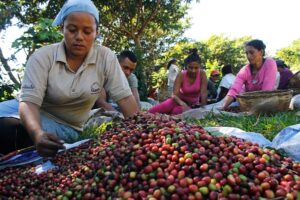
The global coffee market is built on a quiet catastrophe. For decades, the consumer narrative surrounding morning coffee has focused on roast profiles, origin countries printed in bold typography on minimalist bags, and the romantic journey from bean to cup. Behind that glossy facade lies a grinding economic reality. Coffee production at origin is trapped in a destructive cycle of price volatility, climate pressures, and systemic undervaluation that threatens the entire supply chain.
When a standard commodity market dictates the value of green coffee, smallholder farmers absorb the vast majority of financial risk. They buy fertilizer at retail prices, pay for labor upfront, and sell their harvest into a volatile global exchange where prices fluctuate wildly based on weather events in Brazil or macroeconomic speculation in New York and London. This structural flaw means that prosperity in the consuming countries—where a single latte fetches six dollars—rarely trickles down to the volcanic slopes of Central America or the highlands of East Africa where the crop actually grows.
Understanding the mechanics of this broken system requires looking past corporate sustainability pledges and examining the balance sheets of the people who actually harvest the cherry.
The Commodity Trap And The Illusion of Fair Trade
Global coffee pricing is anchored to the C-market contract, a futures exchange mechanism that was never designed to reflect the labor-intensive reality of specialty agriculture. When C-market prices drop below the cost of production, farmers face an impossible choice. They can abandon their trees, sell their land to speculators, or migrate.
Many choose migration. The exodus of younger generations from coffee-growing regions across Honduras, Colombia, and Guatemala is not a sociological mystery. It is a rational economic response to extreme poverty. When a season of grueling physical labor yields negative net income, farming becomes an untenable career path.
Corporate sustainability initiatives often attempt to bandage this wound through certification stamps. Yet, third-party certifications frequently impose heavy administrative and auditing costs on cooperatives without guaranteeing a living income. The farmer pays the compliance fee, sells a fraction of their crop under the certified label, and watches the rest get absorbed by the conventional market at a loss.
Climate Pressures And The Shrinking Yield
Agronomic reality is compounding these economic pressures. Rising global temperatures, erratic rainfall patterns, and the relentless spread of plant diseases like coffee leaf rust are shrinking arable land suitable for traditional arabica cultivation.
Farmers are forced to move higher up mountain slopes to find the cooler microclimates required for high-grade beans. This vertical migration incurs massive capital expenses. New land must be cleared, roads must be built, and young trees require years of investment before producing a viable commercial yield.
For a hypothetical smallholder farming two hectares in the Tarrazú region of Costa Rica, a single unseasonal drought can wipe out half an annual harvest. Without access to affordable credit or agricultural insurance, that farmer defaults on loans, loses their land, and becomes a wage laborer on the very farm they once owned. The coffee reaches the shelves of specialty cafes labeled as an artisanal luxury, while its producer sinks deeper into generational debt.
Direct Trade As A Disruptive Alternative
Amid this systemic decay, alternative distribution models offer a glimpse of functional economics. Direct trade and relationship-driven sourcing bypass traditional commodity brokers, establishing transparent pricing structures tied to quality rather than exchange quotas.
When roasters commit to multi-year buying agreements and pay prices calculated using the actual cost of production plus a margin for reinvestment, the dynamic shifts entirely. Farmers can invest in soil regeneration, improve processing infrastructure, and pay agricultural workers fair wages that retain local talent.
This is not charity. It is risk mitigation for the roaster. Climate change and economic abandonment guarantee declining yields and plummeting quality for anyone relying on spot markets. Securing the future of high-end coffee requires treating farmers as essential business partners rather than interchangeable inputs.
The romanticized view of coffee origin must give way to radical economic transparency. If the market continues to squeeze the people who plant, tend, and harvest the crop, the specialty coffee boom will collapse under the weight of its own neglect. The fix demands higher retail prices matched by mandatory supply chain accountability, ensuring that the wealth generated by the world's favorite stimulant stays rooted in the soil where it begins.